


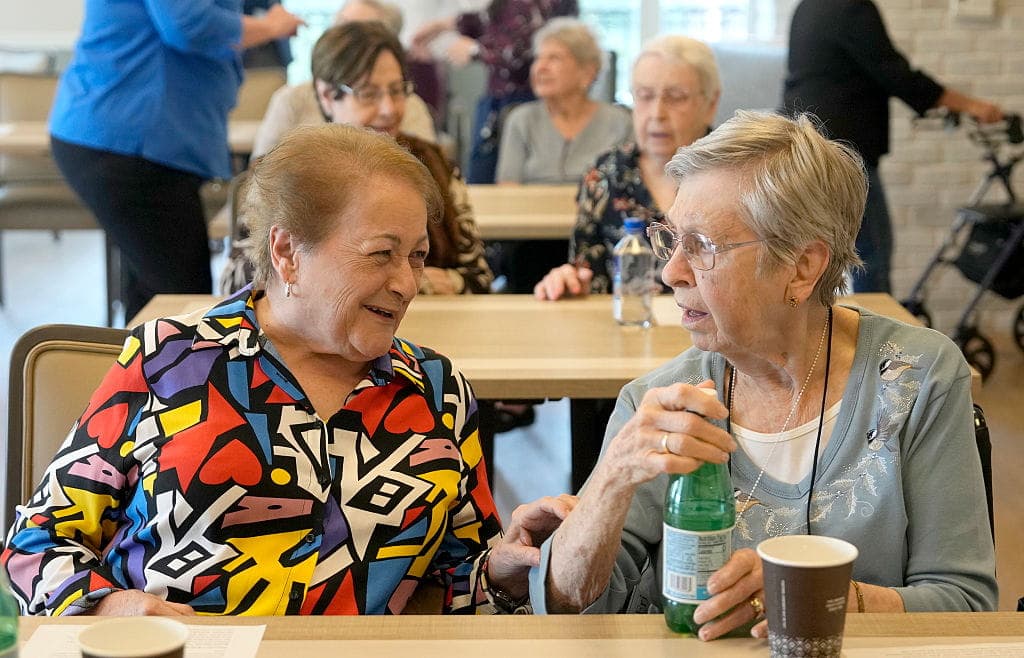

Take a look at your friends. Are they keeping you young, or are they adding years to your life in all the wrong ways? We already know that diet, exercise, sleep, and stress can play a role in aging, but scientists are finding that our social lives may belong on that list, too. From the friend who makes you laugh until your stomach hurts to the one who makes your blood pressure rise just by calling, the people around us may be leaving their mark on how quickly we age.
Social Life and Aging
When talking about aging, we don’t mean counting wrinkles or age spots. This is about biological aging, the functions of your internal organs, and the health markers associated with getting older.
A large study published in the peer-reviewed journal PLOS Medicine looked at 148 previous studies involving more than 308,000 people. Researchers wanted to know whether our relationships with other people could actually be connected to how long we live. Although the studies spanned more than 50 years, the participants were followed for an average of 7.5 years. They found that people with stronger social relationships had a 50% greater chance of surviving during the studies than those who weren't as socially connected. What’s interesting is that this measured the results not just from the elderly, but from people of all ages, sexes, and health. They weren’t studied just on a singular aspect, such as whether they lived alone, but on all areas of their social lives, including friends, activities, etc.


Free with the Daily Briefing
85EssaysUnravel the Constitution
Hamilton, Madison & Jay’s complete case for America, free and searchable in the Publius Reader.
Free with the Daily Briefing. Unsubscribe anytime.
Men may suffer even more than women. According to a 2025 study published in The Journals of Gerontology: Series B that studied 6,208 middle-aged and older Australians, men who stayed isolated and didn’t socialize much were biologically older. Researchers looked at blood samples for DNA changes that were indicators of aging and compared those with information about the participants’ social lives, which included whether they lived alone, if they were married, and how many close friends and relatives they had. Not surprisingly, the people who had more friends and relatives and who spent at least a moderate amount of time participating in social activities tended to show signs of younger biological age. Men, however, were the only ones who showed older biological ages when they isolated.
That doesn’t mean meeting your friends for lunch or joining the neighborhood book club is a magic anti-aging treatment, but scientifically speaking, having a healthy social life does show promise to help reduce biological aging.
The Physical Health Aspect
In 2025, the National Institute on Aging conducted a study of more than 600,000 people. Research found that loneliness was associated with a 31% greater risk of dementia, 14% Alzheimer’s disease, 17% vascular dementia, and 12% cognitive impairment without dementia.
The Surgeon General associated poor social relationships and isolation with a 29% increased risk of heart disease and a 32% increased risk of stroke. Furthermore, social isolation is associated with a 29% higher risk of early death. The American Heart Association found a similar result, reporting a 30% greater risk of heart attack or stroke due to social isolation and loneliness.
Chronic inflammation can also be linked to a host of health problems, including heart attacks and strokes. A study published in the peer-reviewed journal Brain, Behavior, and Immunity looked at whether social isolation and loneliness were connected to inflammation in the body. Participants were from Denmark, New Zealand, and the UK and of varying ages, some of them having been studied since childhood. Blood samples were studied to look for markers to indicate inflammation. They found that children who were isolated tended to have higher levels of inflammation throughout life. In the New Zealand group, those who felt lonely in their late 30s and 40s also had higher levels when they were 45.
Loneliness and social isolation didn’t measure the same. “The findings indicate that social isolation was more consistently associated with inflammation than loneliness, emphasising the importance of clearly demarcating these two constructs in research,” according to the study.
That doesn't prove that being isolated causes inflammation, but it does give scientists another possible explanation for why our social lives could affect our health. Since long-term inflammation is connected to many health problems, staying connected to other people may be important for more than just keeping us company.
Your Friends May Have an Impact
Friends with benefits may have an entirely different meaning when it comes to aging. Having supportive people in your life has been linked to everything from better heart and brain health to a lower risk of premature death. But what about those who constantly get on your nerves and seem to bring drama to you every chance they get?

A 2026 study published in Proceedings of the National Academy of Sciences looked at more than 2,000 individuals and the difficult people in their lives. Participants were asked how often someone "hassled them, caused problems or generally made their lives more difficult" in the past six months. Researchers referred to these types of people as “hasslers.” They measured the results using saliva samples.
The researchers investigated hasslers and their impact on people, and found “that these negative ties are not rare, disproportionately experienced by individuals facing greater social and health vulnerabilities, and consequential for aging. Each additional hassler is associated with faster biological aging, with especially pronounced effects when the hassler is a family member. These findings identify negative social ties as chronic stressors that shape aging trajectories and underscore the need for interventions that reduce harmful social exposures to promote healthier aging.” Nearly 30% of people report having at least one hassler in their social network.
Additionally, “exposure to negative social ties follows patterns of social and health vulnerability, with women, daily smokers, people in poorer health, and those with adverse childhood experiences more likely to report having hasslers in their networks.” And the real kicker: “Having more hasslers is associated with accelerated biological aging in both rate and cumulative burden: Each additional hassler corresponds to approximately 1.5% faster pace of aging and roughly 9 mo older biological age.” And to further emphasize the problem with negative relationships: “not all hasslers exert the same influence; kin and nonkin hasslers show detrimental associations, whereas spouse hasslers do not.”
There’s no friendship prescription from your doctor just yet, and scientists certainly haven’t discovered that happy hour reverses aging. Research, though, has shown that being social can have positive effects on our mental and physical health. But beware the Debbie Downers in your life, because negative socializing can also be detrimental.


(1).jpg&w=1920&q=75)