


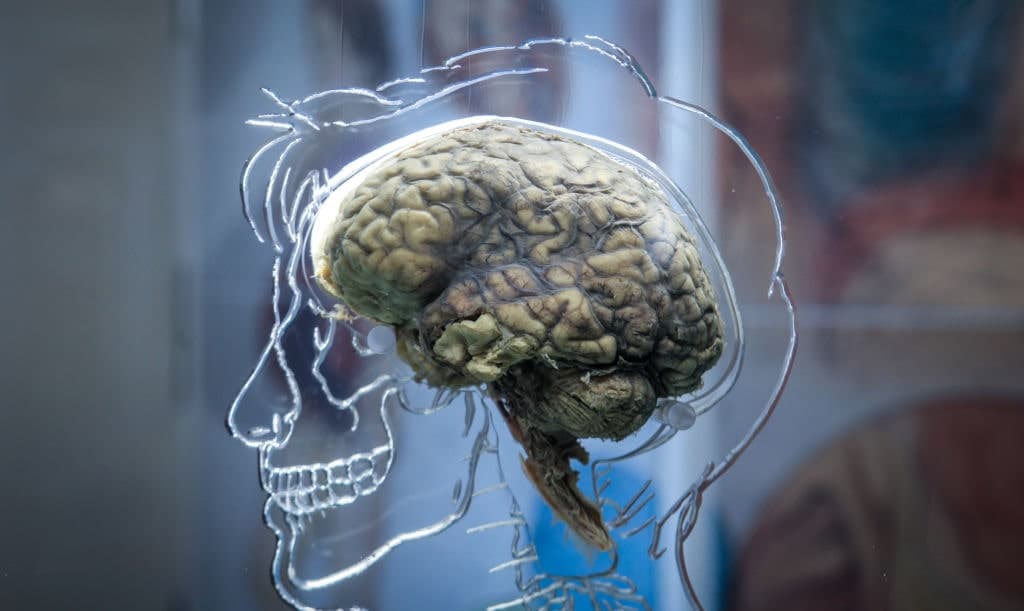

When are we actually grown up? Are people adults at 16, when Kamala Harris and many other Democrats think teens should be eligible to vote? Perhaps it’s one of the ages set by the law, 18 or 21 – or maybe even 25, when the decision-making part of the brain is said to mature. A new study suggests all those milestones might be wrong. According to research published in Nature Communications, the human brain does not fully shift into what scientists call “adult mode” until around age 32.

The finding comes from nearly 4,000 MRI diffusion scans analyzed by researchers from the University of Cambridge, who discovered that the brain hits four major turning points across life – at roughly ages 9, 32, 66, and 83. That second age shift, according to the study, may be the biggest of all.
“Around the age of 32, we see the most directional changes in wiring and the largest overall shift in trajectory, compared to all the other turning points,” said Dr. Alexa Mousley. “While puberty offers a clear start, the end of adolescence is much harder to pin down scientifically. Based purely on neural architecture, we found that adolescent-like changes in brain structure end around the early thirties.”
So what we’ve long called “adulthood” may just be the world’s most misunderstood biological era – a phase that doesn’t truly begin until early middle age.
Brain Ages
What emerged from this study was a lifelong map of the brain’s wiring that looks far less like a straight line and more like a series of sharp bends. Instead of smoothly maturing from childhood to adulthood, the researchers say our brains move through five distinct eras, each with its own pace, strengths, and quirks. And these eras don’t line up neatly with birthdays, driver’s licenses, or any of the cultural milestones we use to declare someone “grown up.”
According to the research, childhood lasts until about age nine. During those years, the brain is in hyperdrive – pruning old connections, building new ones, firing rapidly, and absorbing information at a speed any parent or teacher would recognize instantly. But then, something shifts. It’s the first big turning point the study identified, marking the moment childhood transitions into an unusually long adolescent period. And here’s where the findings start to challenge almost everything we assume about development.
Most of us think of adolescence as a messy stretch of life comprised of hormones, breakouts, questionable fashion choices, and that intense feeling that the world is either ending or just beginning. But the Cambridge researchers describe this era differently. They see it as the brain’s major renovation phase. Behind the scenes, the brain is strengthening long-distance connections, refining communication pathways, and essentially upgrading its wiring for adult life.
But now it seems that process doesn’t wrap up anywhere near our late teens or twenties.
As Dr. Mousley explained in the University of Cambridge’s summary of the research, “adolescent-like changes in brain structure end around the early thirties.” This means the 20s – a decade often burdened with pressure to “be an adult already” – may be biologically closer to the tail-end of adolescence.
The second major turning point – the biggest one of all – happens at age 32. According to the researchers, this is when the brain stops reshaping itself like an adolescent system and settles into a more stable adult mode. Dr. Mousley described this shift as showing “the largest overall change in wiring direction” of any stage in life.
That moment marks the true beginning of the brain’s adulthood era, which lasts until around age 66. During this period, the brain is about as stable as it gets when traits, habits, personality patterns, and cognitive abilities tend to level off. This aligns with earlier research showing that by midlife, personality traits become remarkably consistent, as Psychological Science pointed out in its personality stability research.
But stability doesn’t last forever.
Aging Gracefully
At around age 66, the brain enters its early aging phase – the third major turning point. Here, white matter integrity slowly starts to decline, meaning communication between major networks becomes less efficient. It’s not a dramatic collapse, but people may start noticing subtle differences, such as needing more focus for new tasks, feeling mentally slower when switching between activities, or leaning more heavily on experience to solve problems.
This transition is consistent with broader aging science. The National Institute on Aging explains that normal aging involves gradual changes in brain structure and connectivity, especially in areas handling memory and complex reasoning.

Then, at around age 83, the final era begins: late aging. The researchers found that global connectivity – the big-picture communication between widespread brain regions – declines noticeably in this stage. The brain compensates by relying more on local circuits.
For example, older adults might remember faces instantly but struggle longer to recall the names. In today’s technological society, instead of trying a new app feature by exploring (global problem-solving), an older adult may stick to the one method they already know and trust (local circuit). In other words, at this stage, it’s like going from using the entire city’s transportation system to relying mostly on the neighborhood streets that you know best.
The usefulness of this research goes beyond simply labeling stages of life. It also offers potential clues about why certain challenges, like anxiety, depression, or identity struggles, often cluster in the late teens and twenties.
It may even shed light on broader life patterns.This research suggests the so-called “quarter-life crisis” many experience in their mid-20s could reflect a brain that is still finishing the developmental marathon that began in childhood. The increased sense of confidence and stability many feel in their 30s and 40s could align with the entrance into the long period of neural stability.
From Liberty Nation News, Trivia, Facts, Check Us Out
Stay informed.
Today’s news, the Constitution and American history, written for young readers.
Visit GenerationLiberty.com
News, Trivia, Facts, Check Us Out
Stay informed.
Today’s news, the Constitution and American history, written for young readers.
Visit GenerationLiberty.com
But there’s an important caveat: These ages are averages. The study emphasizes that individual differences — genetics, culture, stress, environment, trauma, and health — can shift the timeline. And the dataset’s population was mostly Western, meaning cultural expectations elsewhere might push or pull these developmental markers.
Still, the broad message is striking: The brain’s timeline does not match society’s.
We hand out many adult responsibilities at 18, real adult freedoms at 21, and serious expectations in the mid-20s – all while the brain is still wiring itself like a teenager.
The study doesn’t claim society needs to rewrite its laws or norms, only that if we want to understand human behavior, especially in young adults, we may need to rethink what “maturity” really means. After all, 32 is long after the world already expects us to have everything figured out.