

The United States is famously a constitutional republic, which means we pass laws and expend taxpayer funds through elected representatives. It is not a direct democracy, where all matters of public concern are put to a vote, with the majority prevailing. But that does not mean voters never get to weigh in directly on controversial issues of particular concern in certain states. This year, voters in 39 states are deciding nearly 150 statewide measures – referendums, ballot initiatives, and proposed state constitutional amendments – that could significantly impact an American cultural environment that has been severely challenged in recent years. And transgender rights are front and center in a number of states.
Transgender Rights – The 80-20 Issue of Our Time
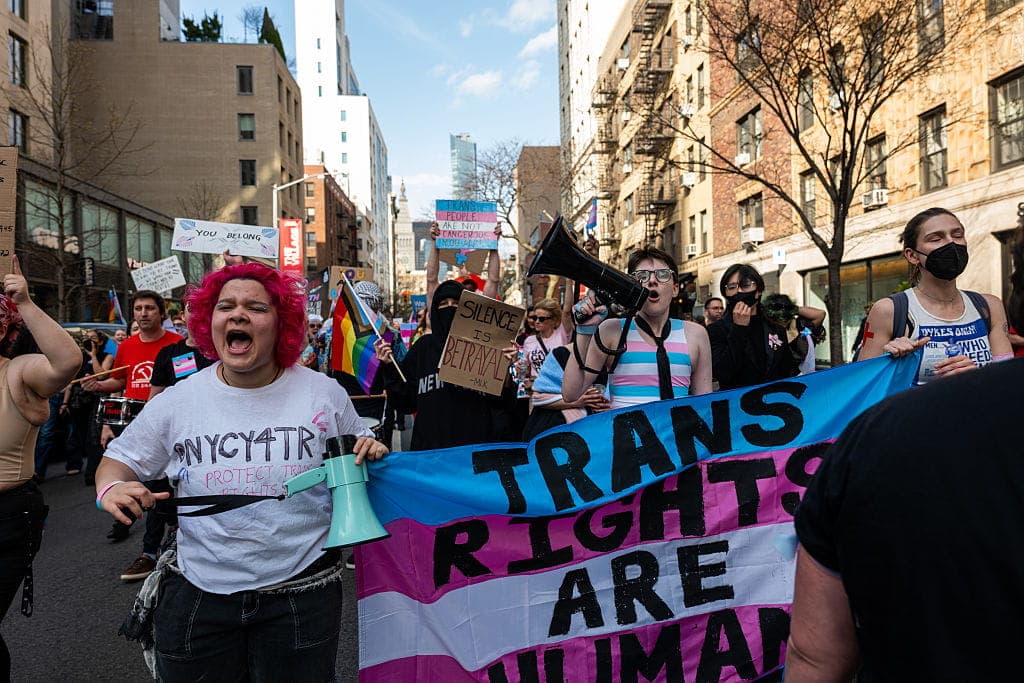
After years of legislative maneuvering around the thorny issue of transgender rights, particularly regarding sex change operations for minors and biological men playing in women’s sports, voters, rather than legislatures, will weigh in directly on those issues in a few states. Colorado’s Proposition 134 would require students from kindergarten through college to play only on teams matching their gender at birth, and Proposition 135 would ban gender-affirming surgery for minors. Those propositions came about after Colorado lawmakers rejected bills calling for the same measures, leading to the movement for a proposition to be put to the people. Washington, Nebraska, Arizona, and Missouri also put transgender rights on the ballot.
The collective outcome of these ballot initiatives will likely go a long way in determining just how explosive the issue of trans rights will continue to be. Republicans and conservatives in general are overwhelmingly opposed to genital mutilation of minors and biological men competing in women’s sports, so the outcomes in red Nebraska and purple Arizona, where the state legislatures have already banned boys from girls’ sports, are likely preordained. But since these propositions are also on the ballot in two deep blue states, we will finally get a gauge of just where millions of voters in the leftist strongholds of Colorado and Washington stand on what is arguably the thorniest cultural issue of our time.
The rights of minors to undergo a sex change, in some states without parental approval, and biological men entering women’s sports undoubtedly contributed to Donald Trump’s return to the White House. It was a potent litmus test for just how radical Democrats had become, shortly after all manner of neo-Marxist policies were adopted in the wake of the George Floyd affair in 2020. Suddenly, men could get pregnant, whiteness was equated with evil, and America was systemically, irredeemably racist and needed to be stripped down to the studs. Donald Trump was the antidote to that wokeness, as reflected in his infamous “they/them” ads that all but destroyed the electoral hopes of Kamala Harris, a narrative still being used in 2026 against several Democratic candidates.
More than a few Republicans are throwing transgender red meat at their base, particularly with regard to James Talarico. The Texas Senate candidate, when asked in a recently resurfaced podcast interview from 2023 what he loved outside of his family and friends, gave "trans children" as his first answer. While that reply was more than a bit creepy, Republicans would be wise to include some nuance in their argument by, for example, acknowledging the rights of adults, as distinct from those yet to reach the age of reason, to undergo gender reassignment surgery if they so desire. Voters don’t much care for bullies, even when they might hold the moral high ground on a particular issue.
Abortion Still Hot
During the last midterm elections in 2022, conducted in the wake of the Dobbs decision by the Supreme Court overturning Roe v. Wade, abortion was a hot-button issue for Democratic voters, who flooded the polls and allowed the party to avoid the worst of a mild red wave. This time around, abortion has largely given way to other issues that have risen to the top of the cultural agenda, primarily regarding transgenders. But the abortion measures on the ballot in several states will help clarify the developing post-Roe environment for abortion.
The most consequential of the initiatives might be in Missouri, where voters are being asked whether to repeal the state’s “right to reproductive freedom” amendment that narrowly passed in 2024. A vote to repeal the measure, which would also ban “gender-affirming” care for minors, including surgeries, would represent a significant victory for the pro-life movement. An opposite proposition is on the ballot in Idaho, which currently prohibits abortion except to save the life of the mother or in cases of rape or incest – a yes vote on the state’s Proposition 1 would establish a right to abortion. And in Virginia, which has arguably turned further left than any state in the union since the turn of the century, a proposed amendment would establish a fundamental right to abortion all the way through the third trimester. Virginia has also put forward a marriage amendment that would repeal the state’s constitutional provision defining marriage as between one man and one woman, and bar the state from denying a marriage license based on sex, gender, or race.
Election Security, Billionaires, DEI, and Guns
President Trump has repeatedly tried and failed to gin up sufficient support to pass the SAVE America Act designed to tighten election security. But six states – Alaska, Arizona, Arkansas, Kansas, South Dakota, and West Virginia – are trying to pick up the ball and run with it, voting on amendments stating explicitly that only US citizens can vote – even though noncitizen voting in federal elections is already illegal under federal law. Another six states – Arizona, California, Colorado, Nevada, North Carolina, and Ohio – are voting on ID requirements for in-person or mail voting. And in Arizona, where 75% of voters mailed in their ballots in 2024, Proposition 144 would require ID for absentee voting as well. California’s Proposition 39 would require a driver’s license or other government ID to vote.
Meanwhile, there has long been a push on the far left in California to impose a wealth tax, an unprecedented maneuver that would tax not a person’s income, but their net worth. The Golden State’s Proposition 40 would impose a one-time 5% tax on California residents worth more than $1 billion. The union backing the measure estimates it would raise about $100 billion over five years. Governor Gavin Newsom, somewhat surprisingly, leads the critics who argue the tax would drive billionaires out of the state.
At the same time, you may have thought DEI was dead and buried at least in government, so Arizona’s Proposition 142, backed by the GOP, is a bit of an odd one. It would bar the state from requiring anyone to endorse preferential treatment or discrimination based on race or ethnicity. Critics argue it’s unnecessary because the state constitution already bans racial discrimination. And finally, it wouldn’t be a midterm election without guns on the ballot. In Massachusetts, a referendum would repeal gun control laws passed in 2024. Arkansas and Idaho also have pro-gun measures on the ballot.
The primary purpose of the United States Constitution is to secure representation of all people in the 50 states. But especially, as so many feel today, when government is mistrusted by a solid majority of Americans, it is refreshing and vital that the people can occasionally speak directly to controversial issues of the day. And in 2026, voters in 39 states will have the opportunity to deliver a variety of judgments to their elected politicians. Whether it’s transgender rights, election security, abortion, guns, or squeezing more money out of the wealthiest among us, we will no longer need to guess or surmise the messages voters will be sending directly to their elected representatives.