


In just a few days, Americans head to the polls in what was supposed to be a standard, run-of-the-mill midterm election. That was until Zohran Mamdani was elected to lead the country’s largest city. The New York mayor is doing what all socialists do, which is to make pie-in-the-sky promises. And at first that’s what happens. But given enough time to brew, socialism, both the economic system and the government that uses it, unravels.
No need to take my word for it. Take a few minutes to absorb our interview with Pedro Burelli, a former board member of Petróleos de Venezuela, S.A., who was born in Venezuela. He is recognized as a leading voice for liberty and justice across Latin America and Europe.
The Crushing Reality of Socialism
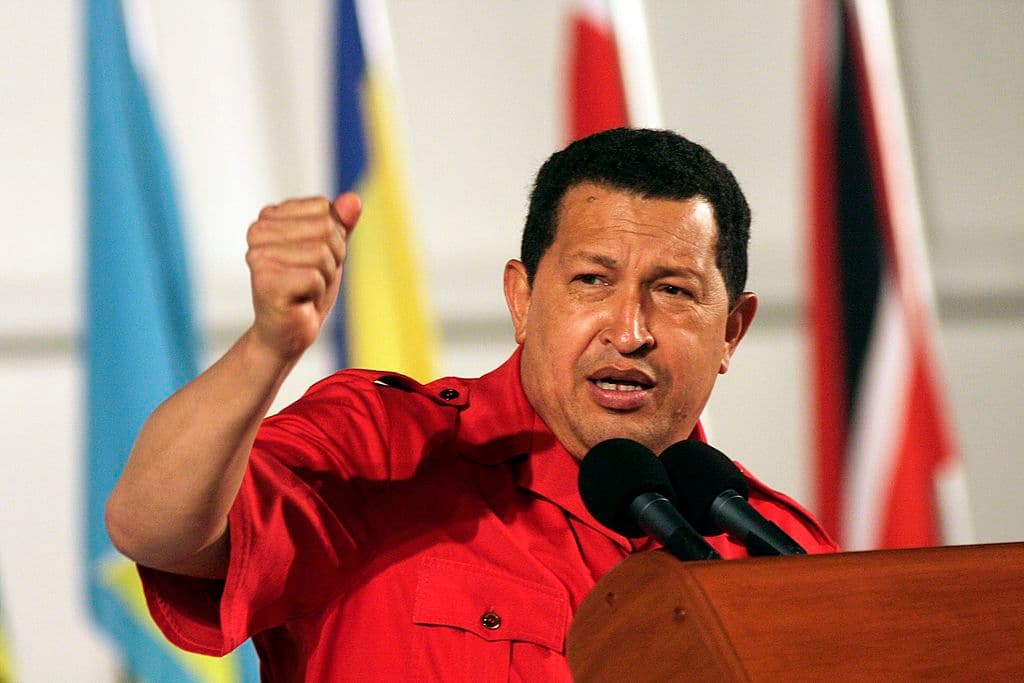
Leesa K. Donner: Pedro, in Part 1 of this series, you spoke about how socialism caught fire in Venezuela, and now we're up to the point where Hugo Chávez is in power. Can you tell us a bit about the living conditions in Venezuela during the beginning of Chávez's rule in 1999?
Pedro Burelli: Well, poverty levels had increased before he entered office, so there was a high level of frustration. Hugo Chávez won the election almost as a protest vote. In 1998, there was a huge price war between Saudi Arabia and Venezuela, so oil prices had dropped tremendously low. He comes in, and he agrees not to produce more oil, in order to not increase oil production, to help oil prices go up. As prices began to go up, things looked better, and right away you went from oil prices at $10 a barrel to $100 a barrel. Suddenly, Hugo Chávez had barrels full of money and began to buy support with that.
So, free housing, free flat-screen TVs, free refrigerators. He literally bought support by largesse. He started giving out money, and people were like, "Well, this system really works. This is great. What could be wrong with this?"
What he was doing was spending an oil bonanza irresponsibly. It was not associated with production. They were not producing more barrels of oil. There was no more employment in Venezuela. It was just more money coming in because they were selling oil at an increasing price. He took this bonanza and spent it providing people [with] what [they] were asking for. People were very, very happy, and Chávez looked all-powerful. The problem is that, in the process, he was closing private sector businesses; he was taking them over. He was defining at what price they could sell something, so putting price controls on in order to stop inflation. When these guys couldn't produce, he would just take them over, and little by little he started destroying not only food production companies but farms, then manufacturing companies. Everything started collapsing. But because he had money, he could import from our neighbor Colombia or from the United States or from Brazil. Somehow you weren't feeling the shortage because you had a very rich state willing to invest its easy oil money in maintaining the perception of abundance. For a period, people didn't see anything wrong.
LKD: We tend to think of political changes – significant ones – as a slow turn, but this was like a torrent.
Free with the Daily Briefing
85EssaysUnravel the Constitution
Hamilton, Madison & Jay’s complete case for America, free and searchable in the Publius Reader.
Free with the Daily Briefing. Unsubscribe anytime.
PB: Yeah, this was a torrent, and in the moment people said, "My God, he's solving all the problems of Venezuela, and look at this." But you knew it was unsustainable because the state was making decisions that were completely unsustainable.
It was not based on investment. It was not based on jobs. It was based on the fact that you had a very large purse that you had accumulated because you were selling oil at a very high price. What happened was that when the oil price came down, and substantially down, while expectations were very high, you could no longer deliver goods or services to the people, and people started rebelling.
This is what always happens in communism and socialism. When things do not work out – and they always stop working out because the model doesn't generate wealth; it actually destroys wealth. When that wealth is destroyed, and people start protesting, what comes next? Coercion. The state starts squashing protests and jailing the people who are protesting. You make life very difficult for anybody who's criticizing you. You start censoring the press because you want to hide the reality you've created.
The Collapse
In Part 3 of this Liberty Nation News Special Report: Socialism: A Living Hell, an economic collapse was taking over the country, and Hugo Chávez began to suppress those citizens who were protesting his regime. Chávez clamped down on free speech and the free press. Meanwhile, average Venezuelans were finding it more and more difficult to maintain their lifestyles and began sinking into poverty.
~
Take a sneak peek at the video series that accompanies this report.