



Health-conscious Americans face an almost bewildering onslaught of revelations that products or substances they were told were safe turned out to harbor hidden health threats. Glyphosate and other agricultural chemicals may cause cancers or reproductive disruptions. Microplastics abound in human organs. Cellphone radiation may cause brain and other cancers. Teflon frying pans are just one of tens of thousands of products now revealed to be coated with endocrine-disrupting “forever” chemicals. A recent study suggests a new cancer culprit may lurk in techniques using frozen embryos to help couples facing fertility challenges.
Frozen Danish Embryos
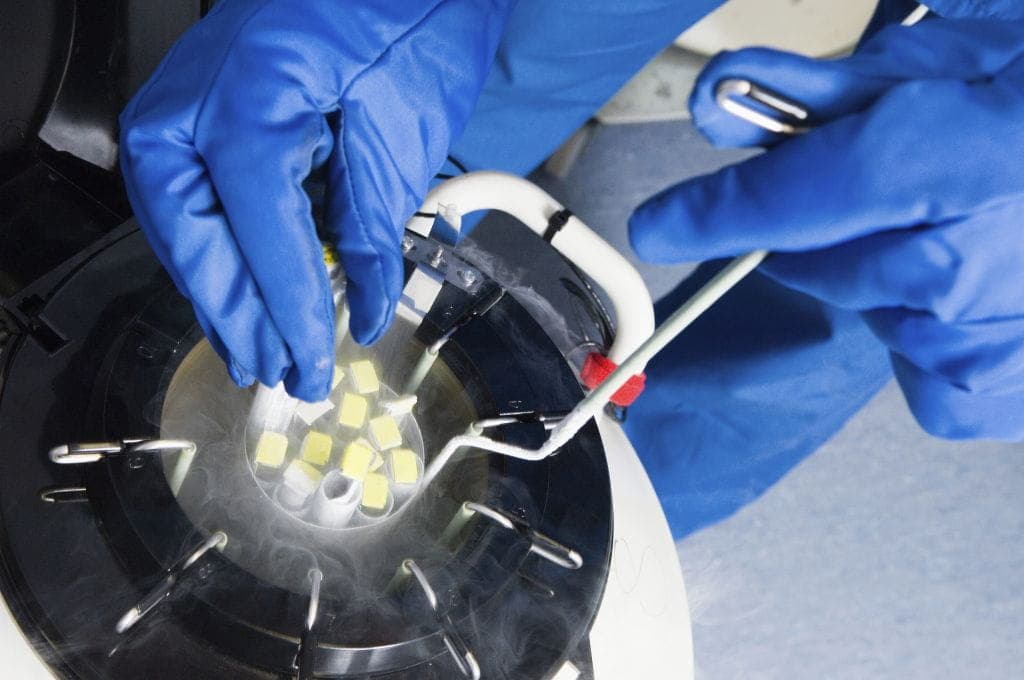
The study of Danish children over 20 years old is unprecedented in its size and duration and reveals a significantly higher rate of later childhood cancers in children born using assisted reproductive technology (ART). Because Denmark maintains detailed child records that include fertilization techniques, researchers tracked 1,086,136 Danish children from 1996 to 2012 and identified 3,736 cancers. The study determined that ART-conceived babies showed a cancer incidence of 23.6 per 100,000 person-years, compared to a rate of 18.3 for their naturally conceived peers. Those rates doubled (to 41.1 per 100,000) in children born of frozen embryos and also increased (to 27.9 per 100,000) in children following intracytoplasmic sperm injection (ICSI).


Free with the Daily Briefing
85EssaysUnravel the Constitution
Hamilton, Madison & Jay’s complete case for America, free and searchable in the Publius Reader.
Free with the Daily Briefing. Unsubscribe anytime.
Notably, children born from fresh embryos showed no deviation from the baseline cancer rate. Also, the researchers conducted a secondary analysis of the children with a history of maternal infertility, suggesting that procedure-related, and not fertility-related, factors were causative.
Prior studies had suggested a potential connection between in vitro fertilization (IVF) and cancer rates when frozen embryos were utilized. A 2022 study of nearly 8 million Scandinavians (representing all children born between the years 1990 to 2014 in Finland, 1994 to 2014 in Denmark, 1984 to 2015 in Norway, and 1985 to 2015 in Sweden) found an elevated incidence rate of cancer of 19.3/100,000 person-years for children conceived via ART versus 16.7/100,000 among those born after spontaneous conception. A 2023 study found the risk of major malformations in live-born singletons was higher for fresh ICSI compared with fresh IVF.
A Tale of Sperm and Egg (in a Petri Dish)
Both procedures are performed in the laboratory and aim to fuse nuclei to create a viable embryo. Conventional IVF consists of introducing millions of sperm into an IVF petri dish, mimicking the natural process without further human involvement. In ICSI, an embryologist selects a single sperm and introduces it into a prepared egg using a microinjector. Each egg must be prepared by removing the cumulus cells that surround it through a process called decumulation, which breaks down the cumulus cells using hyaluronidase.
Understandably, all of that sounds highly technical and like science fiction, tampering with creation in technologies such as CRISPR, gene editing, mRNA vaccines, GMO crops, and anthrobots. The intimate world of human reproduction is just one more frontier for potentially Icarus-like overreach.
From Liberty Nation News, Trivia, Facts, Check Us Out
Stay informed.
Today’s news, the Constitution and American history, written for young readers.
Visit GenerationLiberty.com
It is important to note that, while statistically significant, these overall cancer rates remain very low, and that while this and other studies demonstrate a clear connection between the use of frozen embryos and future cancer rates, causation has not been established. Further study is warranted, but the foregoing research suggests that freezing embryos and the more invasive ICSI procedure may be causative risk factors. A 2022 Newsweek article headlined “Kids Born From Frozen Embryos More Likely to Develop Cancer: Study” speculated, “Chemicals used in the thawing process could cause genetic changes that trigger tumors.” Perhaps the ICSI procedure introduces additional chemical exposures.
The stakes rise yearly as human fertility rates (and male sperm counts) steadily drop, more fertility practitioners favor ICSI over IVF, and higher percentages of pregnancies are conceived using frozen embryos. Moreover, there are numerous other risks to both child and mother presented by IVF rather than natural conception.
Like electromagnetic radiation, vaccine safety, microplastics exposure, and the causes of childhood autism, more study is needed to determine the origin of higher rates of childhood cancer for babies grown from frozen embryos. For couples who do not struggle with fertility challenges, the natural way is probably a healthier bet than freezing future progeny in a test tube.