


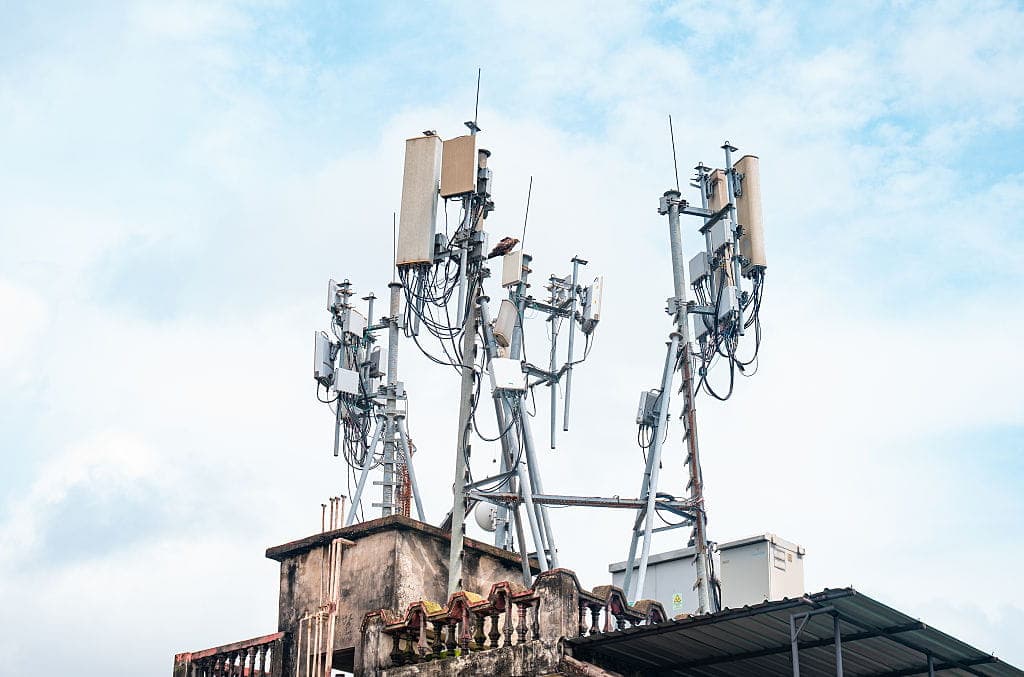

For decades, some Americans have claimed they are sensitive to electromagnetic radiation from cellphones, cell towers, power lines, or electrical devices. Industry and many Americans have dismissively labeled these as “tinfoil hat” conspiracies backed by zero evidence. But it’s not that simple. Much like vaccine injuries, illegal voting, and food additives, the industry at large has spent decades not looking for any evidence. Health and Human Services (HHS) Secretary Robert F. Kennedy, Jr. recently announced that this is all about to change.
Regulatory Integrity Under RFK Jr.?
On September 17, HHS launched an effort to seek public input on electromagnetic fields and wireless radiation through a formal Request for Information (RFI). Requests for Information are official notices the agency issues periodically to solicit public input on specific scientific, policy, or regulatory topics, including from physicians and researchers. The deadline for public comments about the potential harms of these technologies was October 21, 2026.
The investigation into potentially harmful radiation specifically seeks “information on RF/EMF exposures associated with mobile phones, Wi-Fi, smart meters, wireless infrastructure, wearable technologies, wireless medical devices, 5G, 6G, satellite communications, Internet of Things devices, smart homes, smart cities, autonomous vehicles, and other emerging technologies.”
That’s a long list, for which HHS seeks health experiences from individuals and physicians, information about existing international standards, methods of measurement and assessment, and details about potentially sensitive human populations, especially “children, pregnant women, older adults, people with implanted medical devices, workers with elevated occupational exposure, and people with preexisting medical conditions.”
Technomysticism vs Healthy Skepticism
The twenty-first century has ushered in what might be called a sociological epiphany: Not all technological advances are worth the bargain. This splintering of faith in so-called “real science” is ubiquitous and unavoidable. Americans have learned that plastics once marketed as salvific are saturating the ecosystem, especially Earth’s oceans, with microplastics that are being woven into human hearts, lungs, brains, and reproductive systems. Non-stick frying pans were all the rage decades ago; now rage is directed at wells tainted with per- and polyfluoroalkyl substances (PFAS). Gasoline causes cancer. Lobotomies didn’t turn out so well, either. And let’s not forget the utterly discredited pseudo-scientific pandemic claims that porous masks block minuscule viruses, that the gain-of-function creation actually came from a wet market, and that rushed experimental mRNA vaccines were better than natural immunity and caused no serious injuries.
From Liberty Nation News, Trivia, Facts, Check Us Out
Stay informed.
Today’s news, the Constitution and American history, written for young readers.
Visit GenerationLiberty.com
At this juncture in time, Americans cannot be blamed for embracing a healthy dose of skepticism toward scientific claims – which was once considered a fundamental component of the scientific process. They might better be faulted for the cognitive dissonance of denial. For years, geoengineering was sneered at; now it is openly admitted. Microplastics are everywhere, and there is no talk of a return to glass containers. In the company of such historic technological hidden costs, the prospect that electromagnetic radiation may be harmful is not that absurd. But the history of how this potential risk has been swept under the carpet is plain as every other regulatorily captured day.
Federal agencies have thrown their collective regulatory hands in the air on radiation injuries. The CDC claims: “There is no scientific evidence that provides a definite answer to the question [whether using a cell phone can cause cancer] .... More research is needed before we know if using cell phones causes health effects.” Yet this statement is itself a smoking gun – shouldn’t Americans know about the safety of a product, whether a cellphone, vaccine, or food additive, before exposing themselves and their children to it?
US vs the World
The US stance on electromagnetic radiation exposure mirrors the FDA’s Generally Recognized as Safe (GRAS) label, which permits food makers to incorporate novel chemicals into Americans’ food as long as they’re generally recognized as safe – something companies can self-affirm without notifying the FDA. This lets thousands more chemicals into the US food supply than the European Union allows. There, additives must be tested for safety before European children become corporate guinea pigs.
So what is the truth about electromagnetic radiation that the CDC confesses it does not know? Of the studies that have been conducted, many suggest some of these forms of radiation could be very harmful, especially for “vulnerable” populations, including children and pregnant women. In a 2022 review of existing scientific literature on the effects of cell tower antennas on humans, biologist Alfonso Balmori wrote: “Overall results of this review show three types of effects by base station antennas on the health of people: radiofrequency sickness (RS), cancer (C) and changes in biochemical parameters (CBP).”
Environmental Health News’s summary of Balmori’s review concluded that “73.6% of reviewed studies reported human health impacts associated with higher exposure to the radiofrequency (RF) radiation emitted from cell antennas near homes and schools.” Also, the International Agency for Research on Cancer classifies radiofrequency (RF) radiation as “possibly carcinogenic to humans” based on evidence of a possible increase in brain tumors among cell phone users.
Radiation Nation?
Robert F. Kennedy, Jr. ran his political campaign on claims that US regulatory agencies were "captured" by special interests. Now Americans are told (by the US Supreme Court in Monsanto Co. v. Durnell, backed by the Trump administration) that they don’t have the right to sue for not warning about the dangers of chemicals like glyphosate that the EPA doesn’t require on the label, even if they have scientific proof of causation. That mirrors the Telecommunications Act of 1996, which created something of a de facto legal shield for telecommunications companies by preempting state law claims for personal injury allegedly caused by electromagnetic radiation.


A lawsuit filed by the Environmental Health Trust and Children’s Health Defense in 2020 resulted in a federal court decision finding that the Federal Communications Commission (FCC) had failed to protect human health by dismissing scientific evidence of the harm from wireless radiation, stating, “we find the Commission’s order arbitrary and capricious in its failure to respond to record evidence that exposure to RF radiation at levels below the Commission’s current limits may cause negative health effects unrelated to cancer.” This strongly confirms Kennedy’s campaign-trail alarms about regulatory capture. As HHS Secretary, he seeks to uncover what his predecessors have hidden for corporate America.
Remember when the federal government told Americans that (highly profitable) margarine is healthier than butter? Americans know full well that microwave radiation can cook an egg to a black lump; could widespread or unfiltered 5G or other radiation also slowly cook a child’s brain, mutate DNA in a young couple’s sperm or eggs, or adversely impact the microbes in human guts? Under its recent RFI, Robert F. Kennedy Jr.’s HHS wants to know.