


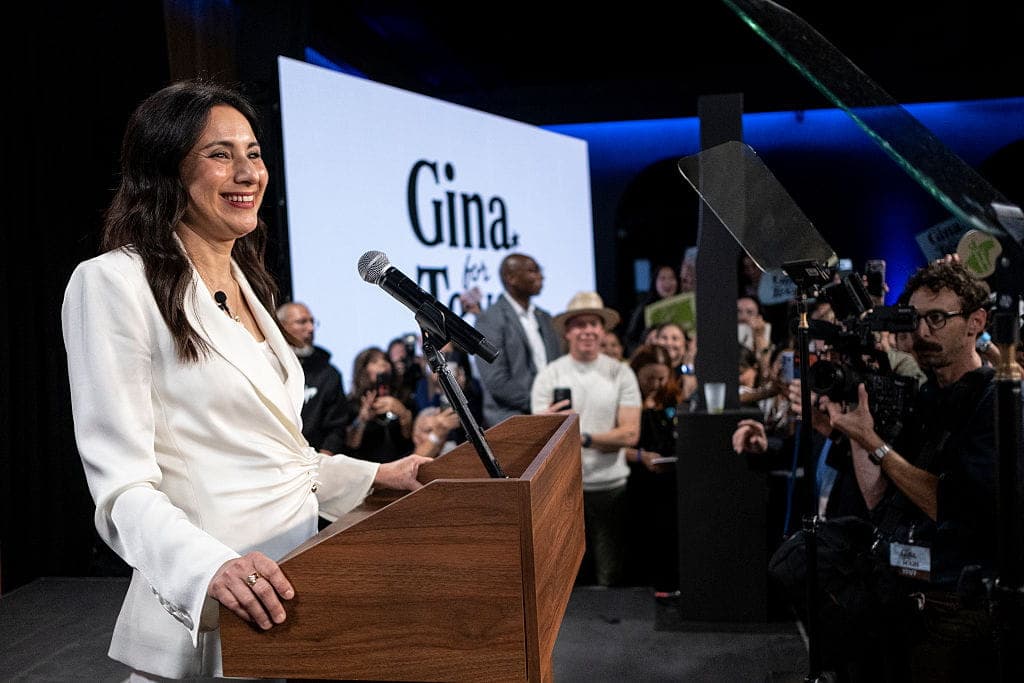

The media is rife with headlines about Democrats flipping both chambers of Congress – especially the Senate. But is the blue wave washing over the Swamp really the big news? Yes, Republicans losing both chambers means no more Trump-friendly reconciliation bills or Trump appointees being rubber-stamped into office. But how much more can the now-blue Congress really accomplish? Without a two-thirds majority to overrule Trump’s inevitable vetoes, there isn’t a lot they can do but posture and hope that, come 2028, they’ve managed to impress voters enough to take the White House while keeping Congress.
Perhaps the bigger news is what happened at the state level on election day. Democrats managed to flip the governorships of five Republican-led states – and are currently leading in two more that still haven’t been called. For the first time in 16 years, more states will have Democrats for governor than Republicans. But the blue wave washed even farther down the ballot than that, and life may soon be quite different for these soon-to-be formerly red-state residents.
Red States Under the Blue Wave
In the Lone Star State, Democrat Gina Hinojosa trounced three-term incumbent Republican Greg Abbott for governor. Republicans have painted her as radical and woke, though she has fought back by focusing on economic issues. But a look at On the Issues or at her own campaign material and legislative voting record shows that she wants to end school choice and homeschool funding, supports restrictive gun control, supports unfettered abortion access and trans/LGBTQ+ “rights,” and wants to expand ObamaCare into healthcare for all while taxing the rich to send out stimulus checks.


Free with the Daily Briefing
85EssaysUnravel the Constitution
Hamilton, Madison & Jay’s complete case for America, free and searchable in the Publius Reader.
Free with the Daily Briefing. Unsubscribe anytime.
That sounds pretty radical and woke for the Lone Star State.
But a look down the ballot shows just how far things have gone. Every statewide office under the governor also went to the Democrats, as did every judicial election on the ballot – including four Texas Supreme Court seats that are presently red but won’t be as of January. Republicans managed to hold on to the state Senate, though with a reduced majority, but Democrats took the state House. This coming session will be the first time Democrats control the Texas House since Republicans took it after the 2002 election.
Life may soon be radically different for the people of Texas.
It’s a similar story in the Peach State. Progressive Keisha Lance Bottoms won the governorship, and while the Republicans held on to the state Senate, they lost their supermajority, and Democrats did take the House. In Ohio and Iowa, Republicans managed to keep both chambers of the legislature despite losing the governorships, but lost their supermajorities in both state houses.
In Nevada, Democrat Aaron Ford has unseated incumbent Republican Governor Joseph Lombardo. Like in Texas, Nevada Democrats won all statewide offices. They took seven of the 11 state senate seats, leaving the exact 13-8 lead they had before the election. Meanwhile, in the state assembly, Democrats picked up another five seats, bringing their lead from 27-15 to 32-10. Not a massive change here, but Democrats in the state assembly once again have a friend in the governor’s mansion to make their legislative dreams come true.
The Shift in Power
The change was perhaps the least profound in Nevada, which didn’t have a GOP legislative majority to break or weaken, and only a single term of red leadership in the governor’s mansion. Iowa and Ohio, on the other hand, now have Democratic governors for the first time since Republicans Terry Branstad and John Kasich, respectively, defeated their Democratic predecessors in 2010.
And Republicans in both states lost their bicameral supermajority, which could have allowed them to overturn any blue vetoes. This will almost certainly make a legislative difference moving forward.
In Georgia, Tuesday’s results marked a return to Democratic control for the first time since Sonny Perdue won in 2002, becoming the first Republican governor there since Reconstruction. And in Texas, Republicans have held the office of governor since George W. Bush took it from Democrat Ann Richards after the election of 1994.
While this likely won’t result in a flood of progressive laws – except, perhaps, in Nevada – it will mean an effective end to the GOP legislative agenda in the other four.
2028 and Beyond
Life will look different for the residents of these five states, there’s no doubt about it. It is at the state level, far more than the federal, that individual laws make the most change in the lives of each individual. And after this election, that seems likely to hit Texas harder than even the other four flipped states.
But what about 2028?
At the federal level, Democrats winning an impotent majority in Congress actually seems likely to be detrimental. When the 2028 elections roll around, they will have two years of failure at making radical changes to positively affect the way this nation is run – especially when it comes to the cost of living. Now, it won’t be their fault, necessarily, that they can’t pass bills through Trump in his lame-duck veto phase. But the average voter won’t care.
From Liberty Nation News, Trivia, Facts, Check Us Out
Stay informed.
Today’s news, the Constitution and American history, written for young readers.
Visit GenerationLiberty.com
Indeed, Democrats might have done themselves a favor come 2028 had they lost in the midterms this year – with one massive caveat that should terrify Republicans.
According to the National Archives, the four largest states by electoral vote are California with 54, Texas with 40, Florida with 30, and New York with 28. The next closest two are Illinois and Pennsylvania with 19 each, and it only goes down from there.
California and New York are almost guaranteed to bring a combined 82 electoral votes for whoever Democrats happen to run for president in 2028, regardless of candidate quality in either party. Florida has backed Trump in all three elections since 2016 and seems likely to stay red in 2028. And Texas has backed the Republican candidate since Ronald Reagan in 1980.
But can Republicans survive 2028 if the red state of Texas is now deep blue and those 40 electoral votes join the blue walls along the coasts?