

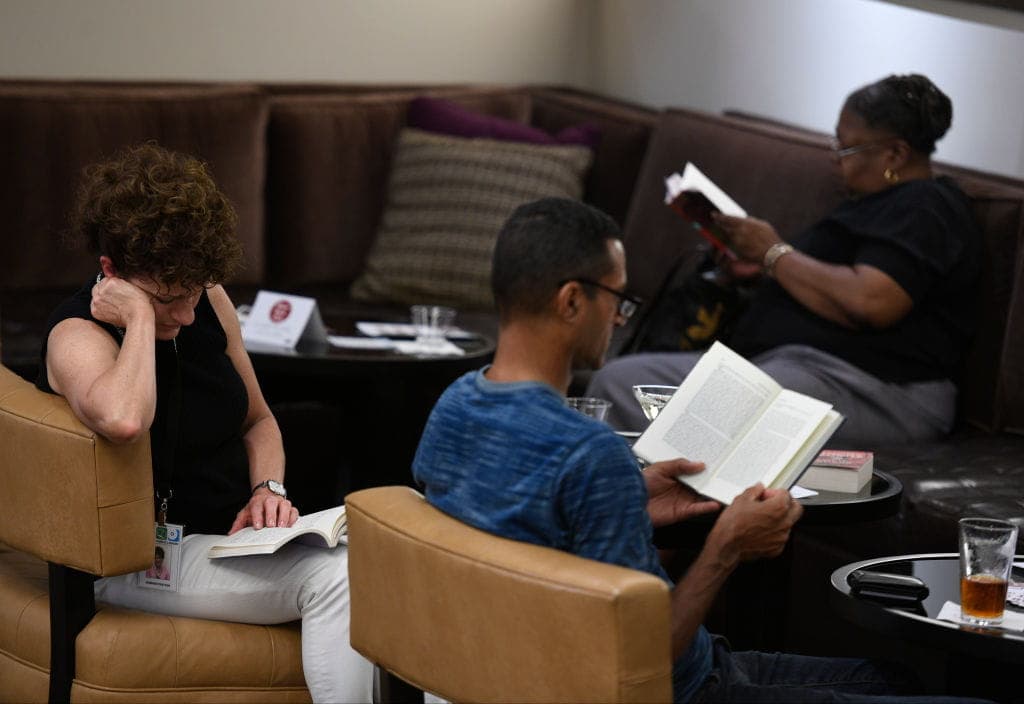

Reading is making a comeback. This is a declarative statement supported by various surveys and trends indicating a real revival. The public is ostensibly aware of the “brain rot” associated with hours of scrolling on social media. People are uninterested in the vast volume of content options on streaming platforms. As cliché as it might seem, individuals want to cozy up by the fire in a comfortable chair, with a good Dostoevsky novel and a cup of coffee.
Reading Is Making a Comeback
When was the last time you read a book from front to back?
Recent data from the American Booksellers Association found a 31% jump in new independent bookstores opening in 2025. The US Chamber of Commerce has noted that Barnes & Noble's share of visits lasting at least 45 minutes rose to 27% in 2024, up from 24% in 2021, as it embraced a “books-first” approach.
Book clubs have become the hottest new social scene, driven by Generation Z and Millennials, with approximately five million Americans belonging to one.
“Book-maxxing” has become a social media trend as people plan to up their game in the number of books they consume. A corner of X is dedicated to users sharing their love of reading as much as they can, with a particular focus on the classics, whether Homer’s Odyssey or Dumas’ The Count of Monte Cristo.
This is a terrific turn of events in a world dominated by algorithms, Androids, and Apple. What makes this development even more special is that it is apparently being led by younger generations, the ones whose attention spans have been decimated by short-form content and other vacuous forms of entertainment.

It is like the classic Groucho Marx joke: “I find television very educating. Every time somebody turns on the set, I go into the other room and read a book.”
The social phenomenon could also be an effective tool for enhancing comprehension or encouraging others to dive into a book. National University estimates that a fifth of US adults are considered functionally illiterate. One-quarter of 16- to 24-year-olds read at the lowest literacy level, according to the National Center for Education Statistics. Now, if only government schools would do their part, listen to the science, and return to basics: paper, pencil, and physical books.
Just Do It
If you are one of these individuals trying to increase your minutes or hours of daily reading, you will inevitably come across the naysayers.
For example, critics contend that much of the reading renaissance is performative. In other words, individuals are using a book penned by Leo Tolstoy or Marcel Proust as a social accessory, presenting themselves at local coffee shops as intellectuals. However, even if this were true, being exposed to even a page of literature is superior to five minutes of Instagram Reels or TikTok clips.
The research is definitive: Scrolling diminishes your brain power as it seeks quick dopamine hits, while reading builds focus, memory, and patience.
From Liberty Nation News, Trivia, Facts, Check Us Out
Stay informed.
Today’s news, the Constitution and American history, written for young readers.
Visit GenerationLiberty.com
News, Trivia, Facts, Check Us Out
Stay informed.
Today’s news, the Constitution and American history, written for young readers.
Visit GenerationLiberty.com
Of course, based on various studies, how you read does matter to the efficacy of this widespread resuscitation. If you truly wish to consume William Shakespeare's soliloquies and Roald Dahl’s foreshadowing, paper is best. A wide array of studies conclude that our brains process paper reading differently from digital reading. Physical books boost comprehension by as much as eight times, turning pages creates an "index,” and even holding a book carries advantages.
Another roadblock might be not knowing where to begin. This is a common concern among those who may have been exposed only to Goosebumps or Harry Potter as children. However, by visiting a brick-and-mortar bookstore, you will inevitably come across a shelf that catches the eye. Penguin Classics’ beautiful black-and-red covers with classical artworks will likely be the culprit!
Winning for Culture
Ray Bradbury, author of Fahrenheit 451, said: "You don't have to burn books to destroy a culture. Just get people to stop reading them." It is no secret that culture is suffering a gradual decay, an erosion that has coincided with fewer people reading books. Other art forms have endured the same deterioration: Visual art is defined by a banana taped to a canvas, and Taylor Swift is now synonymous with music.
But all hope is not lost.
Now that reading is making a comeback, perhaps society will also become fixated on classical music by listening to J.S. Bach, learn that beauty is objective by viewing a Bernini sculpture, or that English is the world’s greatest language by watching a Shakespeare play. America is attempting to be physically healthier, but is it becoming mentally and cognitively healthier as well?
Perhaps success will be when the average person can say to someone else: “Shall I compare thee to a summer’s day?”





.jpg&w=1920&q=75)