


Politicians so often treat election results as a mandate from the public – and so often they are, though they don’t always mean what the politicians seem to think they mean. In any case, while the government of our republic was designed to represent the people it governed – the Constitution begins with the words “We the People,” after all – it was never designed to be ruled by the fickle whims of the popular majority in the moment.
The Founding Fathers were in fact quite careful to avoid the pitfalls of direct democracy. This is a distinction that must be made, from time to time, as it seems people both in and out of government service frequently forget it. So often we hear things like the Electoral College and the slow, sometimes clunky legislative process called undemocratic. Well, yes, they are – and that’s a feature, not a bug. In fact, the process was built specifically around that idea. It’s not just a feature; it’s the core purpose behind the entire design.
The Disaster of Direct Democracy
To understand why the Founding Fathers were so against the idea of pure democracy, let’s go back in time to the ancient Greek city of Athens. As Thucydides wrote in the third book of his History of the Peloponnesian War, the city-state of Mytilene rebelled – unsuccessfully – against Athenian rule. After Athenian forces put down the rebellion, the enraged citizen assembly of Athens voted to execute all the men and enslave all the women and children. A war galley was dispatched across the Aegean Sea with the order.
Overnight, that rage cooled, and the people regretted the cruelty they had authorized the day before. An emergency second assembly was called, and the people narrowly reversed the kill order.
Athens launched a second ship to race across the sea and stop the slaughter. The crew rowed day and night and arrived not long after the first ship, just as the commander was reading the decree aloud and preparing to carry out the grim orders.
And that isn’t the only example: In 406 BC, the Athenian assembly condemned the generals who had won a naval battle for failing to rescue survivors in a storm. Despite being illegal under Athenian law, they tried the generals as a group and had six of them executed. Athens then quickly regretted the decision and turned instead on the men who had pushed the initial prosecution.
Then there’s Socrates, who was tried and convicted for impiety and corrupting the young. He was condemned to death after a single day of trial. Tradition holds that the people of Athens soon regretted that decision as well, prosecuted the men who prosecuted Socrates, and then erected a bronze statue of him – fat lot of good it did Socrates, of course.
The Founders’ Designs, in Their Own Words
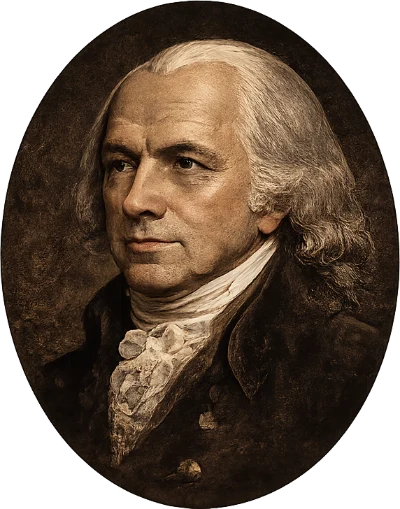
The Founding Fathers absolutely knew these stories, and they referenced them in the Federalist Papers. In Federalist 63, James Madison wrote: “What bitter anguish would not the people of Athens have often escaped if their government had contained so provident a safeguard against the tyranny of their own passions?”
“It adds no small weight to all these considerations, to recollect that history informs us of no long-lived republic which had not a senate,” he continued. “Sparta, Rome, and Carthage are, in fact, the only states to whom that character can be applied.”
In Federalist 55, he wrote:
“In all very numerous assemblies, of whatever character composed, passion never fails to wrest the scepter from reason. Had every Athenian citizen been a Socrates, every Athenian assembly would still have been a mob.”
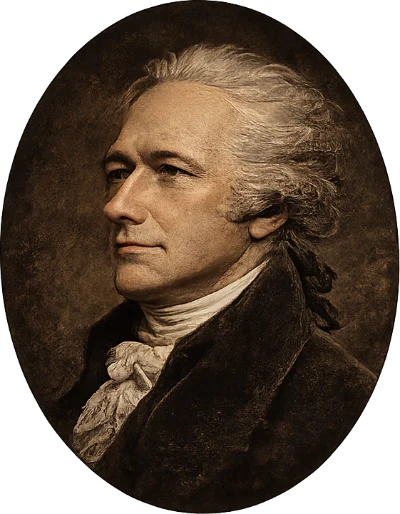
So how would the Founders prevent such folly in their own republic? “Ambition must be made to counteract ambition,” Madison wrote in Federalist 51. Here, he laid out the necessity of a bicameral Congress. In Federalist 73, Alexander Hamilton takes that idea a step farther in defense of the presidential veto, saying that the risk of occasionally blocking a good bill is far outweighed by stopping “an improper or wicked project” hastily passed by a heated legislature.
The Constitution’s Core – A Republic, If You Can Keep It
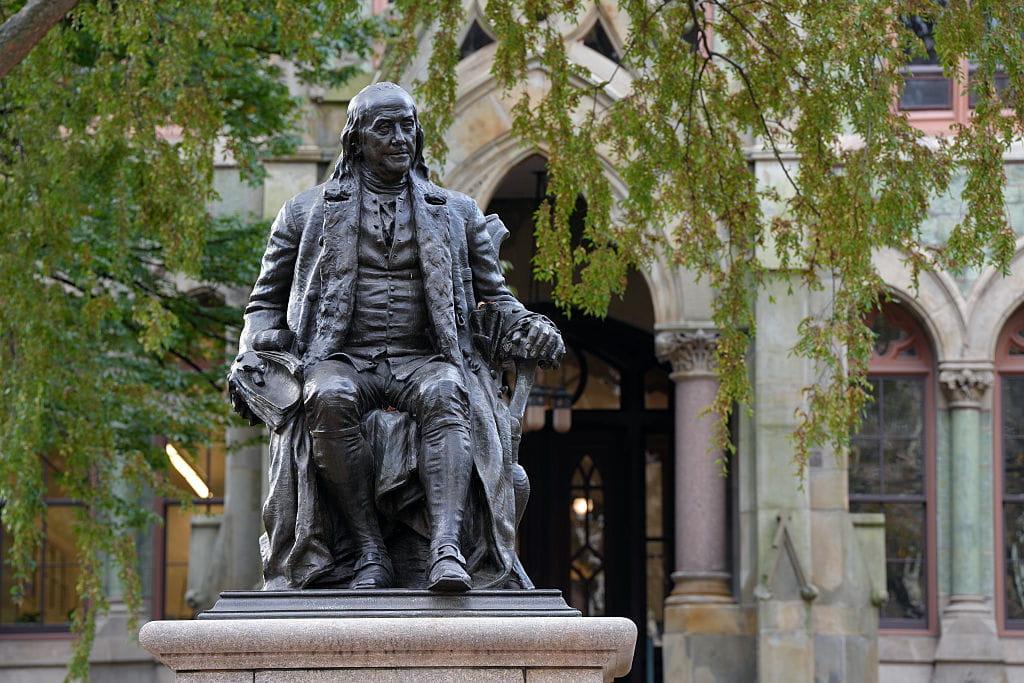
When the Constitution was complete, what had the Founders wrought? In the famous words attributed to Benjamin Franklin, “a republic, if you can keep it.”
Article I of the Constitution established a House of Representatives, the delegates of which are elected by the people in their districts in their states every two years. It’s the nod to direct democracy – the right of the people to be represented in Congress and to hold their representatives directly accountable to their will.
The Senate, on the other hand, was designed to be a slower, more deliberate body. Senators must meet a higher minimum age for service than members of the House; they serve six-year terms rather than two, and the elections are split into thirds so that two-thirds of the Senate is never at risk of the popular outrage of the moment during any given election. Before the 17th Amendment of 1913, in fact, it was even more insulated. Initially, the members of the Senate were elected by the legislatures of their states rather than by popular election. In this way, they were held even more above the possible outrage of a momentary movement.
From Liberty Nation News, Trivia, Facts, Check Us Out
Stay informed.
Today’s news, the Constitution and American history, written for young readers.
Visit GenerationLiberty.com
The House represented the people directly in smaller groups and more in the moment, while the Senate represented the interest of the people of each state as a whole and for longer terms. To reference once again Madison’s words in Federalist 51, the lawmakers in both chambers had different purposes, different “ambitions.”
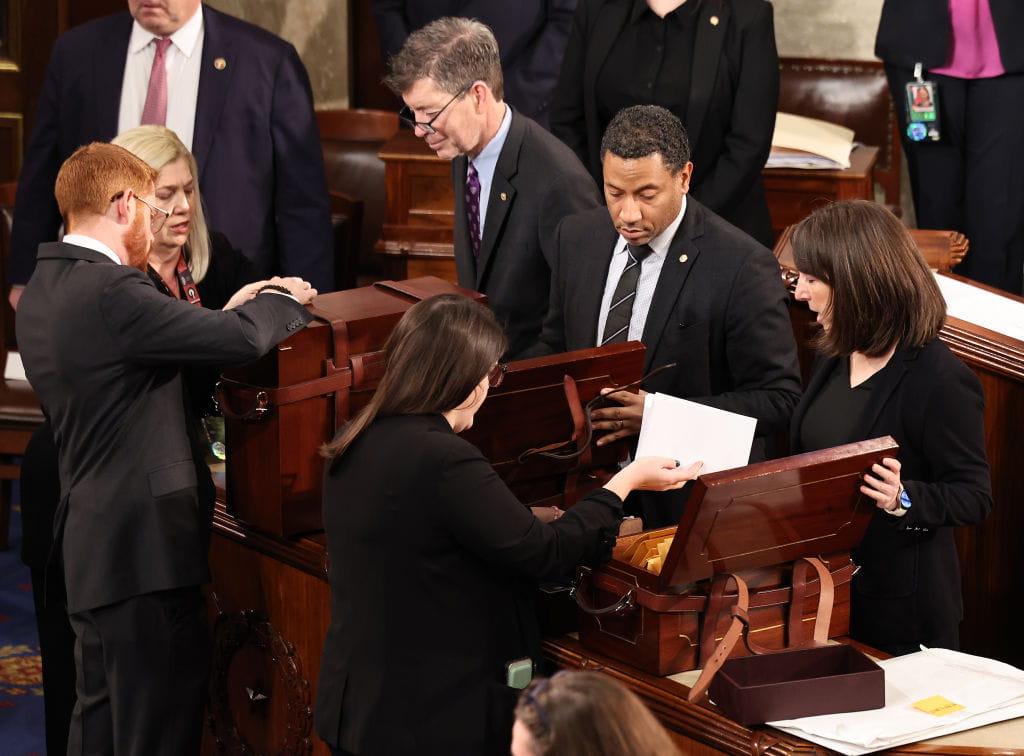
Then there’s the presidency. Every four years, a president and vice president are elected, not by a national popular vote, but by electors determined by each of the states. In the legislative process, a bill must achieve a majority of votes in the House and the Senate, then be signed into law by the president. Should the president dislike a law, he can veto it – and, to further involve the executive, the vice president serves as a tie-breaking vote in the Senate. Even that is not the final check, of course. To protect against the president having the power of a king, a two-thirds majority in each chamber of Congress can override even his veto.
The Founding Fathers saw the folly of ancient democracies and monarchies alike and crafted a government that would safeguard the people against both. Yes, the legislative process is slow. It’s cumbersome and often awkward, and conflict between the priorities of the three parties involved frequently stalls the process. But that’s the whole point. It’s the very framework the Founders intentionally built. And everyone who complains about it when their own party rules the Swamp is quite thankful for it whenever their people are in the minority instead.