


A big reason Democrats did so well in the 2026 midterms was that so many young voters who supported President Donald Trump in 2024 defected or stayed home. Republicans lost more support among Gen Z than any other age group, according to a recent poll by J.L. Partners. A New York Times analysis shows a 34-point swing in favor of Democrats among voters aged 18 to 29, a somewhat surprising number since several pundits said after the 2024 election that Gen Z’s rightward lurch was a cultural realignment that could last years. Now, some leftists are calling 2024 an aberration, saying Gen Z and young millennials who supported Trump’s 2024 bid for the presidency have finally come to their senses and returned to their home on the left side of the political spectrum. That’s a convenient explanation if it aligns with your politics, but it may be wishful thinking.
The Gen Z Pendulum
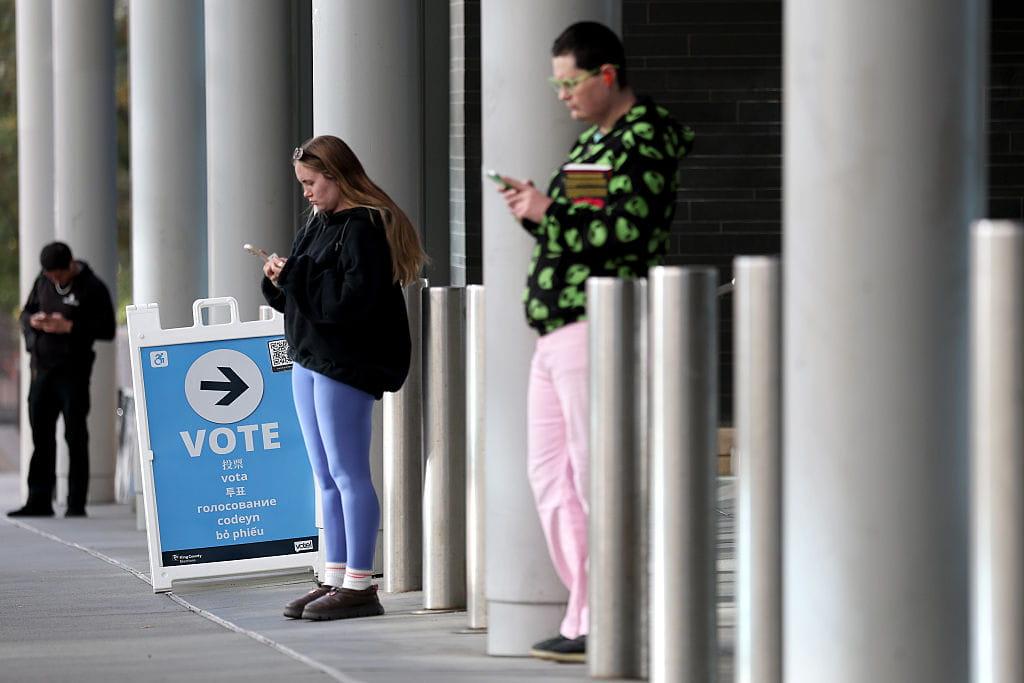
In the 2024 presidential election, Trump won a larger share of voters under 30 than any Republican presidential candidate in nearly two decades, winning men under 30 by a 14-point margin, according to a Tufts University analysis of AP VoteCast data. By early 2025, MAGA seemed to have gone from countercultural to mainstream, especially among young adults. A deluge of articles highlighted Trump’s new coalition, using words like “edgy,” “hip,” and “unapologetically authentic.” But the tide has apparently turned. This year, 59% of young men voted for Democratic House candidates, compared with 37% for Republicans, with 66% of voters under 30 backing them, per Tufts.


Free with the Daily Briefing
85EssaysUnravel the Constitution
Hamilton, Madison & Jay’s complete case for America, free and searchable in the Publius Reader.
Free with the Daily Briefing. Unsubscribe anytime.
Gen Z was a vital part of the coalition that flipped several GOP-held Senate seats. In Mississippi, 76% of voters under 30 voted for Scott Colom, who narrowly defeated GOP Sen. Cindy Hyde-Smith. Tufts’ analysis shows young adults in North Carolina, Ohio, South Carolina, and Texas (all states where Senate seats flipped) broke for Democratic candidates at a higher rate than they did in reliably blue Oregon.
In South Carolina, Clemson College Republicans were shocked that the state had elected a Democrat to the Senate, “an occurrence unprecedented in their lifetimes,” as New York magazine put it. “On the other hand, this is what they wanted.” Some in the group skipped the ballot box, while others voted for Democrat Annie Andrews, not because of her policies but because they were “punishing the president for abandoning his nationalist-populist project,” the magazine noted.
Notably, the Clemson group is not representative of the entire demographic, but its outlook and recent voting behavior may reflect a wider phenomenon.
The Free Agent Generation
One can understand the temptation to call Gen Z’s massive shift a realignment. After all, similar words and perspectives are widespread in commentary after one party trounces the opposition, even though history has repeatedly shown how volatile the electorate can be and how often it votes against one party rather than for the other. Perhaps real realignments happen on Capitol Hill – when a party in power changes course and focuses on issues incompatible with voters’ concerns. Whatever the cause, Gen Z appears less attached to party affiliation than its elders.
Gallup shows that 56% of Gen Z adults identify as independents, more than any other age group. In 1992, 40% of Gen X adults identified as independent, and 20 years later, 47% of millennials put themselves in the same category. A pattern seems to be emerging, one that suggests the days of rigid partisanship might be fading. What happens if the next generation follows in Gen Z’s political footsteps and the electorate becomes more detached from political parties as older, more partisan voters die?
From Liberty Nation News, Trivia, Facts, Check Us Out
Stay informed.
Today’s news, the Constitution and American history, written for young readers.
Visit GenerationLiberty.com
Of course, if either party can persuade young adults and then deliver on promises to improve economic prospects, one could lock in this crucial voting bloc for longer than two years. Still, any coalition built with this group will likely be fragile and highly conditional.
Maybe Democrats could win over some young independent voters in the next two years and broaden their base, but the more likely scenario is that they will overpromise and underdeliver, a habit both parties share, and one reason we appear trapped in a perpetual doom loop. Democrats already seem to be veering away from the affordability agenda that so many candidates boasted about while campaigning, setting the stage for another potential repudiation at the ballot box in 2028.
If anything, Gen Z’s swing to the left is a good reminder that there are no permanent victories in politics. While the country may look largely blue on an election map, maps can be as misleading as victory itself, especially if the victor mistakes backlash for vindication and treats it as a new coalition. Democrats who read the 2026 election outcome as a mandate could discover later that they were just the latest beneficiaries of voters’ disappointment.