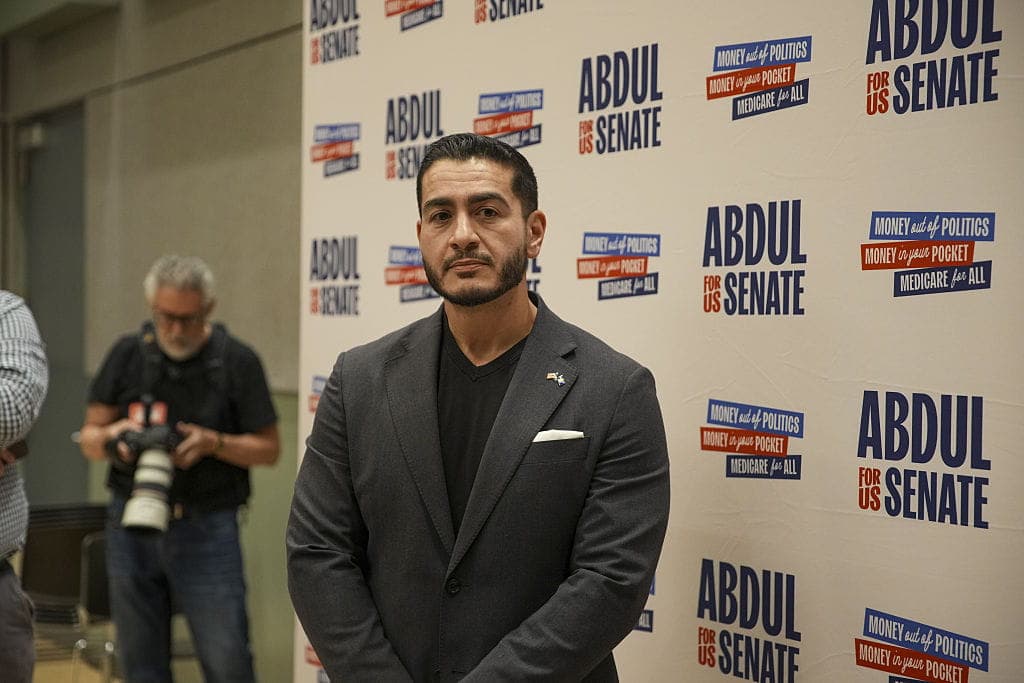


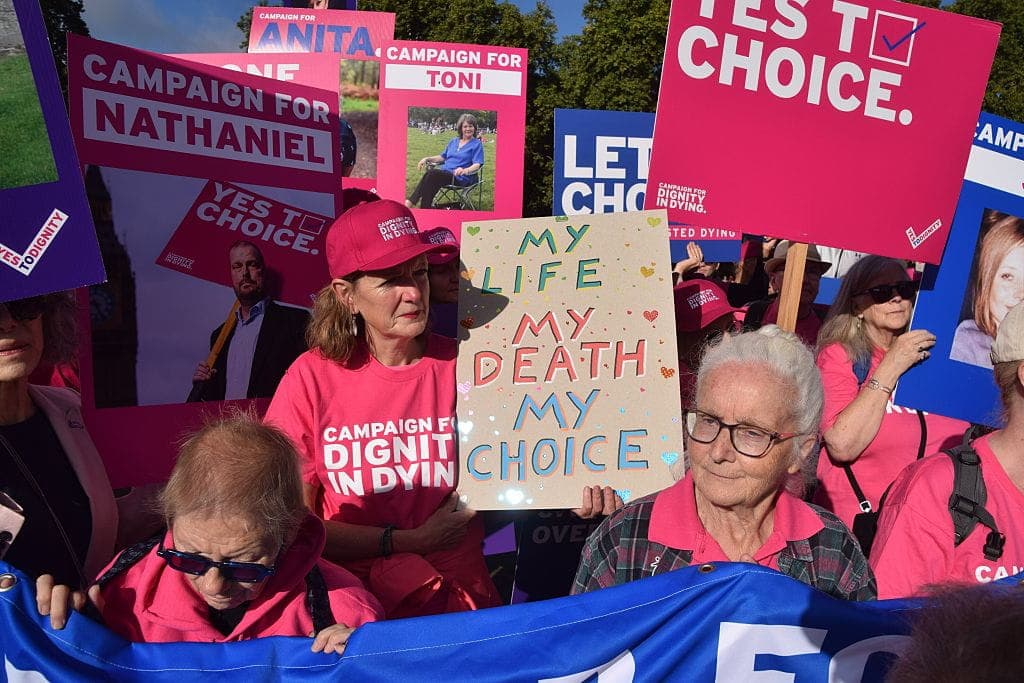

Canada’s government introduced legislation on October 27, 2026, to update the country’s existing Medical Assistance in Dying (MAID) framework. The two primary reforms proposed would 1) allow advance requests for MAID, and 2) postpone the currently scheduled expansion of MAID program euthanasia services to include those suffering from mental illness. Both changes raise profound ethical dilemmas.
Canada’s Euthanasia Fetish
Canada’s euthanasia laws were created in response to a 2015 decision by the Supreme Court of Canada (Carter v. Canada) that struck down the prohibition of “physician-assisted death for a competent adult person who (1) clearly consents … and (2) has a grievous and irremediable medical condition … that causes enduring suffering that is intolerable to the individual in the circumstances of his or her condition.” The Canadian Parliament duly enacted MAID legislation in 2016, which did not permit assisted suicide for mental illness, nor allow advance requests that people to implement while of sound mind.
Advance assisted suicide requests are comparable in some ways to “Do Not Resuscitate” or “Living Will” instructions that provide reliable evidence of an incapacitated person’s wishes (consent) for use in a medical crisis. Such instructions direct physicians not to interfere with death. MAID provided a pathway that many claim conflicts with the Hippocratic Oath to do no harm: to medically hasten mortality.
The law allowed the nation’s provinces to legislate and administer a healthcare process in which patients could choose between ‘physician-assisted’ suicide and ‘physician-administered’ euthanasia. The first allows doctors to prescribe lethal doses of medicines which patients self-administer. The second pathway, which the vast majority of electing Canadians chose, permits clinician-assisted injection.
A Syringe With a Death Warrant?
The ethical implications of a state-run healthcare system being equipped with a bureaucratic paper license to kill and a syringe are intimidating. The social and moral consequences of shifting a society toward similarly euthanizing those with mental illness, or routinely completing authorizations to be euthanized in future without one’s consent (like an organ donor card), are deeply troubling.
Canada’s MAID laws then expanded euthanasia from those facing imminent death to those suffering from chronic pain or degenerative illness. The latest legislation, Bill C-41, the Medical Assistance in Dying Safeguard Act, seeks to allow simultaneously halt the expansion of MAID availability to mental illness (as current law permits), while expanding these dubious services for those diagnosed with serious incurable conditions, particularly neurodegenerative conditions such as Alzheimer’s and other forms of deme ntia.
The femininely-acronymed euthanasia term MAID is sufficiently Orwellian without the Kafkaesque prospect of a sprawling state apparatchik governing who lives and dies by a slip of paper of a glitch in a medical record, or defining the subjective determinants of ‘mental illness,’ ‘intolerable suffering,’ or ‘informed consent.’ An implacable, secular system once advocated for lobotomies as curative, subjected unsuspecting ‘ignorants’ to experimentation at Tuskegee, and force-sterilized the marginalized under the misguided perversions of the eugenics movement.
Eugenics, Lobotomies, and Puberty Blockers
Recent decades suggest eugenics has been reborn, or it perhaps never left. Race is being labeled an immutable determinant of outcome for blacks under the corruptive race theories of social justice radicals. Transgenderism, long recognized as a clinical psychiatric diagnosis, has now been embraced as some sort of intrinsically virtuous normality. Hormones and even surgeries have been provided to children without parental consent, the norms of jurisprudence displaced by doctors and legislators who have pledged to “protect” children from unsupportive parents.
Under the new law, Canada may soon protect declining parents from supportive children. In one recent case, 83-year-old Brigitte Stegemann was allegedly euthanized by doctors after changing her mind about consent which her family insists was never properly obtained. Breitbart reports that “Stegemann clearly changed her mind before the end, but she was euthanized anyway in a botched procedure that left her covered in blood.” What if a patient changes their mind but is unable to communicate effectively? Where is there an attorney or legal representative to assess informed consent, both ate execution of an authorization, and at implementation? How much pain does a person have to be in before the euthanasia process is initiated, and who measures that uniquely subjective metric?
Canadian law does not currently authorize euthanasia for people whose ‘sole’ medical complaint is mental illness. Yet mental illness often accompanies chronic pain, or dementia, or other conditions. Pre-authorization by a mentally well dementia patient providing permission to kill based on a future anticipated mental health decline is a sort of anticipatory euthanasia solely for mental health reasons. It is doubly suspect, though it is surely understandable that people seek to avoid unnecessary suffering.
Suicide for the Mentally Ill or Compromised?
Europe has already crossed this mental health boundary. On May 22, 2024, Zoraya ter Beek was legally euthanized under Dutch law on May 22, 2024 due to mental health issues, at the ripe old age of 29. Diagnosed with depression, anxiety, trauma, and “other issues,” the Dutch Code permitted her to be assisted in her suicide for ‘unbearable suffering with no prospect of improvement.” This young woman tragically summarized the moral conundrum faced by humanity when she stated, just days before her scheduled self-extinction: “People think that when you’re mentally ill, you can’t think straight, which is insulting.” This chicken-and-egg problem of mental illness is unavoidable. But further, who is to say this young woman had no prospect of improvement, that some new drug, therapy, or even diet change might one day reverse her suffering.


In response to this young Dutch girl’s public decision, Cardinal Willem Eijk observed: “The respect for the essential value of the life of a human being is eroded ever more in the last half a century, which was inescapable… [O]nce accepting the termination of life for a certain measure of suffering, one will always be confronted with the question of whether it should not also be allowed in suffering that is only a little bit less.” This is what lawyers call the ‘slippery slope’ argument, and Canada’s slopes appear to be growing slipperier by the year.
The transhumanist effort, growing secularism, and the deterioration of reverence for the sacredness of human life, theories about Big Bangs, AI, and men as machines. These and other modern ideologies have promulgated a growing utilitarian ethic that conjures myriad ways to justify killing others. Babies that are unborn may be exterminated because their mother’s finances are not currently up to desired grade. Charlie Kirk’s and Brian Thompson’s murders are celebrated. Calls to kill those with whom one disagrees (or who are guilty of the now-violent crime of silence) abound.
In the midst of such deteriorating ethical clarity, perhaps assisted suicide (delegated to a Brave New State) is the bottom of the morality barrel, a cousin to cannibalism. GK Chesterton observed: “The man who kills a man kills a man. The man who kills himself kills all men. As far as he is concerned, he wipes out the world.”