


Polls closed several days ago, yet America still awaits final counts for major races in three states, plus nearly two dozen House contests across the nation. What’s the hold up? One of the issues in Alaska specifically could delay a final result even longer – even if it saves incumbent Sen. Dan Sullivan from his Democratic Party challenger’s alleged ploy.
Delayed Counts Across the Country
Polls closed on November 3, and by November 7 there are still 19 US House races yet to be called from Maine to Washington, Florida to California, and numerous points in between. But few have really noticed. It’s the races for governor in Alaska and Kansas and for US Senate in Alaska and Mississippi that have Americans holding their breath in anticipation.
The bad news for the curious is that results may not come anytime soon – especially in Alaska.
Win, lose, or draw, the closeness of three of these four races so far is the primary problem. Whether it’s the governorship of Kansas or the Senate seat for Alaska or Mississippi, the gap between the leading candidates is, as the old folks say deep in the southern wilds, finer than a frog’s hair split four ways. And things like mail-in and provisional ballots just add to the confusion and delay.

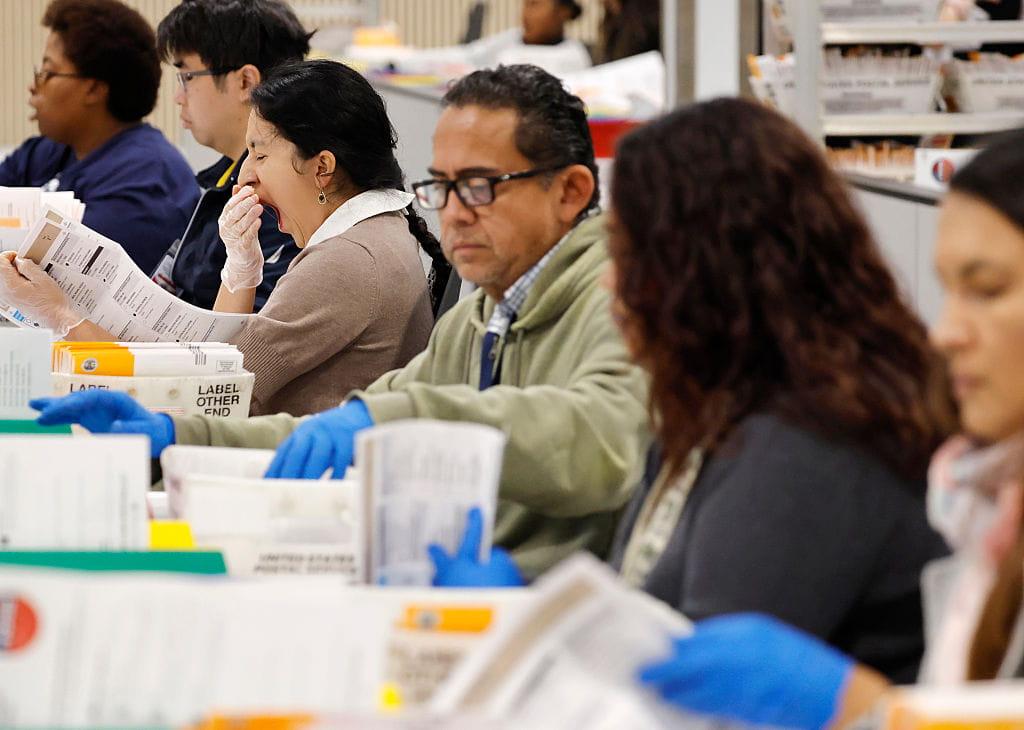
When voters turn up at the polls – including at the wrong polling station – and can’t verify their identities or if there seems to be an issue with their registration status, they’re still allowed to cast a ballot. Their ballots just aren’t counted until whatever issue triggered the provisional option is resolved and it becomes clear they’re actually allowed to vote.
Unfortunately, this takes time. It goes beyond just hand-counting ballots; issues of identity, registration eligibility, and even the appropriateness of where the vote was cast must be sorted out by a human. Then the votes get counted and added to the tally.
In the Magnolia State, Democrat Scott Colom is currently leading incumbent Republican Cindy Hyde-Smith by a margin of just 0.3%. There are just over 2,500 votes between them, but thousands of provisional ballots must still be counted – so this hotly contested Senate race really could still go either way.
It’s a similar situation in the Kansas governor race, though the margin is ever so slightly wider. Democrat Cindy Holscher is leading Republican Ty Masterson by 0.7%. With an estimated 99% of the votes counted, that’s a gap of less than 7,700 with more than 11,000 to go. It’s out in the remote wilderness of Alaska where things really get interesting.
Alaska – The Last Frontier in Election Results
If all four races go the way they’re leaning right now, three will be significant flips from the GOP to the Democratic Party. But it’s in Alaska where this makes the biggest news – and causes the longest potential delays. All the problems of provisional ballots and slow counts that could plague counties across the lower 48 are multiplied here, where some precincts have to deliver their ballots by plane from the bush where there simply aren’t roads. This is likely why Alaska reports 74% of its votes counted rather than the 95% plus of just about any other state.
But beyond the waiting, the tally itself may still not be enough. Alaska uses ranked-choice voting, which means voters are allowed to mark multiple options in descending order of desirability rather than just picking one. So, imagine you’re a voter in Alaska, and you really want Treg Taylor of the GOP to be governor of Alaska. You can mark him your first choice – then mark Dave Bronson and Bernadette Wilson of the same party as your second and third choices. Imagine the current count is the final result: Democrat Jonathan S. Kreiss-Tomkins has 49.1% of the vote, with his closest runner-up being Wilson at 29.2%. A resounding victory, right?
Wrong.
He falls 0.9% shy of the required 50%, so Taylor gets dropped from the race, and everyone who chose him is reassigned to their second choice. This continues until there’s a winner at 50%. There’s only one Democrat, so it’s highly unlikely his vote share is going up with the ranked-choice recount – but the combined total between the three Republicans is 50.9%.
Now look at the Senate race. As Liberty Nation News’ Leesa K. Donner reported back in August, Alaska has a bad case of ballot confusion. Sen. Dan Sullivan has represented the Last Frontier in the Swamp for two terms and is running for re-election in hopes of a third. But it isn’t the only Dan Sullivan on the ballot, thanks, it seems, to the efforts of his Democratic challenger Mary Peltola, who has been accused of recruiting Daniel J. Sullivan Jr., a retired teacher, for the sake of confusing Republican voters.
Well, it doesn’t look like it worked very well. The new Dan only has 3,600 votes, or 1.7%. The incumbent has 47.9%. Peltola, however, currently leads with 48.2%. There’s barely a 0.3% gap between them – just 637 votes with thousands yet to be counted. Even if double Dans had not appeared on the ballot, the incumbent would only be sitting at 49.6% right now – still shy of the required 50%.
Yet, like governor hopeful Bernadette Wilson, ranked-choice voting could well save Sen. Sullivan. As candidates drop through rounds of voting, the second Dan’s votes and those of Republican Gerald Heikes (currently sitting at 2.3%) are likely to push the incumbent over the line, assuming the vote share remains the same or close.
Ranked-choice voting will almost certainly delay the outcome in Alaska even longer than in Kansas and Mississippi – the next round of counts won’t be until November 18, after all – but it also may just have kept the state in Republican hands.