


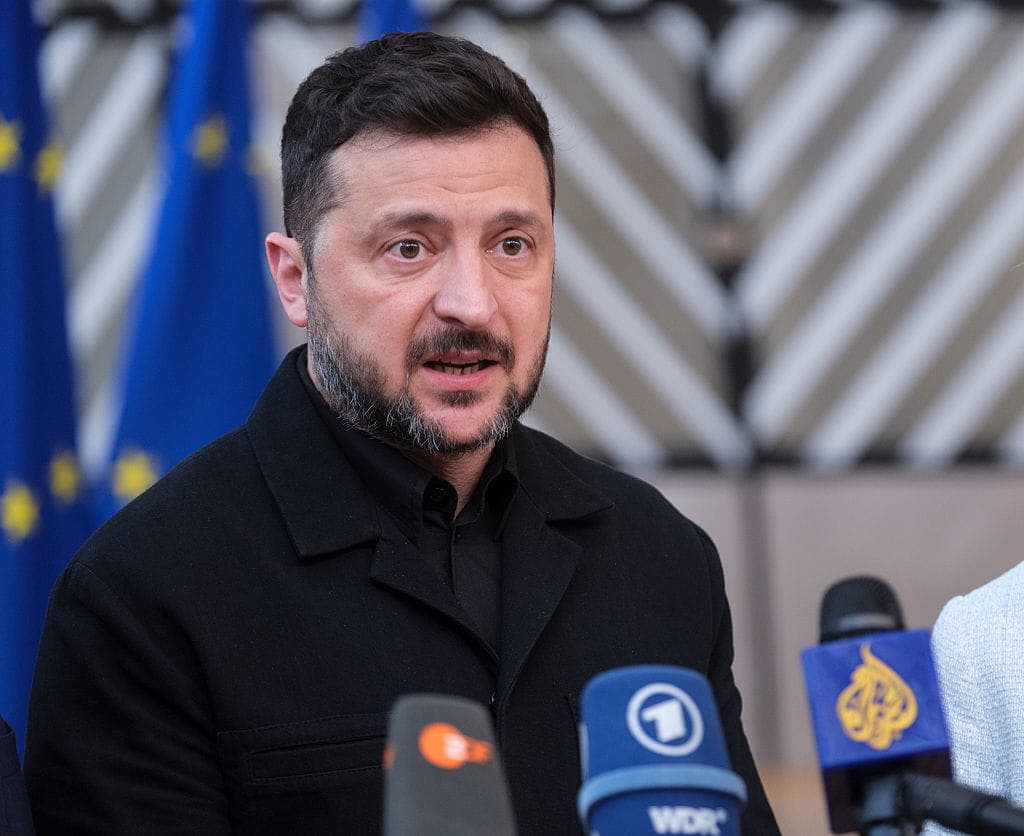

After 1,588 days (as of July 1, 2026) of constant fighting in Ukraine, Russia has failed in its objective to invade and conquer Ukraine. Though Russia had the momentum in the beginning, that has stopped, and Moscow is sending its ground units into the grinding gears of attrition. Furthermore, at the start of the invasion, Ukraine faced a bombardment of its power plants, petroleum facilities, military installations, and civilian neighborhoods, yet there was little Kyiv could do to take the fight deep inside Russia. That seems no longer to be the case. Ukraine is showing Russia it can give as good as it gets.
Ukraine Makes the Most of One-Way Attack Drones
Peace talks among the United States, Ukraine, and Russia are displaying signs of rigor mortis. The negotiations have made no progress in months. In the meantime, Ukraine appears to be getting a second wind. During the Joe Biden administration, Ukraine was not allowed to strike targets deep into Russia, for fear that if it were given the means to hit infrastructure, weapons production facilities, and other lucrative targets there, Russia would escalate the conflict. This thinking was, of course, ludicrous. Ukraine was getting pounded nightly with glide bombs, cruise missiles, drones, and ballistic missiles. From Kyiv’s point of view, the conflict had escalated about as much as it could.
Now, it’s Ukraine that is inflicting damage on the Russian motherland with long-range drones, including an intense assault on major Russian oil refineries over the last several days. As the Associated Press explained:
“The campaign has choked Russian fuel supplies, causing widespread shortages and long lines at gas stations across the country and prompting authorities in many regions to introduce fuel rationing. According to Western analysts, it has also slowed Moscow’s efforts on the battlefield, heaping pressure on the Kremlin to come to the negotiating table.”
Previously, Russian citizens did not have an up-close-and-personal view of the war. Now they do. Reports from inside Moscow say Ukrainian drone attacks disrupt the daily routines of the people and have led to the temporary suspension of commercial flights at major airports near burning refineries. To understand the intensity of the Ukrainian air attacks, Fox News reported: “Moscow Mayor Sergey Sobyanin said air defenses shot down more than 130 drones approaching the city. Russia’s Defense Ministry claimed more than 550 Ukrainian drones were intercepted overnight across several regions, though battlefield claims from either side could not be independently verified.” Nevertheless, hundreds of Ukrainian drones did get through, causing significant damage to the Moscow Oil Refinery in the Kapotnya district.


Free with the Daily Briefing
85EssaysUnravel the Constitution
Hamilton, Madison & Jay’s complete case for America, free and searchable in the Publius Reader.
Free with the Daily Briefing. Unsubscribe anytime.
According to an AP report, debris from a falling drone set fire to another refinery in Slavyansk-na-Kubani, east of Crimea, which has been a major producer of crude oil, turning out close to 4 million tons annually. Targeting Russia’s oil production is having an impact. “Outside analysts estimate the recent wave of attacks has knocked more than 20% of Russian refining capacity offline," The Wall Street Journal explained. "In recent weeks, Kyiv’s drones have repeatedly struck fuel trucks on an overland supply route that runs through other occupied territories of Ukraine, causing gasoline shortages in Crimea.” Those shortages may be affecting Russian forces' ability to maneuver and engage the Ukrainians. In the last month, the Russians have been unable to acquire territory as rapidly as in the past.
Russian Forces Have Missed Deadline After Deadline
In its "Russian Offensive Campaign Assessment" for June 30, 2026, the Institute for the Study of War (ISW) observed that Russian President Vladimir Putin’s battlefield deadlines “do not align with battlefield realities.” Since the war began in 2022, the Kremlin has issued 15 deadlines for the seizure of all of the Donetsk Oblast. Putin has posted another deadline of December 2026. It is not likely that Russian forces will meet that milestone. According to ISW, “Russian forces advanced on average 3.79 square kilometers [1.46 square miles] per day in June 2026 — a rate far below Russian forces’ previous rate of advance in August 2025, when Russian forces advanced at a rate of 16.65 square kilometers [6.42 square miles] per day.” With fuel running so low for the Russian troops on the frontline, they may be unable to move at all.
From Liberty Nation News, Trivia, Facts, Check Us Out
Stay informed.
Today’s news, the Constitution and American history, written for young readers.
Visit GenerationLiberty.com
News, Trivia, Facts, Check Us Out
Stay informed.
Today’s news, the Constitution and American history, written for young readers.
Visit GenerationLiberty.com
Ukrainian President Volodymyr Zelensky may be on to something, bringing war to Putin’s porch. The Atlantic pointed out, “The recent focus on Moscow-area targets reveals how the Ukrainian government and military, in addition to trying to defend their territory from Russian aerial attack, are now taking the war to Putin’s doorstep.” At the rate Ukraine is building drones, Kyiv is bound to get Putin’s attention. Again, from the WSJ, “Fire Point, one of several companies that make long-range UAVs [unmanned aerial vehicles], is aiming to produce 300 of its FP-1 drones a day, around eight times more than last year. The FP-1 can travel up to 1,800 miles, the company says.”
Relentlessly hammering Russia’s oil storage and refining capability may just be the ticket to getting Putin back to the negotiating table. With 20% of Russia’s refining capacity having been impacted since March, “If previously damaged refineries can’t quickly restore their output, Russia’s loss of capacity might be 28 percent down on previous years,” Carnegie Politika estimated. Ukraine has borne the brunt of the Russian unprovoked invasion and is now taking advantage of its long-range drone capability to bring the realities of war to the invader’s home front. In the end, it may be the Russian citizens, tired of waiting in interminable gas lines with a fuel shortage, who bring the conflict to an end.
~
The views expressed are those of the author and not of any other affiliate.



.jpg%20Midterms&w=1920&q=75)