

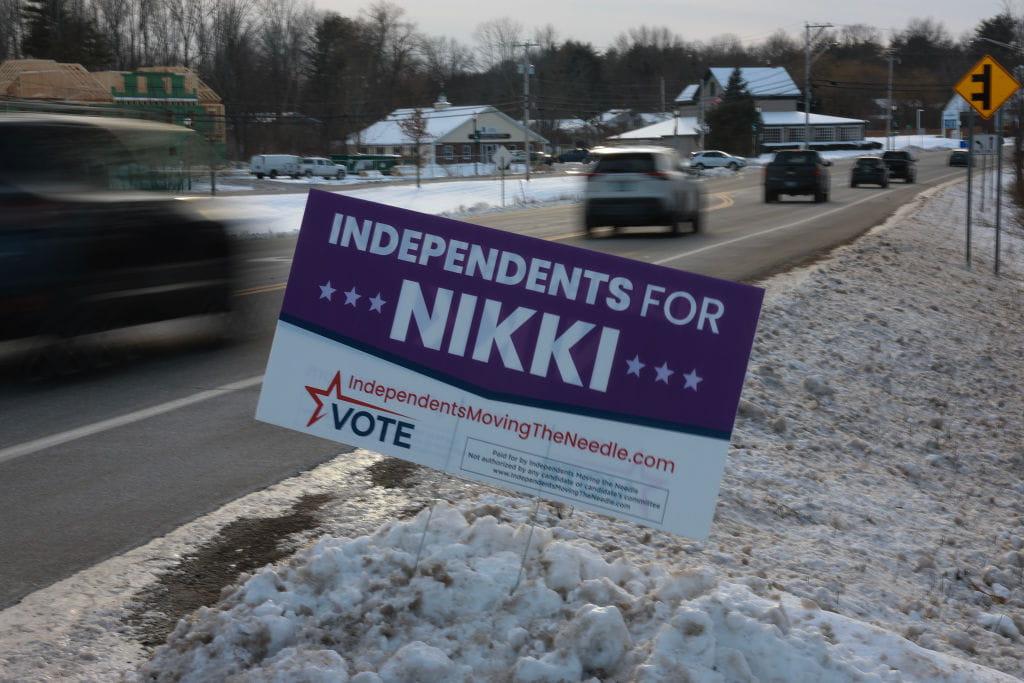

For as long as most of us have been alive, we have reflexively divided the electorate into Democrats and Republicans, with the great bulk of the electorate identifying as one or the other. But that is no longer a relevant assessment of politics circa 2026, except in districts leaning far to the left or right. Neither Dems nor members of the GOP decided the 2026 election – or the one in 2024, for that matter. It was self-proclaimed independent voters, the same ones with whom Donald Trump overperformed in 2024, who then flipped violently in the other direction two years later. There are now more independent voters than either Republicans or Democrats in this country. In fact, this was the second straight federal election in which independents, by a narrow margin, outvoted one of the two major parties.


Free with the Daily Briefing
85EssaysUnravel the Constitution
Hamilton, Madison & Jay’s complete case for America, free and searchable in the Publius Reader.
Free with the Daily Briefing. Unsubscribe anytime.
Voters as a whole have shown ever-diminishing loyalty to either of the political parties – that’s why so many refuse both labels. This has led to an ever more fickle electorate, for whom everything can change in the space of two years due to a lack of bedrock principles to which they consistently adhere. For independent voters, voting is largely transactional. They put a politician in office for a specific purpose. In 2026, they judged that Trump did not do what they elected him to do, namely fix the economy.
With no allegiance to MAGA, the political establishment, or the left, independents switched on a dime, apparently satisfied to trust the economic acumen of the same Democrats they booted out of power just two years ago. These voters generally cast their ballots based on the belief that a particular candidate is more likely to fix a specific problem, usually the economy. They vote with expedience. Their loyalty is limited to that one vote.
The Great Migration of Independents
The midterm election numbers paint a stark picture and throw the next election wide open. Democrats won independent voters by a whopping 20 points, according to exit polls. The counting is not yet complete, but if this holds, it will be the largest margin among independents in the history of exit polling, beating the Republican margin in 2010 of 19 points, according to rollcall.com. For Republicans, this is the fifth consecutive election losing independents, a streak that they simply cannot afford to continue.
Voting was split almost evenly – independents made up 33% of the electorate, Democrats 35%, and Republicans 32%. In 13 Senate battleground races, 12 were won by Democrats. Incredibly, that list included Mississippi, Kansas, and South Carolina. Democrats won independents in all dozen states by double digits, and ten of them by 20 points or more, per rollcall.com. That overwhelming independent vote allowed Democrats to overcome significant deficits in party enrollment in states long considered ruby red.
In Kansas, Republicans had a 17-point party advantage, but lost independents by 33 points. In South Carolina, Republicans had a 14-point party advantage, but lost independents by 31 points. In Texas, Republicans’ five-point advantage was wiped out by independents who, as in South Carolina, favored the Democrats by 31 points.
According to Gallup, the share of voters calling themselves independent has roughly doubled since 1960, from about a quarter to about 40–45%, depending on the poll. A record-high 45% of Americans called themselves independents in 2025, with Gallup attributing much of the rise to millennials and Gen X.
But drilling down one level on those metrics, that 45% breaks down into 20% who lean Democratic, 15% who lean Republican, and 10% who don’t lean either way. “Political scientists debate how much leaners differ from partisans,” per an article in theconversation.com. “One scholar who contests the ‘leaners are really partisans’ view notes that counting leaners as party supporters puts independents at about 10% of the electorate, roughly constant since the 1950s, but argues independents’ voting is more volatile when tracked over time.”
From Liberty Nation News, Trivia, Facts, Check Us Out
Stay informed.
Today’s news, the Constitution and American history, written for young readers.
Visit GenerationLiberty.com
So, how do you appeal to these pesky independent voters beyond just saying you can make their lives more affordable, as the Democrats did in 2026, without actually revealing any particular policies they plan to implement? For the most part, you need to convince them that you are better positioned to not just fix economic problems with sound policies but also generate sustained economic growth, the engine of prosperity. The GDP under Trump has risen steadily, but as they say, with gas and groceries still barely affordable for so many, GDP is just a number with little immediate relevance to their own lives.
That said, in just over a week since their big victory based on the promise of lowering the cost of living, it seems all Democrats have done is talk about investigations and impeachments, already falling into the same trap as Trump by promising one thing and then delivering another. Rest assured, independent voters won't appreciate that any more than what they consider the broken promises of the 47th president.