


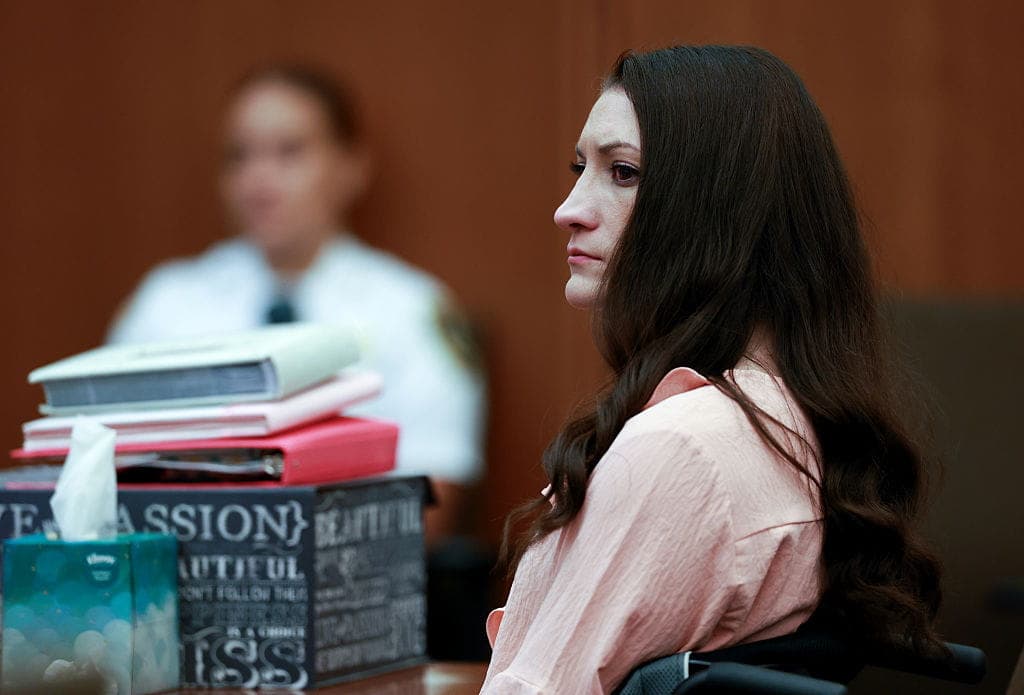

In the classic movie 12 Angry Men, the legendary actor Henry Fonda stands alone as a single juror in arguing the potential innocence of a young defendant charged with murder. He eventually convinces the 11 other jurors to concur. What we have now witnessed in the Lindsay Clancy trial is something of a mirror image of that narrative, a single juror taking it to the limit in refusing to join his fellows. Only this time, instead of one juror being able to turn the other 11 his way, by all accounts, 11 were unable to swing the one holdout their way, thus singlehandedly forcing a mistrial in one of the most high-profile cases of the 21st century.
Rarely have the American people witnessed a trial where, in the eyes of most observers, the prosecution and defense offered up equally compelling narratives. No one has argued that Clancy’s three children were killed by anyone but their mother, who later attempted suicide and has consequently been permanently confined to a wheelchair. At the same time, all involved will also stipulate to varying degrees that Clancy was experiencing postpartum mental anguish – whether it was depression or psychosis has been debated at length by opposing experts – and engaged in behavior entirely inconsistent with her long history as a dedicated mother and wife with no prior criminal record. It seems over 90% of the jury believed that the latter argument trumps the former and appeared ready to find Clancy not guilty by reason of insanity.
Free with the Daily Briefing
85EssaysUnravel the Constitution
Hamilton, Madison & Jay’s complete case for America, free and searchable in the Publius Reader.
Free with the Daily Briefing. Unsubscribe anytime.
But in this country, it takes a unanimous verdict to convict a person charged with a felony. Eleven out of 12 is not enough. It is not like a civil trial, where a simple majority of jurors is usually enough to find for the plaintiff, depending on the laws of individual states. The jury consisted of nine women and three men, one of whom was apparently the lone dissenter – defense attorney Kevin Reddington kept referring to the holdout as “he” – so the search by inquiring minds will likely be narrowed to the three men. One way or another, even those who disagree with his viewpoint must stipulate that anyone who sticks so stubbornly to his position through seven days of deliberations when surrounded by so many voices trying to talk him out of it is deserving of at least grudging admiration. He will be a hero to some, a villain to others. And the search for the identity of this one juror and the attendant parlor game will now begin and is sure to include every manner of dubious conspiracy theory.
In reviewing the bidding, the one factor that most experts found baffling, even inexplicable, about this trial was the decision by Judge William Sullivan not to sequester the jury. Thus, jurors were sent home at the end of each day, forced to try and shut out information and opinions from all directions in print, broadcast, and social media, not to mention the proverbial conversations around the water cooler and coffee shop. Sure, the judge instructed the jurors not to discuss the case nor watch, listen, or read about it, but was that really possible given the ubiquitous coverage of the trial? One senses that if he had it to do again, Judge Sullivan might have decided to isolate the jury at a hotel, assuring their minds would not be influenced by the frequently hysterical coverage of the trial. Indeed, much like the OJ Simpson trial, this would seem to be a textbook case for sequestering the jury, but now we will never know if that would have influenced or changed the outcome.
What’s Next in the Clancy Conundrum?
It took over three years from the day Clancy killed her three young children to reach this point, so will the state attorneys just go ahead and re-charge Clancy and try her again? It seems unlikely when they could instead negotiate a plea deal that would put the case to bed. This would also avoid further embarrassment for the prosecutor, who likely breathed a deep sigh of relief that the one juror spared her a life-changing defeat.

There are also other options available, such as seeking a bench trial, in which a judge alone determines the verdict without a jury. Reddington, clever defense attorney that he is, has filed motions in an apparent attempt to lay the foundation for a double jeopardy claim in any subsequent trial, i.e., arguing that Clancy was effectively found not guilty by this jury and thus can not be tried a second time for the same crime(s), per the Fifth Amendment in the Bill of Rights. Reddington had previously argued for dismissing the lone dissenting juror based on a note from the jury foreman to the judge indicating they were hopelessly deadlocked because of one man’s refusal to follow the judge’s instructions regarding reasonable doubt. But grounds for dismissing a juror, such as a conflict of interest or lying to the court, do not include a refusal to vote the same way as his peers. Quite the contrary. No one on a jury can ever be compelled to vote in any fashion other than that guided by his conscience.
It is notable that even the prosecutor in this case did not appear particularly passionate in expressing the state’s conviction that this was a premeditated act of evil rather than the uncontrollable emotions of a woman who was losing her mind. It speaks to the efficacy of both the facts of the case and the extenuating circumstances which apparently carried the day for all but one juror charged with determining the fate of Lindsay Clancy. It has been said that under our system of justice, we would rather let ten guilty people go free than convict one person who is innocent. People on both sides of the argument about Lindsay Clancy may find comfort in that, if nothing else.


.jpg&w=1920&q=75)
.jpg&w=1920&q=75)