

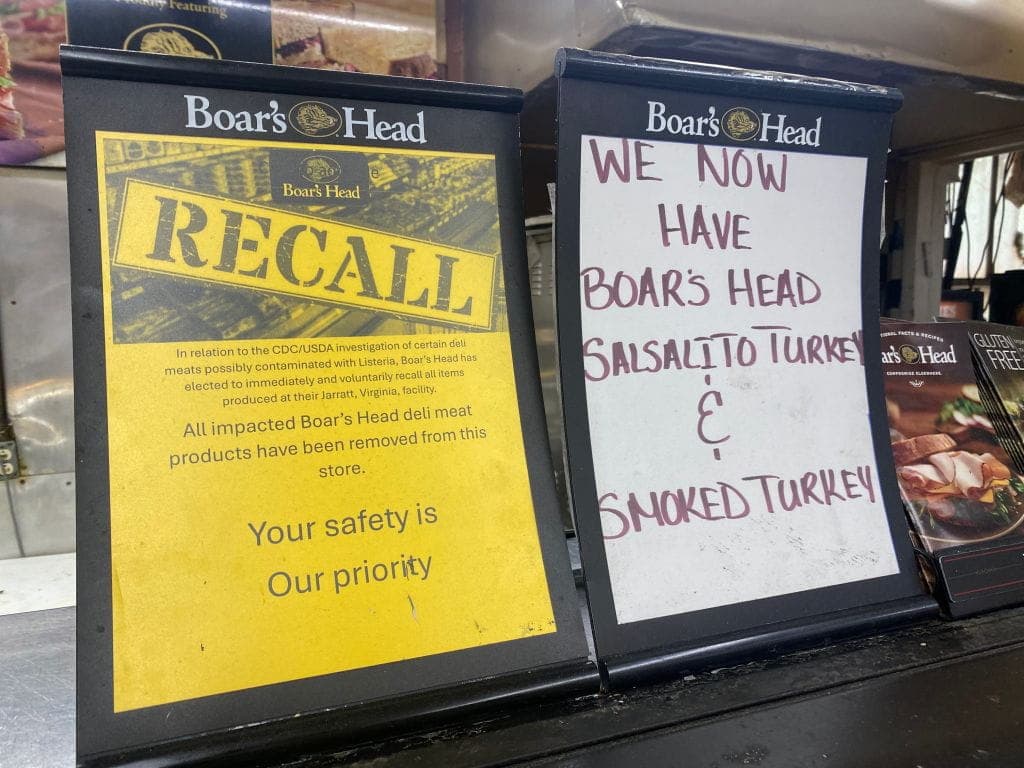

Nowadays, it seems like opening the refrigerator is starting to feel a little like playing food-safety roulette. It’s almost like every day there is another food or product we are warned has a safety hazard, contains ingredients it shouldn’t, or has the potential to make us very ill – or worse. Why have there been so many food recalls lately? Are that many of our essentials under par, or is there something else going on?
Why Are There So Many Food Recalls Lately?
Products are getting booted from grocery store shelves faster than you can say, “Wait, I just bought that.” We’ve seen eggs, lettuce, jalapenos, sprouts, frozen berries, fruit bars, bread, candy, and olive oil, to name a few, receive urgent warnings to consumers and get yanked from shelves. There’s not one specific reason for all the recalls; better technology and safety guidelines, human error, and even migrant workers all play a role in our staples being rejected.
As the country continues to grow in technology and artificial intelligence usage, the ability to discover problems might be getting easier. Foodborne illness detection has become considerably more sophisticated. Twenty or thirty years ago, someone getting Salmonella in one state and another person getting it elsewhere could have looked like two unrelated cases, but today, there is genetic sequencing that can help investigators discover that both people ate food that came from the same supplier. For example, the July outbreak of Cyclospora, which many referred to as exploding diarrhea, was traced back to a farm in Mexico and its shredded lettuce crop, affecting 20 states with more than 11,000 cases, according to the Centers for Disease Control and Prevention (CDC).


Free with the Daily Briefing
85EssaysUnravel the Constitution
Hamilton, Madison & Jay’s complete case for America, free and searchable in the Publius Reader.
Free with the Daily Briefing. Unsubscribe anytime.
Employees get a portion of the blame as well. Even with sophisticated equipment and surveillance, the fact that glass and metal get into products and go without detection hints at human error. The food process can go sideways at every point in its journey, from growing and harvesting to processing and packaging, then transportation and restaurant preparation or retail handling. That’s a lot of areas where errors can occur. Contamination can happen easily in many ways. Employees who improperly wash their hands – or don’t wash them – use contaminated gloves, fail to clean equipment correctly, mix raw foods with ready-to-eat products, allow food to stay at unsafe temperatures, or come to work sick.
But a “careless” employee might not completely be at fault; they may not be aware of all the rules and regulations, the company they work for may not be up to date on all the safety and hygiene methods, or the business might not be supervising to make sure rules are being followed.
When Congress passed the Food Safety Modernization Act in 2011, the goal was to stop contaminated food before it reached consumers instead of reacting after people got sick. Fifteen years later, a January 2026 Government Accountability Office (GAO) report found the FDA had completed 41 of 46 requirements it examined, but five were still unfinished or only partially completed. Those included updated guidance for farmers on reducing contamination of fruits and vegetables, guidance dealing with intentional food tampering, and a better system for tracking and tracing food through the US supply chain.
Lost in Translation – The Migrant Contribution
This is not to say that migrants are causing food recalls, but rather that this is an area that can be considered a contribution to the problem. One reason is the language barriers. A recent study published in the Journal of Food Protection looked at food safety training among small-scale food processors. Of all the employees interviewed who didn't speak English as a first language, 73% reported that their job training in their own native languages was lacking.

There’s also the difference in practices and regulations between the US and other nations. Someone who immigrates to America is used to their country’s way of doing things, and if they don’t receive the proper knowledge and training, then our safety measures might not be met. Without proper training and oversight, human error is bound to happen.
So, why does there seem to be so many food recalls? It’s a combination of things. Technology has made it easier to find problems and locate the source. One recall could lead to several foods being taken off the shelves. For instance, one bad jalapeno shipment can affect salsa and guacamole. Human error and sanitation play an important role, as does company responsibility and oversight.
As of September 4, 2026, the FDA is investigating several foodborne illness outbreaks, including Salmonella, Cyclospora, E. coli, Listeria monocytogenes, and Clostridium botulinum, which can cause botulism. In some cases, officials still don’t know which food is making people sick.


.jpg&w=1920&q=75)