


.jpg&w=1920&q=75)

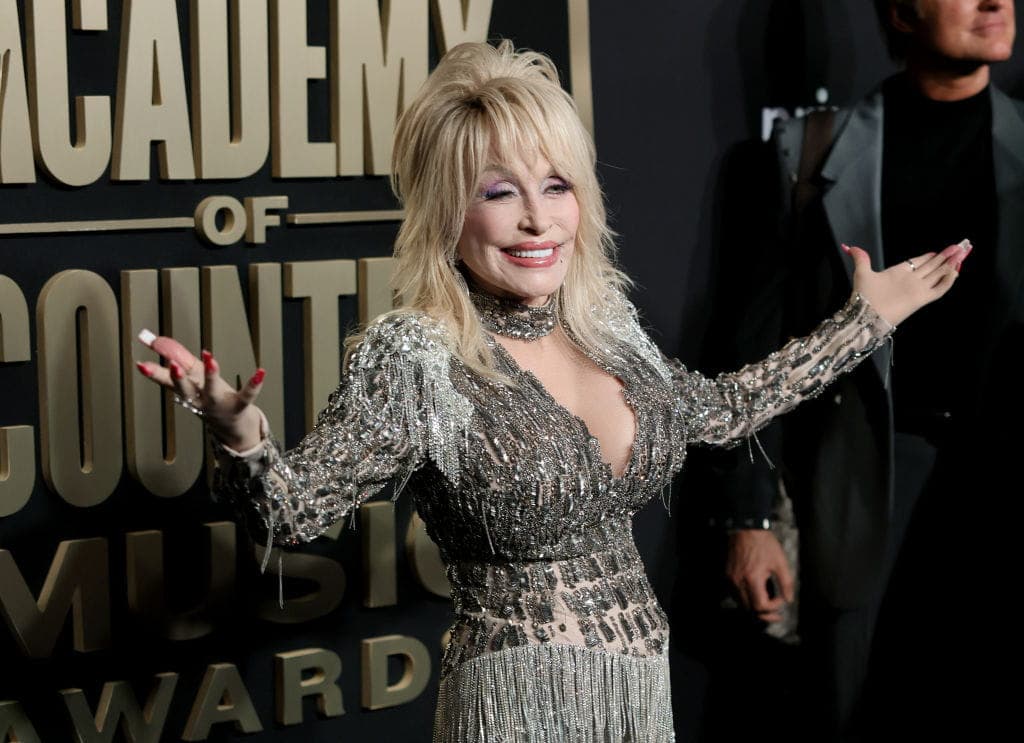
The world lost some powerful and beloved icons this week. First, there was Dolly Parton, whose grace, talent, and charm inspired so many. Then Tim Curry, who didn’t let a debilitating stroke stop him from doing the work he loves. People around the globe mourned their loss, not just for the entertainment they gave us, but for the inspiration they provided as role models to so many. Seeing their accomplishments, hearing their encouragements, motivated others to work toward their own dreams and goals. The power of role models can’t be understated, and humans have been using these muses since the beginning of time.
The Power of Role Models
Role models are unique. They are not idols, which are someone we admire. Or a celebrity, who is a famous person. They aren’t influencers who influence an audience. Instead, role models provide behavior, qualities, choices, or achievements that we want to emulate.
Researchers published a theoretical paper in Sage Journals on Motivational Theory of Role Modeling. They wanted to understand how and when role models actually motivate people. Instead of focusing on what makes someone a great role model, they considered what happens psychologically to the person observing them. They made three significant discoveries:
Free with the Daily Briefing
85EssaysUnravel the Constitution
Hamilton, Madison & Jay’s complete case for America, free and searchable in the Publius Reader.
Free with the Daily Briefing. Unsubscribe anytime.
Role models show us how something can be done. This “behavioral model” is where we watch what another person does and use their actions as an example for our own behavior. Instead of thinking “I admire what she accomplished,” we think, “I can see what she did to get there.” Examples could include observing how a successful business owner built their own company, how an athlete trains, or even how someone responds to failure.
Role models show us what is possible. Seeing someone else achieve something can change our perception of whether that outcome is realistic for us. Dolly Parton, for example, didn’t grow up in a rich family of influence yet still managed to become one of the most famous entertainers in the world. The role model then becomes the evidence: Someone did this. Maybe I can, too.
Role models inspire us. In this case, the role model doesn't necessarily give us a blueprint to copy. Instead, the person can make a particular goal seem more desirable. We see something about the person's accomplishments, values, or life and think: “That's something I want for myself.”
Role models provide something worth incorporating into your own life, instead of duplicating their entire existence. For example, you might admire Dolly Parton’s generosity without wanting to become a singer. They are more than someone to admire; they can affect what goals we consider doable, which ones we value, and whether we’re motivated enough to pursue them.
The Power of Inspiration
Throughout history, there are many individuals we can look to as role models, each with their own unique and powerful attributes. George Washington became the first president of country, before it was really even a nation yet. Benjamin Franklin’s message to keep learning, that you aren’t limited to one identity or accomplishment and curiosity can be a great thing. Harriet Tubman’s courage. Born enslaved, she escaped and then continued to risk her own freedom to help others escape through the Underground Railroad. Amelia Earhart, the first woman to fly solo across the Atlantic Ocean in 1932, taught courage and bravery in a field dominated by men. Thomas Edison received more than 1,000 US patents during his lifetime, but he wasn’t always successful. Inventions almost always involve failure, but persistence can lead to success.
Free with the Daily Briefing
85EssaysUnravel the Constitution
Hamilton, Madison & Jay’s complete case for America, free and searchable in the Publius Reader.
Free with the Daily Briefing. Unsubscribe anytime.
But role models aren’t always famous people. Dolly Parton credits her mother as her inspiration. “My mother was my biggest fan, my biggest supporter, and even when I was little and started young, she’d make my little stage clothes and she would tell me, you know, ‘If you’re gonna be doing this now, you need to remember, like you said, to be true to yourself,’” she told US Magazine. “So I always remember the things that Mama said. And even though she had 12 kids and got married [at], like, 15 years old, she still was very wise. … But she was also a very spiritual person. And so am I, so I lean a lot on God and [the] strength that comes from my spiritual life.”
Dwayne “The Rock” Johnson says his father inspired and encouraged him. In a 2013 interview with Essence, Johnson discussed his father's career as a black professional wrestler during the 1960s and 1970s when it was a mostly white-dominated sport and described him as a trailblazer. “So from my father, I inherited confidence and swagger and his discipline to overcome,” he told the outlet. After his father passed away, Johnson wrote a tribute that he posted on social media, with part of it saying: "I was the boy sitting in the seats, watching and adoring you, my hero from afar. The boy you raised to always be proud of our cultures and proud of who and what I am. The boy you raised with the toughest of love. The intense work. The hard hand."
Role models have a funny way of creating more role models. Yesterday's kid in the bleachers can become tomorrow's superstars, and the daughter hanging on her mother's words can someday have millions hanging on hers. Inspiration travels, sometimes across generations and sometimes without anyone realizing it happened. Sometimes the biggest influence starts with simply watching someone and thinking: “Maybe that's possible after all.”

.jpg&w=1920&q=75)
.jpg&w=1920&q=75)