
.jpg&w=1920&q=75)

The New Civil Liberties Alliance recently filed a lawsuit on behalf of two families in Nebraska who claim the state abridges their free-speech rights in the K–12 education system. The issue is that Nebraska limits government funding only to children enrolled in public schools where students are fed messaging that the plaintiffs claim conflicts with their values. The state also threatens criminal penalties for parents who don’t educate school-aged children, meaning parents who can’t afford private school must put their kids in public school, even when the messaging contradicts their beliefs. In other words, education is speech, and forcing their children to accept government messaging contrary to their values abridges that speech.
The solution, school-choice advocate Corey DeAngelis explained to The Washington Post, is universal school choice, allowing Nebraska to keep its compulsory-education laws while continuing to provide education with taxpayer money: “Funding would follow the child rather than force every family to be indoctrinated in a single government viewpoint.”
Compulsory, state-controlled schooling has been the norm for more than a century and seems to benefit numerous people, just not kids and parents. Old habits die hard, of course, but a reckoning may be ahead.
The Mann Haunting School Choice
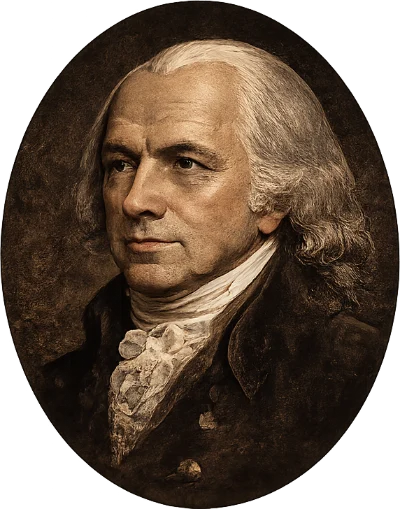
To understand where education might be headed, we should first look at where this system originated. Compulsory education in America has roots stretching back to colonial New England, but the modern concept emerged in the 19th century, largely driven by Horace Mann, the first secretary of the Massachusetts Board of Education. He went to Prussia in 1843 and returned with a head full of ideas. He then wrote the widely circulated Seventh Annual Report to the Massachusetts Board of Education and advocated for a Prussian-inspired educational system in America.
Mann received backlash because his reform ideas were based on the institutions of an autocratic monarchy whose educational system was designed to mold obedient soldiers, disciplined factory workers, and submissive citizens. Still, Mann believed the machinery was separate from the politics and saw taxpayer-funded, universal compulsory schooling as a way to shape children into moral, democratic citizens. “Men are cast-iron,” he famously said, “but children are wax.”
Free with the Daily Briefing
85EssaysUnravel the Constitution
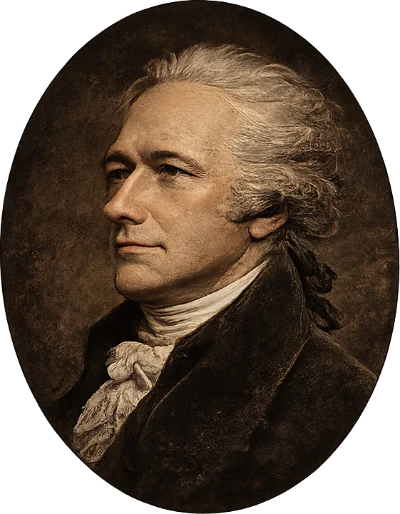
Hamilton, Madison & Jay’s complete case for America, free and searchable in the Publius Reader.
Free with the Daily Briefing. Unsubscribe anytime.
Mann’s ideas laid the groundwork for compulsory attendance laws. In 1852, Massachusetts passed the first state law mandating school attendance, requiring children aged 8 to 14 to attend at least twelve weeks a year, with penalties for noncompliance. Over the next several decades, other states gradually followed suit. By 1918, every state had some form of compulsory education law.
This wasn’t exactly what the Founders had in mind for education, at least not Thomas Jefferson. He supported decentralized education that was free to the poor, but he thought a compulsory, government-controlled system would threaten individual liberty. “It is better to tolerate the rare instance of a parent refusing to let his child be educated,” wrote Jefferson, “than to shock the common feelings and ideas by the forcible asportation and education of the infant against the will of the father.”
Perhaps school choice can turn education into something Jefferson would appreciate, but for that to happen, more people will have to put children’s education above their own agendas.
The Movement and Its Enemies
School choice gives parents the freedom to choose an education that aligns with their children’s needs and their family values, allowing them to select alternatives to their local public schools. Financial assistance programs bridge the gap by reallocating the funds meant for a child’s public education so parents can put the money toward a school they believe is best for their kid, including homeschooling and other models. Some states issue vouchers to redirect funds to help with educational costs or private tuition, while others provide Education Savings Accounts (ESAs), where taxpayer funds are deposited for school expenses.
Several models are offered in various states, such as charter schools, which operate independently but remain public. Some states have also implemented open enrollment policies, allowing students to cross traditional district boundaries for a wider selection of public schools. Families are also increasingly turning to microschools and learning pods, which gather small groups of children for highly personalized, independent daily instruction.
The movement has grown immensely, with 35 states now offering some form of school-choice program; several have universal eligibility, meaning all K–12 students can apply regardless of their parents’ income. Momentum has been strongest in Republican-led states, while Democratic-leaning ones have largely kept their distance.
Despite how logical this all may sound, some people are relentlessly fighting to stop these programs, especially teachers unions, who recently pushed a ballot measure in Arizona to create administrative guardrails and restrict ESA eligibility for high-income families. The National Education Association and other groups put $7 million toward the effort. They needed 255,949 signatures to put the measure on the November 2026 ballot and almost succeeded.
A group of plaintiffs filed a complaint in the Maricopa County Superior Court challenging the validity of the signatures, and the case went to the state’s supreme court, which disqualified entire signature sheets with faulty addresses. “According to court filings,” explained Deseret News, “the campaign paid a convicted sex offender, a human trafficker, and other offenders to collect signatures across the state.”
Teachers unions have been fighting tooth and nail nationwide to curb or stop school-choice programs despite how popular the alternative methods appear to be with parents across the country. These unions may have a lot of power and money, but the movement is only growing – with the backing of the federal government.
Changes
A new tax provision, adopted in the One Big Beautiful Bill Act, establishes the first-ever federal K–12 school-choice tax credit, beginning in January 2027. It offers individuals a dollar-for-dollar federal tax credit of up to $1,700 for cash contributions made to qualifying scholarship-granting organizations (SGOs). Private and public schools can receive the grants; however, states must opt into the program to receive the tax-credit subsidy. Most Republican-led states have already done so, but many Democrat-controlled ones have yet to act.
The Trump administration recently said the amount raised could hit $24 billion if 30% of eligible taxpayers donate. But because few people seem to know about the provision, an expensive marketing campaign is in the works and is expected to cost more than $4 billion.
Governor Jim Pillen opted Nebraska into the tax-credit program, which school-choice supporters saw as a victory after Nebraska voters previously overturned state-level school-voucher legislation at the ballot box. While this may seem like a win, the tax credit only incentivizes modest individual donations, meaning there’s no guarantee it will generate large-scale scholarships for low-income families. On the upside, it makes school choice a more prominent cause, but it probably won’t solve the issue raised in the lawsuit. If the plaintiffs win, however, it could pave the way for similar lawsuits and alter how the educational system works.
For now, the debate over who should control children’s education continues, even though the answer seems obvious. Perhaps a better question is why some states are so adamant about maintaining Horace Mann’s Prussia-inspired system.

.jpg&w=1920&q=75)