

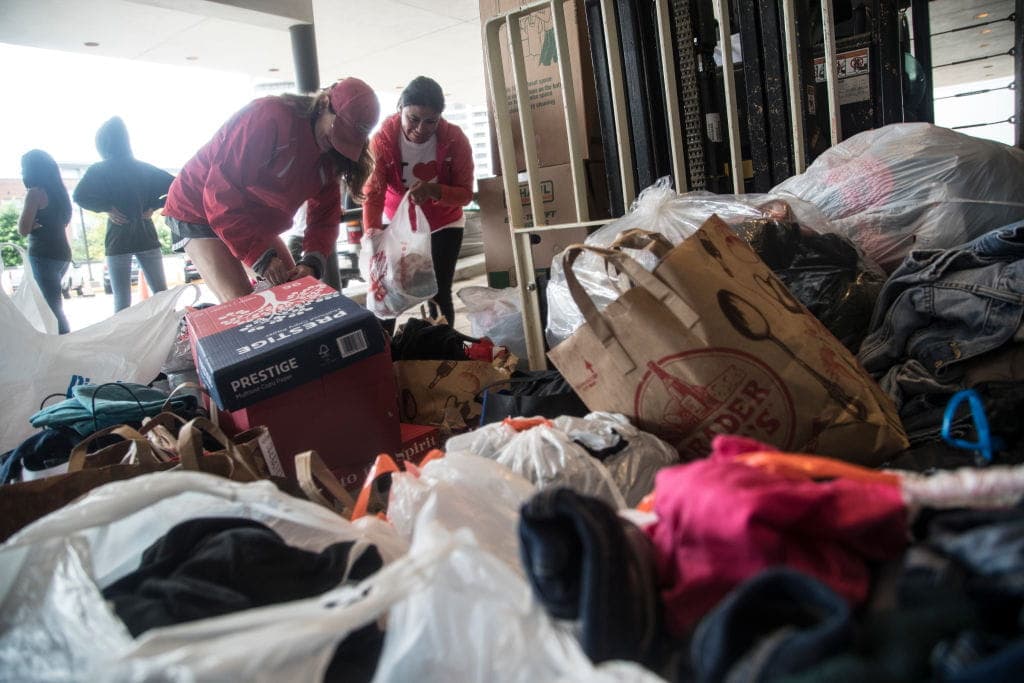

Do wealthy Americans have a duty to give to charity and support their communities? For the answer to that question, look no further than the life of the late country music legend Dolly Parton, who poured millions into the Appalachian region where she was raised and championed literacy around the world. She undoubtedly enjoyed her wealth, as she had every right to do. But Parton never forgot where she came from, and she made sure the people back home benefited from her success, too.
Community and Charity
Charity and community are as American as football and apple pie. Dolly Parton embodied that aspect of the American spirit perhaps most famously through her Imagination Library, which provides free books to children from birth through age five. The program was inspired by her father’s illiteracy, and, since 1995, it has gifted more than 300 million books to children around the world.
Parton was raised in a one-room log cabin in the Smoky Mountains of East Tennessee, one of 12 children. When country music propelled her from poverty to superstardom, she could have simply moved on and never looked back. Instead, Parton invested in the community that molded her, using her success to create opportunities for the Appalachian folk who came after her.
Free with the Daily Briefing
85EssaysUnravel the Constitution
Hamilton, Madison & Jay’s complete case for America, free and searchable in the Publius Reader.
Free with the Daily Briefing. Unsubscribe anytime.
Parton, unfortunately, was something of an exception in modern America. Wealthy Americans overall have become less generous in recent years, with fewer donating to charity and more directing their money toward family. Even among those who still give, donations have declined when adjusting for inflation, according to Bank of America’s biennial study on philanthropy. Among households with at least $1 million in assets or at least $200,000 in annual income, the share that donated to charity dropped from 91% in 2015 to 81% in 2024.
So, what happened? In addition to wealthy Americans’ financial focus turning toward family, taxes undoubtedly played a role in limiting charitable giving. Researchers at Philanthropy Roundtable, a nonprofit network of individual donors, reached a fairly obvious conclusion: As people make more money, they tend to give more of it away. The organization found that a 10% increase in income leads to about a 7% increase in charitable giving, while a 10% drop in income leads to a similar decline in donations. Higher taxes, which leave people with less money, can also reduce giving.
Wealthy Americans: Get Back to Your Roots
Andrew Carnegie (1835–1919) built a massive American steel empire, but he also funded the construction of more than 1,700 libraries in the United States. Julius Rosenwald (1862–1932), former president of Sears, Roebuck and Company, paid for thousands of schools to be built in the South. American chocolatier and businessman Milton Hershey (1857–1945) established the Hershey Industrial School for orphaned boys. The list of wealthy Americans throughout history who used their fortunes to strengthen the communities around them goes on and on.
America is now home to a record 8.7 million millionaires, according to Capgemini’s latest World Wealth Report. Yes, it’s true that a million dollars doesn’t go as far as it did in the age of Carnegie or Rosenwald. It’s also true that Americans would have more to give if the government took less of what they earned. Even so, it’s time for the wealthiest in the United States to revive the old American tradition of charitable giving. Consider the wise words of rhinestone-bedazzled Dolly Parton: “I just give from my heart. I never know what I’m going to do or why I’m gonna do it. I just see a need and if I can fill it, then I will.”

.jpg&w=1920&q=75)