

The Bureau of Economic Analysis released July's Personal Consumption Expenditures (PCE) Price Index, the Federal Reserve's preferred inflation gauge, on Aug. 26. It was a case of the good, the bad, and the ugly. The report likely clouded the Fed policy outlook as goods prices declined, services inflation accelerated, and the headline data were much worse than core (excluding food and energy).
With a few weeks until the central bank convenes its two-day meeting, the Fed is in a bind.
Fed Policy Path
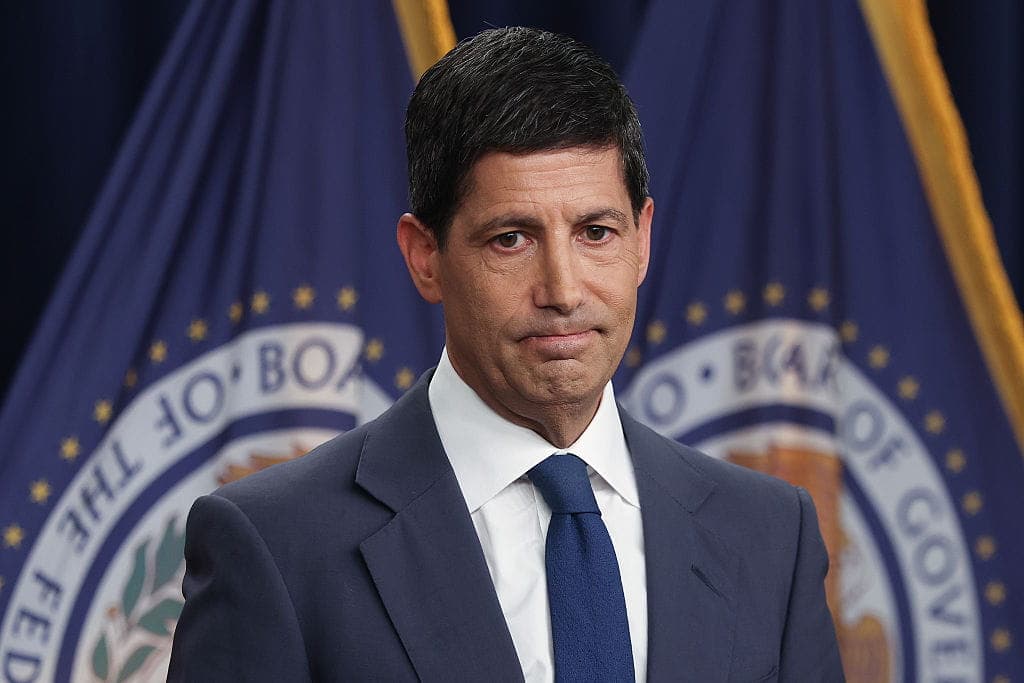
Under Chairman Kevin Warsh, the Eccles Building will refrain from issuing forward guidance. While anything can be seen as gazing into a crystal ball, markets realize they will have to focus on economic data to determine what the Fed will do next. Based on this strategy, it is anyone’s guess whether the Fed will hike, pause, or even cut.
For now, investors expect Warsh and Co. to hold interest rates steady at the September Federal Open Market Committee (FOMC) meeting. Traders are also split on whether the Fed will hike or pause for the rest of the year. Nobody is penciling in a rate cut.
But should the Fed consider lowering interest rates? It is a contrarian case, but a worthwhile discussion, considering how the Fed crafts monetary policy. The standard playbook is for the institution to look past oil price shocks since global energy markets are not within its purview. The challenge, however, is that elevated energy costs could filter through the broader US marketplace.
To determine whether higher oil prices are permeating the economy, the best measure could be core PCE. From June to July, core PCE inflation rose 0.2%. On a 12-month basis, it remained steady at 3.3%, firmly above the Fed’s 2% target.


Free with the Daily Briefing
85EssaysUnravel the Constitution
Hamilton, Madison & Jay’s complete case for America, free and searchable in the Publius Reader.
Free with the Daily Briefing. Unsubscribe anytime.
The core Consumer Price Index (CPI), however, was a lot closer to the 2% mark last month. But Fed officials assert that PCE is superior to the CPI because it reflects real-time consumer substitutions, its component weights are updated frequently, and it is more comprehensive. Examining the July PCE report indicates that inflationary pressures were largely driven by non-war and non-tariff factors: financial services, insurance, and health care. Conversely, prices for apparel, food, durable household equipment, furnishings, and motor vehicles and parts fell.
Last month’s three dissenters – Minneapolis Fed President Neel Kashkari, Cleveland Fed President Beth Hammack, and Dallas Fed President Lorie Logan – would suggest monetary policy needs to remain in restrictive territory (constraining the economy) to restore inflation to the 2% target. This strategy could threaten economic growth prospects, effectively suppressing demand.
Underlying measures suggest weakness could be forming in the world’s largest economy. Consumer spending has softened, job creation has been anemic, and residential investment has decelerated. In other words, interest rate-sensitive categories could be drowning under the weight of tight policy.
At the same time, the Federal Reserve has lost control of interest rates. Treasury yields, from the one-month to the 30-year, have rocketed on persistent inflation fears, fiscal worries, expanded debt issuance, and competition from Big Tech investing heavily into artificial intelligence (AI) infrastructure.
Economic signals are all over the place.
This is why Chairman Warsh was correct in proposing reforms to the more-than-century-old institution. There is no longer a permanently installed goalpost. Over the years, they have kept shifting, be it wages or supercore inflation. While the Fed may no longer home in on forward guidance, investors know there is at least a guiding principle for Fed policy.
Dismantling the Printing Press
One reason the central bank has struggled to bring inflation back to its 2% target for the last 65 months: the printing press. America’s money supply is at an all-time high, even with interest rates at their highest level since the global financial crisis. Omitting tariffs and high war-driven crude oil prices, headline inflation is slightly above 2%, and consumers’ purchasing power has cratered by 25% since the coronavirus pandemic.
Suffice it to say, Warsh will grapple with a series of ordeals before the year is over, mainly inflation and a volatile government bond market. Warshonomics will be put to the test.
.jpg&w=1920&q=75)