

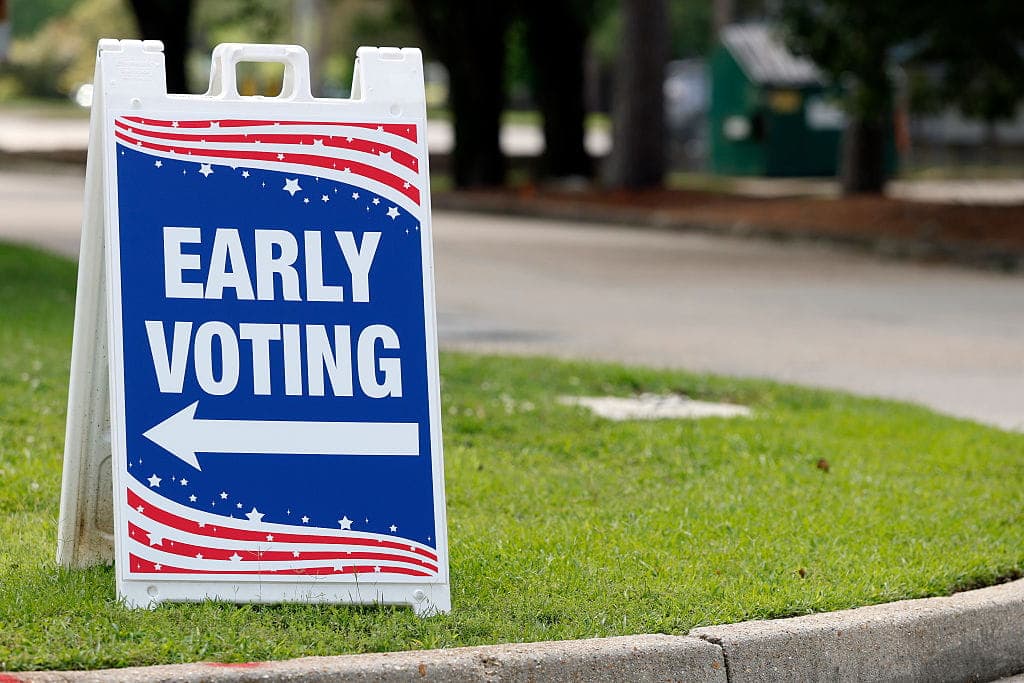

With just over a week left before Election Day, more than 27 million ballots have already been cast across 46 reporting states. In states that report party registration, Democrats account for something like 43% of the ballots cast so far and another 31% belong to Republicans. Other trackers have the Democrats’ share as high as 49%. Either way, that might look like a blowout on paper – and that’s likely how plenty of talking heads will interpret the data. But we’ve seen this song and dance before, and it hasn’t always worked out to the Democrats’ benefit. What does the early voting trend really demonstrate?
Before anyone starts planning the victory parties, it’s worth remembering two critical rules of election data: Conservatives tend to wait for Election Day, and just because your most reliable voters showed up two weeks before the deadline – in either party – doesn’t mean the overall number of voters will increase. You’re still drawing from the same well.
Early Voting and the Ghost of 2022
It seems pundits and pollsters suffer from a particular brand of chronic institutional amnesia that resets every two years. At this precise juncture in the 2022 midterms, Democrats maintained a similar early-vote cushion in key battleground states – yet Republicans still walked away with a nine-seat House majority and lost only one seat in the Senate.
Paul Westcott, the president of L2 Data, a voter and consumer data firm, told Pluribus News that around 94% of Americans voting early in 2026 also voted in 2024. More than 80% voted in 2022, as well – and nearly 60% are over the age of 65. What does that mean? These aren’t newly minted political converts. They’re the old reliables – the folks who show up election after election and get the job done, regardless of whether they do it on October 24 or November 3.
Early voting is up from this time in the previous midterms – but if it’s mostly all the same voters just showing up earlier, that doesn’t move the needle once the ballots are all counted.
Red State Mirage
So, we know that early voting is up and Democrats seem to be leading the charge. What does that mean for red states? In Kansas, early returns show registered Democrats leading Republicans 48% to 39% – but the GOP holds an outright registration advantage of nearly 400,000. In Iowa, 51% of the returned ballots were cast by Democrats, but Republicans outnumber them in overall voters registered by about 180,000.
Down in Texas, Austin voters are turning out in droves. But running up the score in a left-wing urban enclave doesn’t mean the rural red voters won’t show up on Election Day. In fact, so far in the statewide vote, the party split through October 22 was estimated by Decision Desk HQ to be 44.3% Democratic to 43.7% Republican – not nearly the lead seen elsewhere.
From Liberty Nation News, Trivia, Facts, Check Us Out
Stay informed.
Today’s news, the Constitution and American history, written for young readers.
Visit GenerationLiberty.com
Are the rural South and the heartland suddenly pining for progressive central planning and so-called democratic socialism? A look at recent elections – and some simple common sense – would suggest otherwise.
So, what are we looking at here? Most likely, it’s just a shift in the way the same voters are interacting with the ballot. Left-leaning coalitions have spent years convincing their voters to treat the election like a race: Get those ballots in as soon as possible and check it off the civic to-do list. Meanwhile, conservatives seem to treat voting more ritualistically – almost like a Sunday church service. Show up on the appointed day, at the appointed place, in person.
Early voting numbers can be seductive, and it’s no wonder in the excitement of it all that the chattering class seems to forget how the game is played. But an early ballot is still only one vote, regardless of when it’s submitted. Until the rural precincts report their final tallies on Election Day, the early-vote “lead” is more political theater than proof of some foregone conclusion.