

Much attention has focused on the blue wave that swept the country during the 2026 midterms, but Americans nationwide also weighed in on roughly 145 ballot measures, spanning topics from elections to transgender issues and abortion rights. Some results aligned with the broader swing toward policies many Democrats advocate for; other outcomes, however, went against the trend and indicate a possible shift in public opinion.
Ballot Measures on Voting and Elections
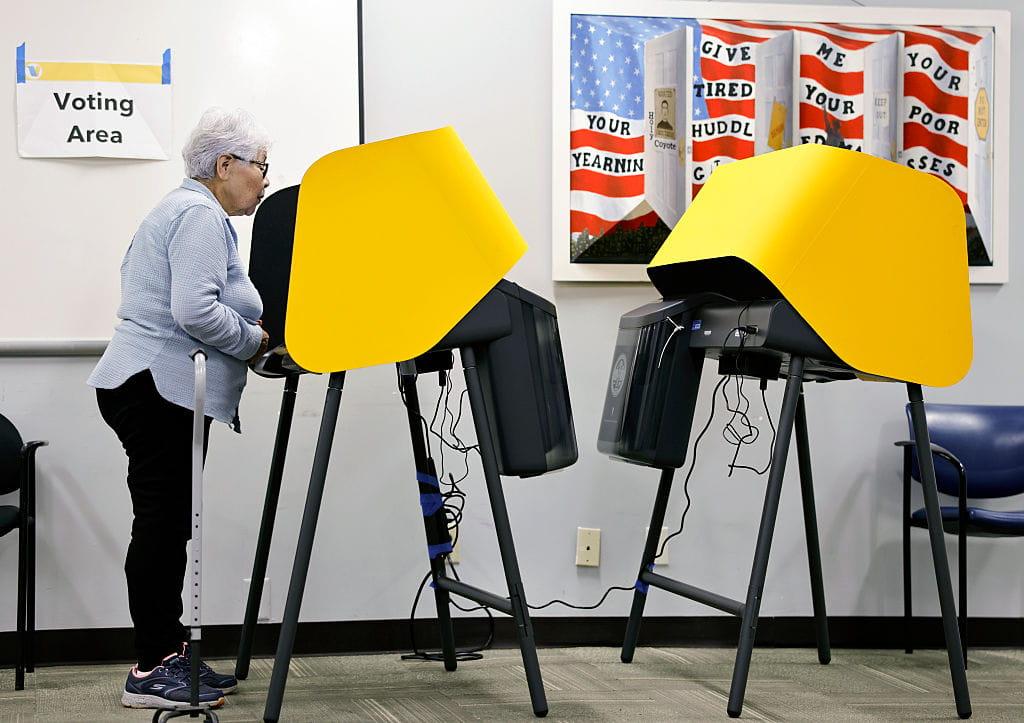
Several states – including Alaska, Kansas, and West Virginia – approved amendments to specify that only US citizens can vote in elections. In other places, such as Nevada, North Carolina, and Ohio, measures strengthening voter ID requirements passed. Similar efforts failed in California and Colorado. Likewise, Arizonans rejected an amendment requiring government-issued IDs and proof of US citizenship to vote in elections, a measure that also would have banned foreign contributions. Meanwhile, Virginians approved restoring voting rights to people with felony convictions once they’re released from incarceration.
Free with the Daily Briefing
85EssaysUnravel the Constitution
Hamilton, Madison & Jay’s complete case for America, free and searchable in the Publius Reader.
Free with the Daily Briefing. Unsubscribe anytime.
In Alaska, a proposal to repeal ranked-choice voting and to make the state’s primaries partisan appears likely to fail. The measure also includes a component to repeal campaign finance rules enacted by a 2020 ballot measure. As of Nov. 7, the “no” votes led by nearly four percentage points, with more than 70% of the ballots counted.
Several states also put redistricting on the ballot. Missouri voters shut down a Republican-friendly congressional map, and Maryland passed an amendment that could open the door to a Democratic-leaning map in 2028. In Colorado, an amendment that would have made it harder to redraw the state’s districts failed.
Voters in other places weighed in on campaign finance. Montana approved a ban on contributions from “artificial persons,” including corporations, labor unions, and nonprofits. Michigan voters overwhelmingly approved a proposal dubbed “Money Out of Politics,” which prohibits campaign contributions from regulated gas and electric utilities, as well as certain government contractors.
Abortion and Transgender Issues
Three states moved to preserve abortion access. Missouri rejected a measure to repeal the right to an abortion, and Nevada voters approved an amendment to include the right to abortion up to fetal viability. This was the second cycle in which Nevada passed this amendment – voters there must approve citizen-initiated constitutional amendments in two consecutive general elections before they become law. In Virginia, an amendment passed to establish a right to reproductive freedom, while a majority of Idahoans voted against the right to an abortion, opting to keep the state’s ban in place.
On transgender issues, the outcomes also varied. A majority of Coloradans approved prohibiting surgical procedures on minors to alter sex characteristics. They also passed a measure requiring student athletes to participate on teams that match their biological sex and ordering schools and colleges to designate sports teams as male, female, or coeducational. Similar measures passed in Arizona, Nebraska, and Washington. In Missouri, a ban on gender transition procedures for minors failed, a proposal that was bundled with the amendment to repeal abortion rights.
Taxes, Marijuana, and Guns
Prop. 40, the much-discussed wealth tax in California, looks set to fail, with more than 70% of the votes counted. The measure would impose a one-time 5% tax on individuals and trusts with more than $1 billion in assets, with the resulting revenues funding health care, food assistance, and education. However, two other proposals were also voted on, Props. 41 and 42, and if either countermeasure got more “yes” votes than Prop. 40, it could nullify the billionaire tax. In Washington, voters opted not to repeal an income tax on households with income over $1 million, a measure that also would’ve prohibited the state from enacting new individual income taxes.
From Liberty Nation News, Trivia, Facts, Check Us Out
Stay informed.
Today’s news, the Constitution and American history, written for young readers.
Visit GenerationLiberty.com
Massachusetts voters rejected a proposal to repeal the laws that legalize, regulate, and tax the sale of recreational marijuana. In Arkansas, voters overwhelmingly approved an amendment strengthening the right-to-bear-arms language, declaring it a “natural, fundamental, and individual right that shall not be infringed.” The amendment also provides a right to possess and use ammunition, as well as firearm accessories and components. Meanwhile, in a nonbinding advisory question, Idaho voters chose the Winchester Model 1873 rifle as their official state gun.
All in all, the results of these measures were a mixed bag. Whether they passed or failed, though, each one shows where much of the public stands on these issues. Officials in both parties might want to read the results before they write their next agenda.