


February 13 is the extended deadline for Republicans and Democrats to come to some kind of agreement for funding the Department of Homeland Security (DHS). In preparation for that, House Minority Leader Hakeem Jeffries (D-NY) and Senate Minority Leader Chuck Schumer (D-NY) sent a list of demands to Speaker of the House Mike Johnson (R-LA) and Senate Majority Leader John Thune (R-SD). If these requirements are met, it would mean a big thaw on ICE (Immigration and Customs Enforcement), their activities, and their ability to perform duties.
Thawing ICE
The letter to Republicans started out a bit theatrically: “For months, the American people have watched in horror as U.S. Immigration and Customs Enforcement (ICE) has terrorized communities across the country.” It continued, “The American people rightfully expect their elected representative to take action to rein in ICE and ensure no more lives are lost.” To accomplish this, they want a reduction of activity in Minnesota, the firing of Secretary of Homeland Security Kristi Noem, and the fulfillment of an additional ten-point list of demands.

Targeted Enforcement: The first item on their list is “targeted enforcement,” whereby agents can’t enter a home without a judicial warrant and require proof that individuals are not US citizens before holding them in a detention center. Generally speaking, ICE is empowered to make warrantless arrests for civil (as opposed to criminal) immigration violations under Section 287 of the Immigration and Nationality Act. Critics have cited the Fourth Amendment that prevents law enforcement from unlawfully entering a home and seizing property. However, there are some exceptions to this protection – like when officers are in hot pursuit of a fleeing suspect; exigent circumstances that require immediate action to prevent the destruction of evidence, escape of a suspect, or to protect the safety of officers or others; and, in this case, the civil immigration arrests.
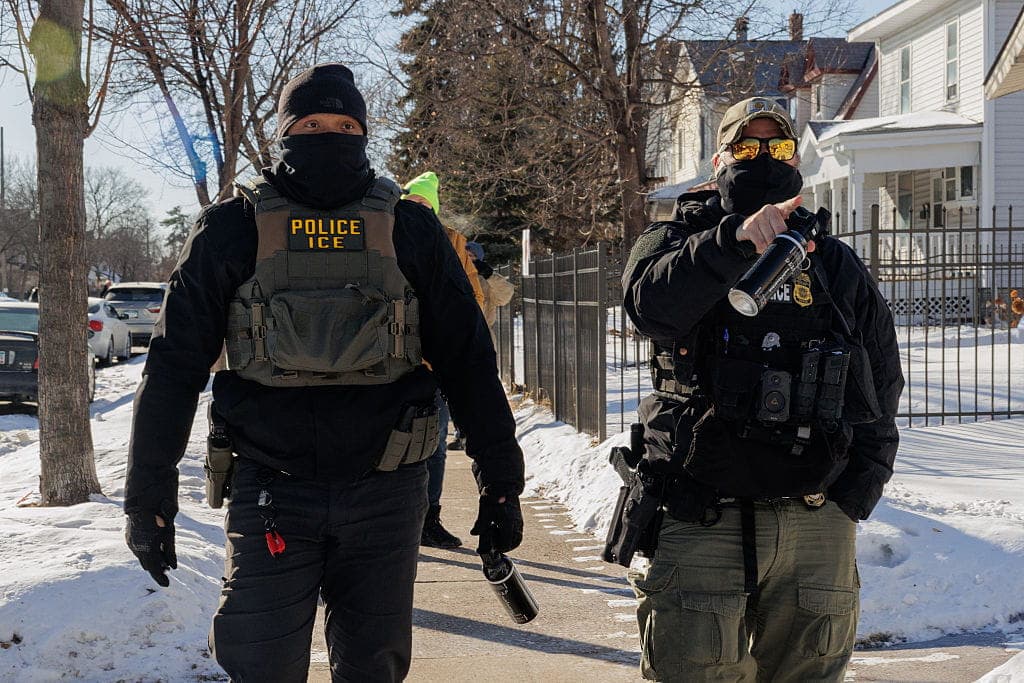
No Masks: The no masks crusade has been going on for a while now. Many want all law enforcement officers to uncover their faces and reveal their identities. “ICE law enforcement officers wear masks to prevent doxing, which can (and has) placed them and their families at risk,” the agency’s website explains. Not to mention, face coverings provide some protection against protesters’ antics such as spitting and throwing things at them.
Require ID: Agents would be required to display their agency, unique ID number, and last name. According to ICE, “All ICE law enforcement officers carry badges and credentials and will identify themselves when required for public safety or legal necessity.” But this would take it further so that the information would be prominent, such as on their clothing. However, ICE agents don’t necessarily wear “uniforms,” and tend to be undercover while tracking down illegal immigrants.
Protect Sensitive Locations: Another demand that has been going on for a while is to prohibit agents from making arrests or conducting business at or near medical facilities, churches, childcare facilities, schools, courts, and polling places.
Stop Racial Profiling: Agents would not be allowed to stop someone based on an individual’s presence at certain locations, their jobs, language or accent, or race. English is the official language in America now, so if someone can’t speak it, that might be an indication that they are in the country illegally.
Uphold Use of Force Standards: This would involve better training, including the use of force. If an agent is involved in an incident, they should be removed pending investigation as well. This demand is one that would bring ICE agents into alignment with how most police agencies operate.
Ensure State and Local Coordination and Oversight: to ensure the ability of state and local jurisdictions to investigate and prosecute potential crimes and use of excessive force incidents, evidence must be preserved and shared with jurisdictions. Consent from state and localities must also be obtained to conduct large-scale operations outside of targeted immigration enforcement.
Build Safeguards Into the System: This would require all detention facilities to follow the same standards, allow states to sue DHS for violations of any requirements, and prohibit limitations on how frequently members of Congress can visit facilities.
Body Cameras for Accountability, Not Tracking: Prohibit cameras from being used to track individuals participating in First Amendment activities. Most agree ICE agents should wear some form of body cam – not only for the public’s protection, but for their own as well. What’s different here is that the footage recorded can’t be used to identify and note people protesting.
No Paramilitary: Regulate and standardize uniforms and equipment agents wear to bring them in line with civil enforcement. ICE agents oftentimes are undercover, a similar tactic used by police officers who don’t want to spook their suspects before they can arrest them. Regulating their clothing into a specific uniform is a maneuver to make the agents visible, screaming their presence so that illegal immigrants have advance warning of their location.
It Gets a Vote, but Not Necessarily a Pass
Senator Lindsey Graham (S-SC) took to social media Saturday, February 7, in response to the demands, saying: “While I believe the Democrats’ proposal regarding ICE and immigration are fatally flawed and will take us backward on immigration enforcement, I think it deserves a vote in the U.S. senate. Therefore, if no one else will, I will introduce the Democrat package to ensure it gets a vote on the floor — and I will enthusiastically vote no.”
Graham continued, saying the Senate should take up the Protect America Act and vote on his legislation to end sanctuary city policies. “These three votes will be important for the country to understand the terms of the debate and who offers the best solution,” he posted on X. “I look forward to taking these matters up next week. Democrats have been anxious to have their say about immigration enforcement. So am I. Let’s vote.”

.jpg&w=1920&q=75)
.jpg&w=1920&q=75)