

As the surreal ordeal of the global COVID-19 pandemic recedes further into the past, increasing criticism has been leveled at state and federal government responses to the outbreak. Faced with the threat of a potentially deadly disease, America’s most powerful government institutions implemented controversial policies that were counterproductive to overall long-term health. But learning from past mistakes may help prevent them from recurring in future crises.
Learning From Failures
Rates of death from COVID-19 have plummeted, yet many citizens still wear masks routinely or line up to receive an mRNA vaccine. In the high-pressure melee of the pandemic, Americans traded possible adverse effects from experimental vaccines against the perceived risk of death from COVID-19. Yet it is now abundantly clear that those shots were neither as safe nor as effective as advertised. Myocarditis, especially in young men, was just one of a myriad of potential adverse health harms posed by COVID-19 “interventions.” But many other health harms also intervened, and the toll is still being tallied.
Business closures mandated by public COVID-19 edicts crushed the US economy and disproportionately harmed small businesses. School closures adversely impacted schoolchildren. Masks, social distancing, and curtailing of public gatherings all extracted societal costs and often impinged on constitutional rights. Much like a post-hurricane disaster survey, the nation continues to reckon with the full extent of these costs.
These lessons raise the prospect of accountability for past failures and the potential for learned wisdom to guide future public policy. If the hantavirus began to spread rapidly from person to person, would America repeat its response to the COVID-19 pandemic? If not, what might the country do differently next time?
Adverse Impacts on Children
Closing down public and private schools proved a profound failure. Minor children were never at high risk from COVID-19; their grandparents were. The hypothetical fear that children would be disease vectors to teachers and others never panned out. The threat of child infection might be different with hantavirus or another disease, but clearly, school closures were a terrible policy under the COVID-19 scourge.
Children were subjected to a barrage of adverse impacts during the pandemic. Their parents were anxious, and most children were forced to curtail normal play, social events, and rites of childhood passage while their lives were put on a stressful hold. Numerous studies have established that these deprivations inflicted adverse effects on mental health and educational attainment. Additionally, socioeconomic disparities between disadvantaged and affluent children widened sharply – low-income kids fared the worst.
This sowed a long-term drag on the economy: Scientists predict there will likely be huge future economic costs from the extended isolation and anxiety experienced by millions of children whose education and development were disrupted. Adverse Childhood Experiences (ACEs) are known contributors to future struggles with mental health, drug abuse, and socialization, and can alter mood, behavior, brain development, and overall well-being.
The national economy stumbled sharply, during the pandemic, plunging many children and families into poverty, undermining healthy diets, and inflicting financial stress. Social distancing, masking, and restrictions on public gatherings (including church attendance, proms, graduation parties, and other socializing milestones) all caused alienation and anxiety, especially for young children. Studies show facial recognition and expressions are integral to infant development and communication.
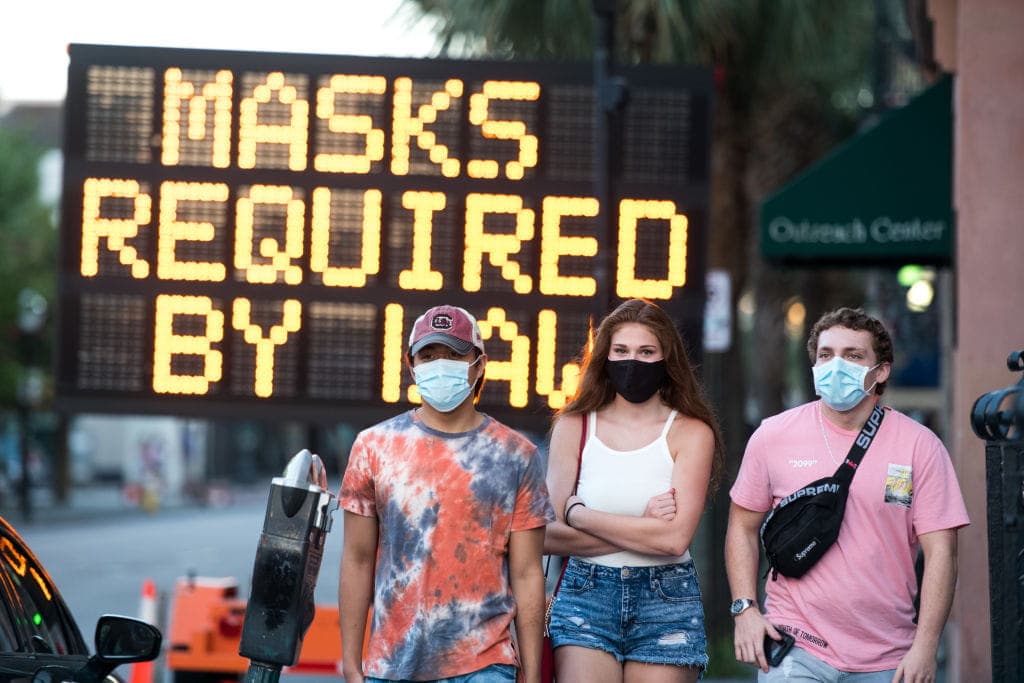
Masking was never proven to curb disease spread effectively, but it certainly inhibited normal social maturation. Moreover, masks interfere with normal respiration and increase rebreathing of carbon dioxide, and disposable masks routinely expose wearers to chemical toxins contained in the masks themselves. A South Korean study “found that disposable masks, including medical-grade N95 masks, released eight times the recommended safety limit for toxic volatile organic compounds (TVOCs).”
Unsanitized COVID-19 Legacy
Additional adverse health impacts included the widespread use of sanitizers and sterilizing cleaning chemicals. As Children’s Health Defense recently reported, COVID-19 cleaning protocols permanently compromised many Americans’ health, especially from “quats” – quaternary ammonium compounds, which a March study from the University of California Davis found “may be far more harmful” if breathed in than swallowed.
Americans swallowed a lot during the COVID-19 crisis. Still, they have become more cautious about trusting “experts” whom they now know were just making up protocols like social distancing and masking as they went along, then bottling these fickle policies up in the dubious guise of “real science.”
So next time (God forbid), expect a more critical public reception of government edicts in response to a so-called pandemic. If there is one thing that COVID-19 taught humanity, it is that human leaders are fallible, perhaps even dishonest – especially when fear is rampant. In the future, the best cure for overreaction will likely include a rather large grain of salt.


.jpg&w=1920&q=75)
.jpg&w=1920&q=75)