


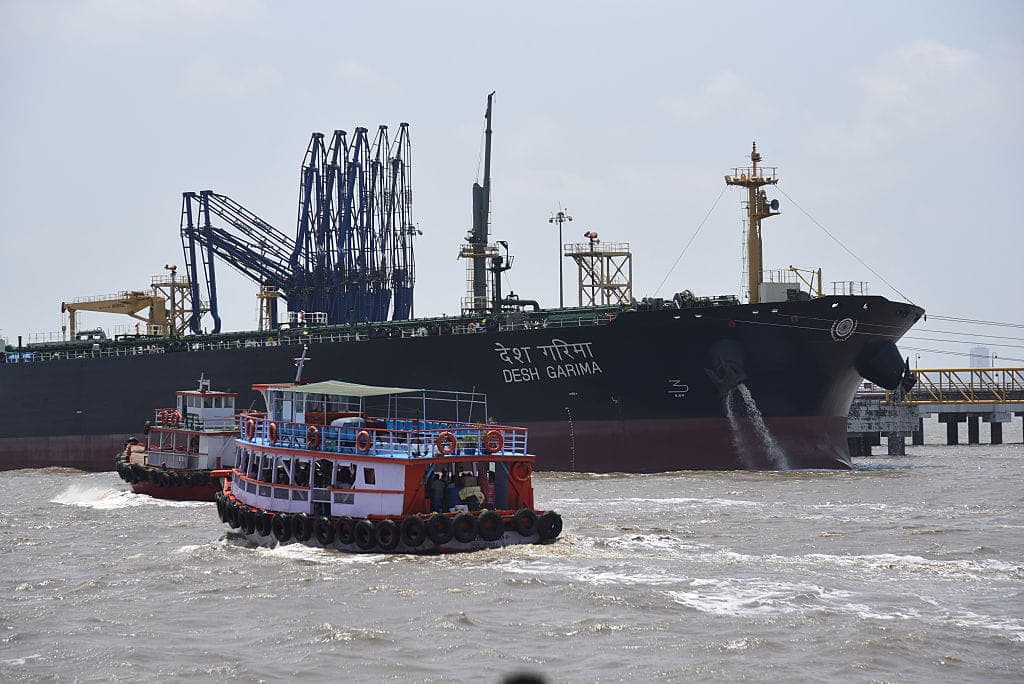

Operation Project Freedom – launched earlier this month – involves US Naval vessels escorting commercial oil tankers and cargo vessels through the Strait of Hormuz. During the initial escort missions, two US-flagged ships, a car carrier and a chemical product tanker, made it through the strait. The transit was not without incident, however, as Iran attempted to attack the commercial vessels with small fast Boston Whaler-type boats. What does this demonstrate? The US Navy is perfectly capable of escorting ships through the strait – yet no amount of guaranteed defeat will deter the Iranians bent on controlling the waterway from giving it their best shot.
Operation Project Freedom Shows Iran Does Not Control the Strait
Iran is under the mistaken impression that it has the right to control the Strait of Hormuz. The US is determined to demonstrate to Tehran that it has no control over the waterway. As Liberty Nation News reported: “So, as things stand, the US controls the Arabian Gulf, and Iran does not.” The strait is an international waterway and will remain so. As the two commercial vessels made their way through, though, they came under a coordinated attack by a flotilla of small boats, drones, and missiles. Both the vehicle carrier and the chemical tanker had US military teams on board and were sailing within a US protective perimeter. In an X posting, US Central Command described the encounter with attacking Islamic Revolutionary Guard Corps (IRGC) naval forces as decidedly one-sided, explaining:
“Iranian forces launched multiple missiles, drones, and small boats as USS Truxtun (DDG 103), USS Rafael Peralta (DDG 115), and USS Mason (DDG 87) transited the international sea passage. No U.S. assets were struck. US Central Command (CENTCOM) eliminated inbound threats and targeted Iranian military facilities responsible for attacking US forces, including missile and drone launch sites; command and control locations; and intelligence, surveillance, and reconnaissance nodes.”
In repelling the IRCG navy attacks, US forces destroyed six of the attacking small boats. An ABC News post on X reported: “President Trump told ABC News' Rachel Scott during a phone call Thursday that retaliatory strikes against Iranian targets are just a ‘love tap.’" The operation to protect ships transiting the Strait of Hormuz is not a trivial undertaking. Reporting on Operation Project Freedom from the region indicated that the three guided-missile destroyers were supported with a layered defense that included AH-64 Apache and MH-60 Seahawk helicopters, which sank six to seven of the IRGC Navy's small boats and numerous other military aircraft and unmanned platforms.
Operation Project Freedom is not the first effort at protecting commercial shipping in the Persian Gulf. In 1987 and 1988, President Ronald Reagan ordered the reflagging as US Kuwaiti oil tankers as part of Operation Earnest Will. US naval vessels established a protective cordon around a convoy of large commercial oil tankers. It was the largest naval convoy operation since World War II, and the dangers were similar, including Iran mining the Strait of Hormuz, small, fast-boat swarms, and Silkworm missile threats. That operation resulted in the US sinking half of Iran’s navy and destroying an Iranian oil platform.
Blockade Remains in Full Force
Approximately 36-50 hours after Operation Project Freedom began, President Trump paused the mission. In a Truth Social post, Trump explained on May 5 that he was pausing Project Freedom “Based on the request of Pakistan and other Countries” and because of the “tremendous Military Success” and the “Great Progress” that’s been made in achieving a “Complete and Final Agreement with the Representative of Iran.” Trump also made clear that the “Blockade will remain in full force and effect.” Unfortunately, as has been the case throughout the conflict with Iran, a “Complete and Final Agreement” has not materialized. So, the pressure of the blockade will continue. According to a May 10 X post, US Central Command announced, “Over 20 US warships are enforcing the blockade against Iran. CENTCOM forces have redirected 61 commercial vessels and disabled 4 to ensure compliance.”
Consequently, “The Trump administration is now looking to restart the operation to guide commercial ships with naval and air support that it had paused after 36 hours this week, US officials said. It isn’t clear when that could happen, though Pentagon officials gave a timeline of as early as this week,” The Wall Street Journal observed in a May 7 article. Restarting Project Freedom, or “Project Freedom Plus” as President Trump called it when talking to reporters is a viable option.
Maintaining the blockade and restarting Operation Project Freedom (Plus) demonstrates the US's resolve to maintain persistent pressure on the Tehran leadership. The willingness of the US to retaliate in strength against the IRGC shows President Trump is not backing down. There is little doubt that the resolution of the Iran conflict lies with Iran. In the absence of progress toward a lasting peace, there may be considerably more “love taps” in store for Iran.
~
The views expressed are those of the author and not of any other affiliate.

.jpg&w=1920&q=75)