
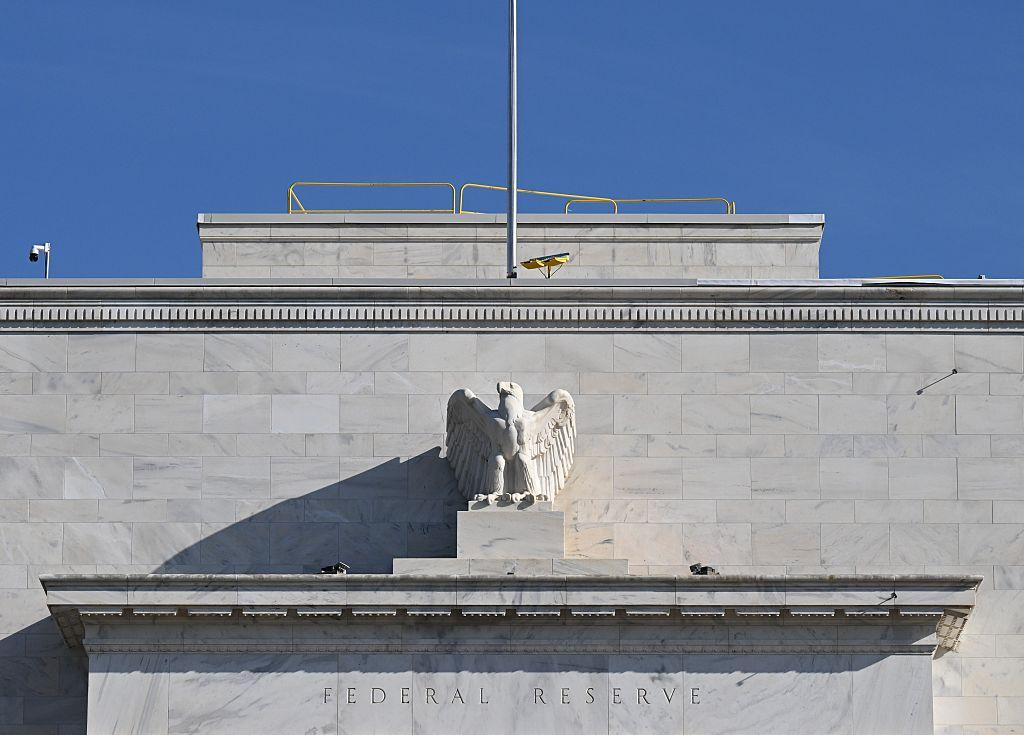

When Chairman Kevin Warsh ascended to the throne of the world's most powerful institution, he promised one thing: no more forward guidance. Under his watch, the Federal Reserve would no longer lay down the policy path and offer a peek into the central bank's crystal ball. Some of the top officials must have missed Warsh's memo.
Talking at the Federal Reserve
The US central bank must have a new dual mandate: talk and talk some more.
Any time Kevin Warsh has made a public appearance, he has offered no hint of forward guidance. Jokes, self-deprecation, and allusions to reforms have allowed him to avoid predicting the Fed's moves.
The likes of Federal Reserve Governor Christopher Waller and Dallas Fed President Lorie Logan have not emulated this discretion. Instead, they have uttered remarks that spooked Wall Street.
In an overseas speech this week, Waller warned that persistent higher-than-expected inflation could force him and his colleagues to pull the trigger on a jumbo-sized rate hike next month. Here is what he said in his prepared comments:
"If the October CPI inflation data out later today are similar to the past two monthly readings — with core CPI inflation around 0.3 percent or even higher — then a stronger policy move may be needed. In that case, I believe a 50 basis point hike in the policy rate should be considered at the December meeting. Hiking only 25 basis points would put our credibility at risk, a risk I am not eager to take."
His oration came just before the October Consumer Price Index, which, in the words of Chicago Fed President Austan Goolsbee, was "borderline disturbing."
Free with the Daily Briefing
85EssaysUnravel the Constitution
Hamilton, Madison & Jay’s complete case for America, free and searchable in the Publius Reader.
Free with the Daily Briefing. Unsubscribe anytime.
The Bureau of Labor Statistics did not publish the year-over-year inflation numbers, but the monthly figures were concerning. Inflation jumped 0.4% – above economists' expectations – and core inflation, excluding food and energy, rose 0.3%, also topping the forecast.
After the hot inflation report, a chorus of monetary policymakers said it could be time to raise rates more aggressively. Others were a bit more coy, but the message was the same: prepare for tighter monetary policy in the year ahead.
Dallas Fed President Lorie Logan called for two more rate hikes. Kansas City Fed President Jeffrey Schmid argued that monetary policy is still "fairly accommodative," meaning the Fed has to become more hawkish. Fed Vice Chair for Supervision Michelle Bowman said inflation is "more persistent" and "there is still work to do" to restore inflation to the Federal Reserve's 2% target.
Is Inflation Spiraling Out of Control?
The base effects of this year’s inflation spike should dissipate sometime next year. If crude oil prices crater amid a resolution to the war in Iran, headline consumer inflation could drop even further than most forecasts predict. Underlying inflation, however, could remain sticky, stubborn, and surprising.
From Liberty Nation News, Trivia, Facts, Check Us Out
Stay informed.
Today’s news, the Constitution and American history, written for young readers.
Visit GenerationLiberty.com
In addition to Middle East tensions and the Eastern European conflict, President Donald Trump’s tariffs are still traversing the global economy. Core inflation, hovering around 3%, could stay in this range for the foreseeable future. The second- or third-order effects of inflation-inducing world events could eventually filter through the system in 2027.
At the same time, promising economic and market data suggest the United States could avoid the pain of ongoing elevated inflation next year.
Gasoline prices are plummeting below $4 per gallon. Tanker rates are collapsing. Wholesale gasoline is plunging. Lumber and wheat are down more than 20%. The one-year inflation breakeven rate is below 2%. Shelter drove one-third of last month's CPI. Unit labor costs (good or bad) are falling. It would not be surprising if November CPI declined by 0.1%.
So, relief could be on the way as the world turns the yearly page to 2027.
Take a Hike!
Central banks, mainly the Federal Reserve, waited too long to remove the pandemic-era emergency measures and kept interest rates artificially low for longer than necessary. They thought inflation was transitory and that accommodation was still required. This historic misfire will be etched into the annals of monetary policy textbooks forever. Because they fear making the same mistake twice, the Fed and its counterparts will keep hiking, even if the data do not support further tightening.