

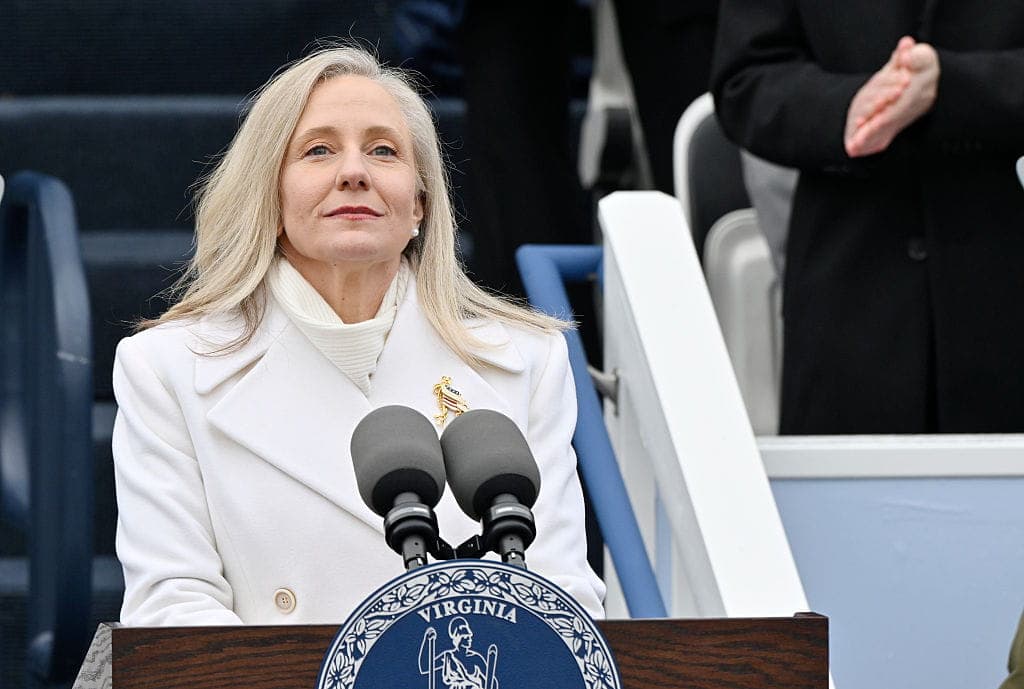

The Virginia Supreme Court gave Democrats a lovely early Valentine’s Day gift on Friday the 13th. Even before the court’s ruling on this latest redistricting plan, legislators of the Old Dominion were fast-tracking a new congressional map that could see four more red seats in the US House flipped to blue in the midterms.
Governor Abigail Spanberger was expected to sign off on it early next week, leading to a special election on the plan in April, should the court rule in their favor. It did. Even as Democrats notch this significant win, however, another court case – Louisiana v. Callais at the US Supreme Court – could wash it all away.
A Matter of Constitution
Democrats hold a trifecta in Virginia: They lead the State Senate 21-19 and the House 64-36, and Governor Spanberger is, of course, also a Democrat. This made it fairly easy to pass a bill allowing the state constitution to be amended in a special election this spring to allow the left-leaning legislature to sideline the bipartisan redistricting commission.

But the constitutional change itself still requires a popular vote.
The Virginia Constitution can be amended by a simple majority – 50% plus one – and voter data from the Independent Voter Project suggest they could pull it off. The party breakdown as of the last time it was updated on August 27, 2025, was 51.81% Democrats to 29.99% Republicans and 18.21% unaffiliated. So, then, the question becomes what kind of voter turnout can be expected in a spring special election outside the regular voting schedule and just how those million or so unaffiliated voters will feel about it.
Now that the state supreme court has paved the way, the special election will be scheduled for April 21 – though early voting starts March 6. At present, Democrats control six of the state’s 11 seats in the US House. If the people choose to allow their lawmakers to pass the new proposed map, that could shift to 10-1.
Redistricting, From Court to Court
Republicans had initially challenged the legislature’s decision to hold a referendum on a constitutional amendment. A lower court ruled in their favor last month, saying Democrats had made a procedural error, prohibiting the vote. But the Virginia Supreme Court overturned that stay on Friday.
Still, that ruling isn’t the final answer on the whole redistricting maneuver, as the court continues to weigh the merits of the case. Oral arguments may soon be scheduled, though a final ruling is likely to happen only after the vote.
As well, there’s another – arguably bigger – case at the US Supreme Court that could potentially wash away any progress gained by Democrats with a new map in Virginia.
On October 15, 2025, the Supreme Court heard new arguments in Louisiana v. Callais, which asks whether Louisiana’s “intentional creation of a second majority-minority congressional district violates the Fourteenth and Fifteenth Amendments to the U.S. Constitution.”
Shortly after the Louisiana legislature adopted a new congressional map in 2021, black voters and organizations filed lawsuits, claiming the map violated Section 2 of the Voting Rights Act because it dilutes the votes of black people in central Louisiana. As a remedy, plaintiffs asked for another map to be drawn that created a second black-majority district in the area. The Middle District of Louisiana and then the Fifth Circuit of Appeals both ruled in their favor.
This ruling – and subsequent new map – was challenged, however, as an unconstitutional racial gerrymander under the Fourteenth Amendment. Should the Supreme Court ultimately rule in Republicans’ favor, it could trigger another wave of redistricting across the nation as GOP-led states redraw any district maps currently based on race. Voting rights advocates estimate it could be 19 or more districts – certainly a big enough wave to wash away four in Virginia.