


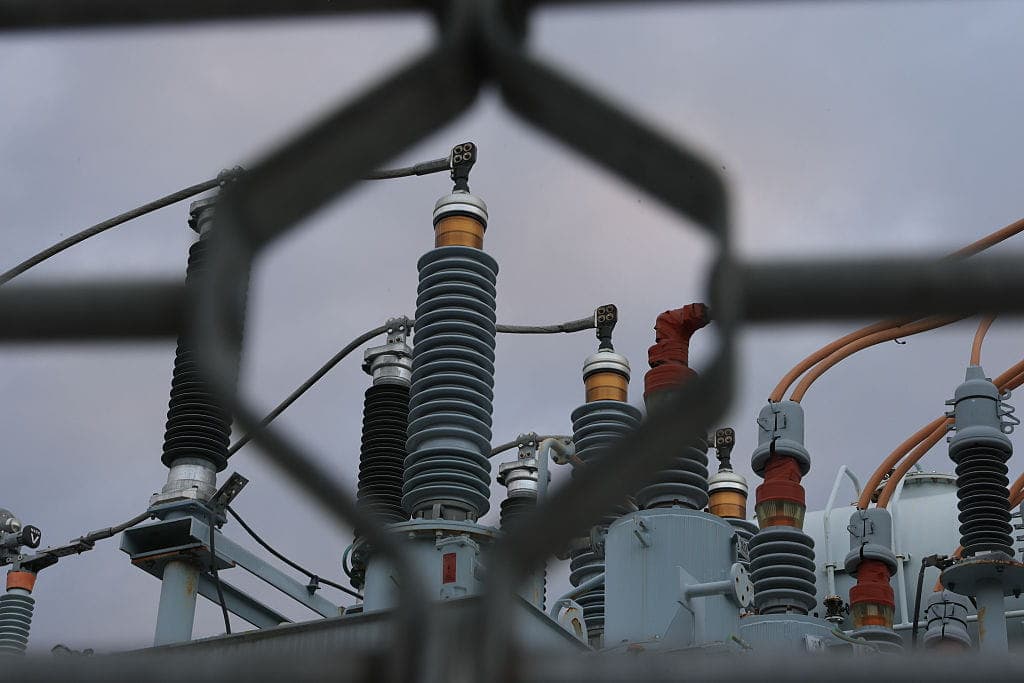

Data centers to host the growing artificial intelligence (AI) technology are creating an enormous new demand for electricity. The political debate and public outcry surrounding them are top headlines. At the same time, cyberattacks are threatening the grid systems that power the vast network of electricity that supports homes and businesses, including AI. Both are needed. Both are essential to America’s infrastructure, security, and growth. The challenge is balancing them, figuring out ways to expand and modernize the electric grid fast enough to supply an AI-driven economy without creating weaknesses that foreign governments, criminal organizations, and hackers can exploit.
White House Declares National Emergency
Most people realize the nation’s grids are in serious need of an upgrade. When electric vehicles started rolling out, issues and concerns about the power grids being able to support the new demand ballooned. But now that focus has shifted to AI data centers. “More than 90 percent of consumed power passes through high-voltage transformers at some point along its journey,” according to the US Department of Energy’s website. “But aging infrastructure is putting this energy supply in jeopardy. Today, more than 70% of the country’s transformers are at least 25 years old and another 15% are more than 40 years, exceeding their expected life expectancy.”
Not only are our electric grids out of date but also cyberattacks have become a critical problem. On Aug. 26, President Donald Trump declared a “National Emergency to Secure the United States Bulk-Power System.” He was quoted in a press release: “Certain foreign actors are increasingly creating and exploiting vulnerabilities in the United States bulk-power system, which provides the electricity that supports our national defense, vital emergency services, critical infrastructure, and economy.”


Free with the Daily Briefing
85EssaysUnravel the Constitution
Hamilton, Madison & Jay’s complete case for America, free and searchable in the Publius Reader.
Free with the Daily Briefing. Unsubscribe anytime.
Furthermore, “The rapid growth of advanced manufacturing, data centers, artificial intelligence, and defense production has increased the Nation’s dependence on abundant, reliable electricity and magnified the consequences of a successful attack or supply disruption on the bulk-power system.”
China, Iran, and Russia have already managed to infiltrate our systems and cause disruptions that could prepare them for future attacks and control.
According to a 2024 press release from the Cybersecurity and Infrastructure Security Agency (CISA) — which works in conjunction with the Federal Bureau of Investigation and the National Security Agency — Chinese government-backed hackers known as Volt Typhoon have broken into computer systems used by important US infrastructure, including energy, communications, transportation, and water systems. Officials believe the hackers may be gaining access now so they can disrupt or damage these systems during a future conflict with the United States.
In another 2024 CISA report, the agency said Iranian Islamic Revolutionary Guard Corps-affiliated hackers targeted programmable logic controllers, also known as PLCs. The CyberAv3ngers group reportedly claimed responsibility for attacks against critical infrastructure organizations, mainly in water and energy sectors in the United States, Israel, and other countries. These facilities also service energy sources, health care, manufacturing, and transportation.
The cybersecurity agency warned of attacks coming from Russia in a 2022 document. According to CISA, Russia gained access to a foreign oil refinery in 2017 and manipulated its safety equipment, causing the refinery to shut down for several days.
Data Centers Not Necessarily Evil
Data centers aren’t a threat to the power grid. Rather they act as a new customer with massive needs at a time when the grid is already plagued with infrastructure and security issues.
Artificial intelligence is here to stay and continues to grow by leaps and bounds. Data centers help support that technology and also communications, banking, health care, government operations, and a host of other services Americans use every day. The problem is that the country’s digital economy is expanding faster than parts of the electrical infrastructure can handle.
While data centers aren’t causing a cybersecurity problem, their enormous electricity requirements make it difficult to keep up. “Energy use began to increase as the amount of accelerated AI servers in the server stock began to become significant in 2017, and by 2018 data centers consumed about 76 TWh, representing 1.9% of total U.S. electricity consumption,” Lawrence Berkeley National Laboratory explained. “U.S. data center energy use continued to grow at an increasing rate, reaching 176 TWh by 2023, representing 4.4% of total U.S. electricity consumption.”
The laboratory released an updated report in June that estimated data centers could account for 11.8% of all US electricity consumption by 2030.
Meeting the Challenges
In March, the Department of Energy approved $1.9 billion for electricity infrastructure projects to help handle the demand while improving grid reliability. A major focus of the project is called advanced reconductoring. Instead of building new power lines from scratch, utilities can replace old wires on existing towers with newer ones that carry more electricity.

Microgrids – a smaller electrical system that includes its own power generation – might be another component. These can operate with the larger grids and can also continue supplying certain loads when the main grid has problems.
Another option is making the centers themselves more energy efficient. One technology showing promise is photonics, which uses light to move information instead of relying entirely on electrical signals traveling through metal connections. The technology is already being used in AI data centers. In 2025, NVIDIA announced new equipment that uses photonics to move data using less electricity. The company said the technology can be 3.5 times more energy efficient than traditional systems.
Data centers are helping drive AI and the digital services the country depends on, but none of it works without a reliable supply of electricity. The challenge is making sure the grid grows and modernizes alongside that technology, while protecting it from cybersecurity threats. The real balancing act is building enough power for America’s digital future without leaving the electrical backbone supporting it behind.

.jpg&w=1920&q=75)