
.jpg&w=1920&q=75)

When it comes to prognostications about 2028 presidential election candidates, most of the chatter surrounds the Democratic Party. Will it be former VP Kamala Harris or California Governor Gavin Newsom – or maybe Pete Buttigieg? Perhaps most observers think, on the Republican side, current Vice President J.D. Vance is President Donald Trump’s inevitable successor, with Secretary of State Marco Rubio a possible alternative. Trump himself has endorsed neither one of them, though, and is, it appears, leaving the field open for other potential candidates.
Previously, the president has suggested Vance and Rubio, in either order, would make unbeatable running mates against anyone the Democrats nominate. Still, he avoided endorsing either of them when the Washington Examiner asked him about the 2028 presidential election on August 31.
Trump’s Take on the 2028 Presidential Election
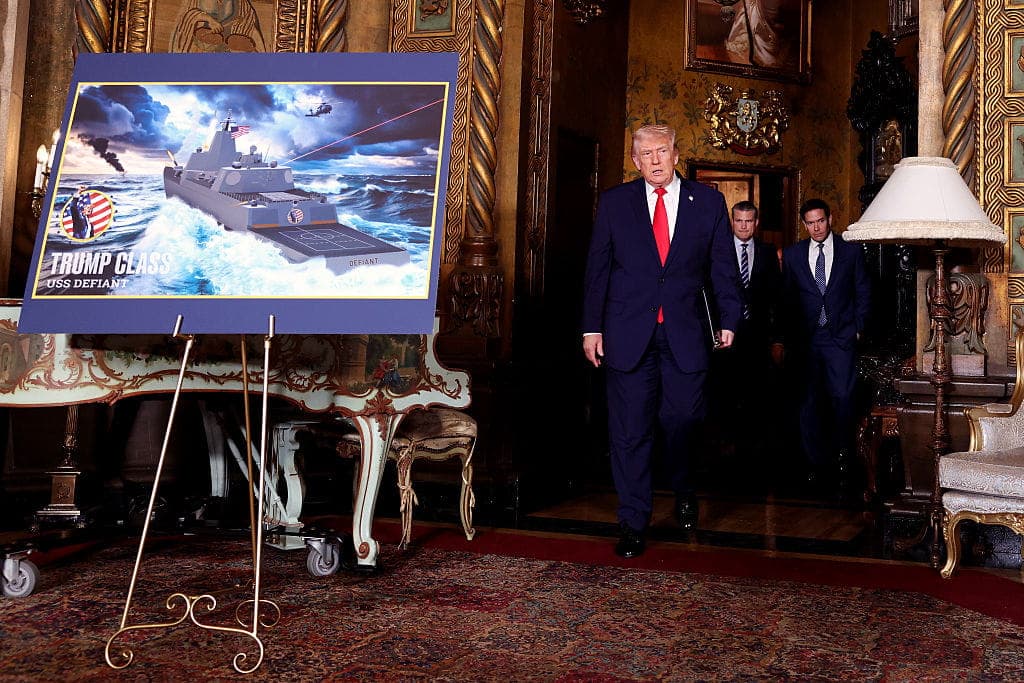
So, what does the president really think about 2028 prospects? "We have to get through the midterms first," he told reporters recently in the Oval Office. "I'll bet there's a lot of people considering it that you don't know about," he remarked, referring to Republican 2028 presidential election contenders.
NBC News has reported – relying on anonymous sources, naturally – that Secretary of War Pete Hegseth has been discussing with associates a possible 2028 run. Hegseth dismissed the report as “100% false” in a post on the X social media platform. Texas Senator Ted Cruz is also apparently considering yet another White House bid.
Free with the Daily Briefing
85EssaysUnravel the Constitution
Hamilton, Madison & Jay’s complete case for America, free and searchable in the Publius Reader.
Free with the Daily Briefing. Unsubscribe anytime.
When asked about the Hegseth rumor, President Trump responded that the Secretary of War was doing a "fantastic job, but it's very early to talk about that."
While it seems as though news media outlets – both on the left and the right – are attempting to bait the president into tipping his hand on the 2028 presidential election, he is, from a political strategy perspective, doing the right thing by refusing to directly endorse anyone. If he did so now, he would take the focus off the all-important November midterms.
The Folly of a Premature Endorsement
Also, in a way, he would be setting himself up as a lame-duck president. To name his preferred successor less than two years into his final term in office, Trump would effectively be saying his time is up, this is the new guy, and I’m already focused on life after the White House. One could argue that the previous occupant of 1600 Pennsylvania Avenue checked out after about two years in office – and perhaps even earlier than that – albeit because of his physical and mental health, rather than as a conscious choice. That didn’t turn out well.
Not only that, but any endorsement now would drive a wedge into a Republican Party already dealing with enough challenges as it gears up to defend a slim majority on Capitol Hill.

Additionally, it would put enormous pressure on whoever he endorsed. The left-wing media machine would relentlessly hound whoever the endorsee was. That individual would endure a two-year smear campaign even before the presidential primaries begin.
Pundits and reporters can read what they will into any remarks Trump makes – or declines to make – about 2028. None of it has any substance at present. Trump may already have decided who he will endorse when the time is right. Or perhaps he is still working on a path to another term for himself. One can only hope he keeps that fantasy alive, purely because of how much it infuriates – and perhaps terrifies – his detractors. If nothing else, the very idea is enormously entertaining.