
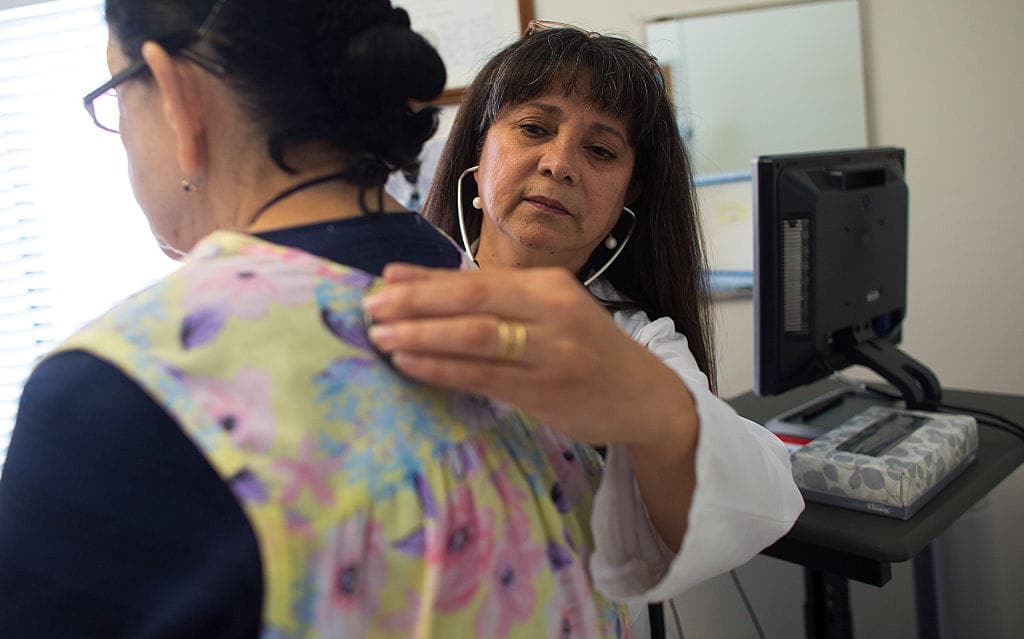

As California goes, so goes the nation. That old saw has referred almost exclusively to the state’s progressive, left-wing policies since the ’90s. But now it’s bad news for the left. For years, California dreamers have wished for universal, single-payer health care. And for a while, they almost achieved it – well, universal coverage, anyway. But the money is running out, and millions more Californians are projected to become uninsured over the next several years. The problem with socialism, to paraphrase former British Prime Minister Margaret Thatcher, is that you eventually run out of other people’s money. And that’s precisely what’s happening.
The thing about universal health care – especially if it’s “single-payer,” which is just a political way of saying government-run and tax-funded – is that it’s awfully expensive. Thanks to a combination of progressive state officials and federal tax subsidies, Californians were largely living the dream for a while. But now – as economic reality sets in – they’re getting a wake-up call.
California Health Care and the Socialist Dream
Progressive Democrats – especially the open socialists – have been calling for “single-payer” health care for everyone, regardless of income or citizenship status. It would mean an end to private health insurance companies. It would likely require the government to regulate the cost of care and would cost trillions a year nationally and hundreds of billions annually in California alone.

While “universal” and “universal single-payer” are often used interchangeably by politicians and activists, it’s important to understand they are different. Around 2024, California almost achieved universal health care coverage – about 95%. But that’s far from universal single-payer; in that same year, only 37% to 38% of Californians were actually covered by the state’s program, Medi-Cal. And that’s the year the state finished its five-year eligibility expansion. When Gavin Newsom became governor in 2019, he quickly set about making good on his campaign promise to expand tax-funded health care to include illegal immigrants. Different groups (children, elderly, etc.) were added over the years until, in January 2024, low-income illegals became eligible.
Republicans in the state, of course, pushed back because of the costs, but they were outnumbered. Democrats have enjoyed around a three-to-one majority in both the state assembly and senate since 2018 – exactly four-to-one in 2022 in the senate. But now even some Golden State Democrats are on board with rolling back the state’s eligibility.
Waking Up to Reality
What happened? Well, they flew too close to the sun, and they got burned. With roughly 95% of Californians, legal or not, covered by some form of insurance – and with more than a third being covered by Medi-Cal – the reality of the cost to cover everyone simply couldn’t be ignored any longer.
Even Gov. Newsom has had to accept budget cuts to California’s health care spending, though the budget he signed in June does delay the worst of the reductions for another year. Still, just kicking the can down the road for 12 months doesn’t solve the problem, nor does it save low-income Californians from losing their insurance when the time comes.
The truth of the situation is in the numbers.
Let’s break down the coverage and the cost. California is the largest health care market in the United States. According to the federal health care agency CMS, the state’s total expenditures have been around $400 billion or more since 2020. For most of that time, Medi-Cal has covered between $124 billion (2021) and $200 billion (2026).

Free with the Daily Briefing
85EssaysUnravel the Constitution
Hamilton, Madison & Jay’s complete case for America, free and searchable in the Publius Reader.
Free with the Daily Briefing. Unsubscribe anytime.
But the federal government has covered between 60% and 65% of that in each of those years. In that same time span, the state has brought in between $217.7 billion and $275 billion a year in total tax revenue. Even in the higher tax years, that’s at least twice what it costs to cover the state’s share of Medi-Cal, and there are a great many tax-funded programs outside of Medi-Cal that need their fair share of funding.
Enter the One Big Beautiful Bill Act. Beginning in 2027, California will lose an estimated $30 billion annually from the federal dole.
So, how will California cover its aggressively progressive health care program? It won’t. The Golden State already imposes the highest income tax, sales tax, and tax on capital gains in the country. It’s in the top ten for highest corporate tax and ranks 48th overall in the Tax Foundation’s State Tax Competitiveness Index (where 50th is the least competitive).
Newsom recently signed a law that increases taxes on large corporations to help cover this cost, and a billionaire's tax has been floated as a ballot measure. But in reality, California simply can’t squeeze much more out of its residents. As a result, Medi-Cal will soon shed recipients, and it’s going to happen pretty fast. According to the UC Berkeley Labor Center and UCLA Center for Health Policy Research, the uninsured rate could nearly double by 2030, reaching 15%, a number not seen since 2013. “I knew it was going to be bad, but seeing that doubling was shocking to me,” Miranda Dietz, director of the labor center’s health care program, told reporters. In the next four years, an estimated 2.2 million people could lose coverage.
Dreams are nice, but you have to wake up eventually. California is now finding out the hard way that, as noble as health care for all may sound, delivering quality care to everyone in a timely fashion isn’t an economic reality. Now the question is whether the rest of America’s socialist left will open their eyes any time soon. As California goes, after all, so goes the nation.



.jpg&w=1920&q=75)