


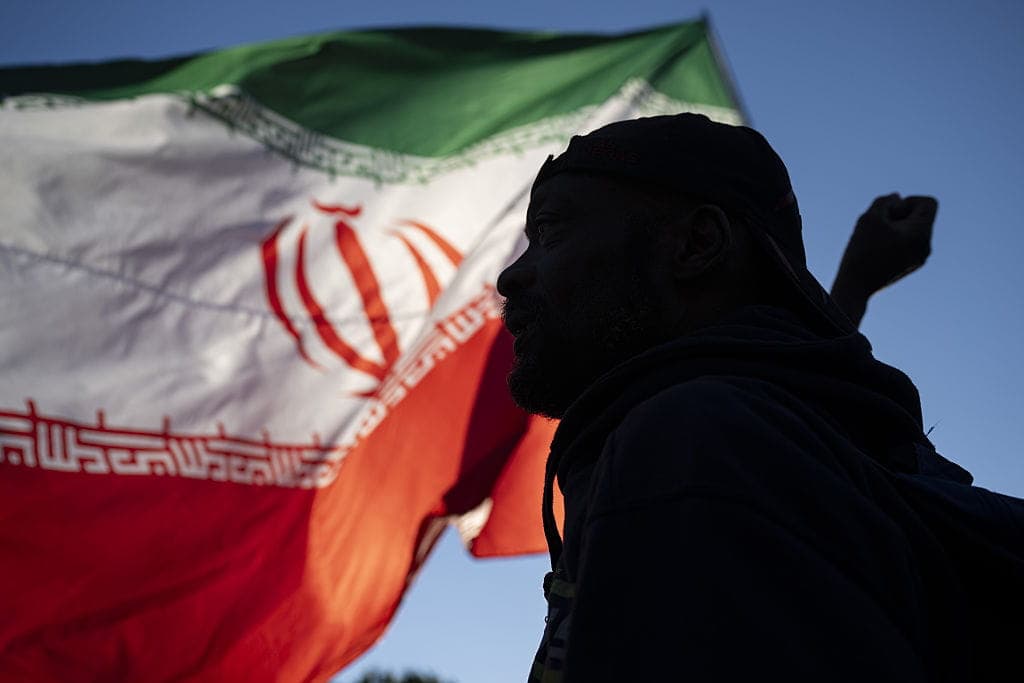

It has been three days since the two-week ceasefire between the US, Israel, and Iran began. Whereas President Donald Trump has appeared upbeat about the truce, Iran has been, well, Iran. Whatever remains of the Tehran government has been whining that the US is breaking the agreement. But is this just a case of the pot calling the kettle black? News clips from Israel show Iranian ballistic missiles raining down on Tel Aviv and Jerusalem after the ceasefire. Nevertheless, the negotiating challenge is to take the ten-point Iranian proposal and come away with something that is not silly on its face. In a Truth Social post, Trump called the reports on the Iranian proposal a “totally FAKE TEN POINT PLAN on the Iran negotiations.”
Ceasefire Provides Hope for Optimism
Still, there is cause for some optimism stemming from an official announcement by Sayed Abbas Araghchi, Iran’s minister of foreign affairs. On April 7, he posted on Truth Social:
“In response to the brotherly request of PM Sharif [the Prime Minister of Pakistan] in his tweet, and considering the request by the US for negotiations based on its 15-point proposal as well as announcement by POTUS about acceptance of the general framework of Iran’s 10-point proposal as a basis for negotiations, I hereby declare on behalf of Iran’s Supreme National Security Council: If attacks against Iran are halted, our Powerful Armed Forces will cease their defensive operations. For a period of two weeks, safe passage through the Strait of Hormuz will be possible…”
Putting Araghchi’s description “Powerful Armed Forces” into context, Liberty Nation News Editor-in-Chief Mark Angelides’ insightful analysis addresses President Trump’s objectives in stopping Iran as a threat. “To that end, the United States destroyed the Iranian navy and air force, took out top leadership, and set back munitions programs by years,” Angelides observed. So, with Iran’s capability to respond militarily (in any meaningful way) in tatters, why is the Tehran remnant still making demands? One of the key conditions of the two-week ceasefire is that the Strait of Hormuz would be open to international shipping. The Associated Press explained: “The United States and Iran said Tuesday [April 7] they have agreed to a two-week ceasefire in the war that includes the reopening of the Strait of Hormuz.”
From Liberty Nation
 News, Trivia, Facts, Check Us Out
Stay informed.
Today’s news, the Constitution and American history, written for young readers.
Visit GenerationLiberty.com
Yet the San Francisco Chronicle observed on April 9: “A ceasefire deal to pause the war in Iran appeared to hang by a thread Wednesday [April 8] after the Islamic Republic closed the Strait of Hormuz again in response to Israeli attacks in Lebanon.” The problem is that Israel has made clear that the Israel Defense Force’s attacks on Hezbollah in Lebanon are not part of the ceasefire deal. Another sticking point is Iran’s hubris in its stated intention to charge a toll of $1 per barrel of oil for outbound tankers using the Hormuz Strait. Some of the largest tankers can carry up to three million barrels of oil. Additionally, Oman, which borders the strait, has as much claim on the international waterway as does Iran. It’s not clear what Iranian military capability could enforce the toll collection.
News, Trivia, Facts, Check Us Out
Stay informed.
Today’s news, the Constitution and American history, written for young readers.
Visit GenerationLiberty.com
Yet the San Francisco Chronicle observed on April 9: “A ceasefire deal to pause the war in Iran appeared to hang by a thread Wednesday [April 8] after the Islamic Republic closed the Strait of Hormuz again in response to Israeli attacks in Lebanon.” The problem is that Israel has made clear that the Israel Defense Force’s attacks on Hezbollah in Lebanon are not part of the ceasefire deal. Another sticking point is Iran’s hubris in its stated intention to charge a toll of $1 per barrel of oil for outbound tankers using the Hormuz Strait. Some of the largest tankers can carry up to three million barrels of oil. Additionally, Oman, which borders the strait, has as much claim on the international waterway as does Iran. It’s not clear what Iranian military capability could enforce the toll collection.
The new round of negotiations between the US and Iran will begin in Pakistan. “US Vice President JD Vance will lead a delegation in talks with Iran in Pakistan beginning on 11 April, according to White House Press Secretary Karoline Leavitt,” the BBC reported. “With the ceasefire in place, Vance, along with special envoy Steve Witkoff and Jared Kushner, will head to Pakistan for in-person negotiations with their Iranian counterparts.” Apparently, the talks will be face-to-face, unlike previous negotiations, which were conducted through an intermediary. Though it is not clear what the Iranian position will be, the foundation for the US side will be its previously offered 15-point proposal to which Foreign Minister Araghchi referred.
If the Carrot Doesn’t Work, There’s Always the Big Stick
If these discussions prove no more fruitful than those in the past, President Trump has promised a resumption of hostilities more intense than those in the past six weeks. In a Truth Social post, the president explained that US forces, for the “lethal prosecution and destruction of an already substantially degraded Enemy, will remain in place in, and around, Iran, until such time as the REAL AGREEMENT reached is fully complied with.” Should the talks not produce a “REAL AGREEMENT,” then the “’Shootin’ Starts’ bigger, and better and stronger than anyone has ever seen before.”
Though in its public comments, the remaining Iranian leadership has expressed an unwarranted bravado, after six weeks of relentless airstrikes, there is some hope that the conflict will end. As for the US achieving its ends, after its air assault on Iran, Secretary of War Pete Hegseth, in an April 8 press conference, explained:
“Together with our Israeli partners, America’s military achieved every single objective on plan, on schedule, exactly as laid out from day one. Iran’s navy is at the bottom of the sea. Whether it’s the Soleimani class, their frigate class, their prized drone aircraft carriers, submarines, minelayers sunk. Iran’s air force has been wiped out. Iran no longer has an air defense — any sort of a comprehensive air defense system. We own their skies. Their missile program is functionally destroyed: launchers, production facilities, and existing stockpiles depleted and decimated.”
Over the next two weeks, during the ceasefire, Iran could accept its reality and negotiate in good faith. With the power of the US military remaining on Tehran’s doorstep, willing and able to reduce the country to rubble, the US has all the negotiating cards. Iran’s time for obfuscation and stringing the US along is over.
~
The views expressed are those of the author and not of any other affiliate.




.jpg&w=1920&q=75)