

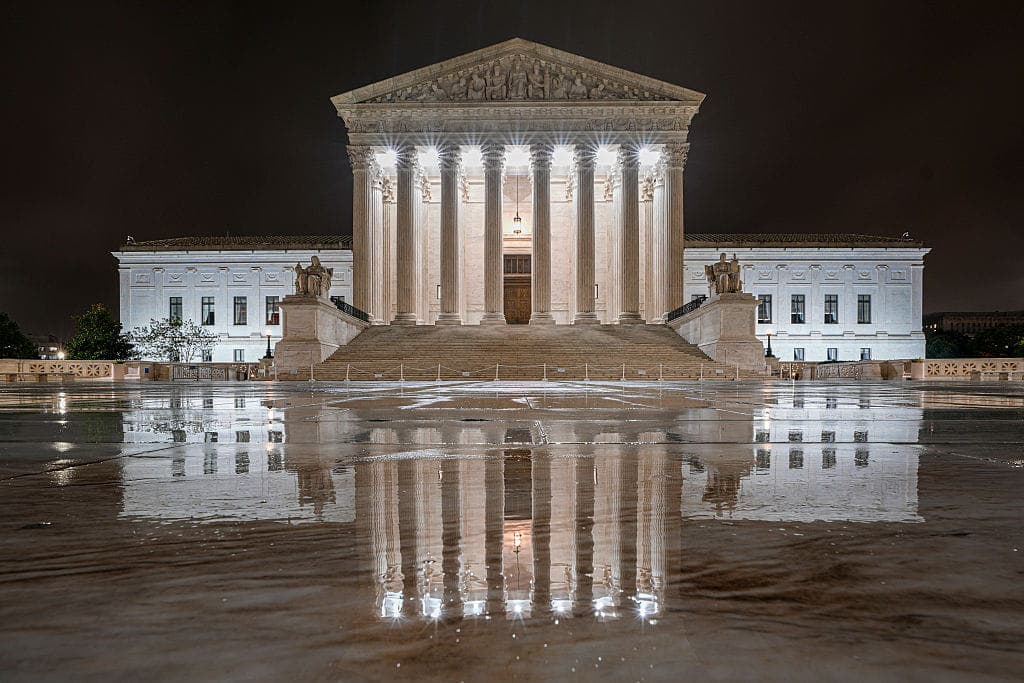

President Donald Trump’s administration can continue restricting immigration judges’ authority to pause deportation cases after the Supreme Court rejected an emergency request to intervene in a legal battle over the policy. The Court’s decision allows an agreement between the administration and Texas that prevents immigration judges from temporarily setting aside cases to remain in effect while litigation continues.
The Supreme Court issued the unsigned order in response to three cities and an immigrant advocacy group that asked the justices to halt the Trump-Texas deal. No one on the Court publicly dissented. The order did not rule on the merits of the case but leaves the policy in place for now.
Immigration Deal or No Deal?
The policy in question, known as “administrative closure,” has been used for decades, but was codified in 2024 during President Joe Biden’s single term by the Justice Department’s Executive Office for Immigration Review (EOIR). It allowed immigration judges to temporarily pause certain deportation cases while individuals pursued other legal options to remain in the United States — including cases involving crime victims or witnesses who may need additional time to seek asylum or other legal protections, SCOTUSblog explained. "Eliminating these protections puts vulnerable people at greater risk of deportation and undermines public safety in communities across the country," the left-wing group Democracy Forward said in a statement following the Court’s decision.
But this summer, Texas officials argued in federal court that the administrative-closure rule was just “one part of the Biden-Harris Administration’s campaign to undermine our immigration laws.” Officials argued that the EOIR “does not have the authority to adopt the administrative-closure rule.” Rather, immigration judges are required by law to simply “decide whether an alien is removable from the United States.” The Trump administration agreed to settle the case the same day Texas filed it.
Then, in August, Baltimore, Maryland; New Haven, Connecticut; Columbus, Ohio; and immigrant legal aid organization Centro Legal de la Raza sought permission to enter the lawsuit. The three cities, all home to large immigrant populations, and the advocacy group wanted to protect the administrative-closure policy on appeal. Chief US District Judge Reed O’Connor denied the group’s request, citing lack of standing. “In particular, he rejected the cities’ contention that the elimination of the rule would cost them money because their taxpayers are likely to be deported,” SCOTUSblog explained.
The challengers, unwilling to take no for an answer, sought relief from the US Court of Appeals for the 5th Circuit — but they were again rejected. They then moved on to the Supreme Court, insisting that the agreement between the Trump administration and Texas amounted to “egregious collusion.” The Supreme Court denied their request.
A Pre-Midterm Win
Hundreds of thousands of deportation cases have been delayed through administrative closure, according to Reuters. The Trump administration’s efforts to end the practice reflect the president’s broader push to crack down on illegal immigration and accelerate deportation proceedings.
SCOTUS handed the Trump administration a victory on one of the president’s top priorities, immigration enforcement, just days before the midterms. Supporters of the president’s immigration agenda will undoubtedly welcome the news — but the decision could also energize progressive activists who have long called to abolish ICE.