
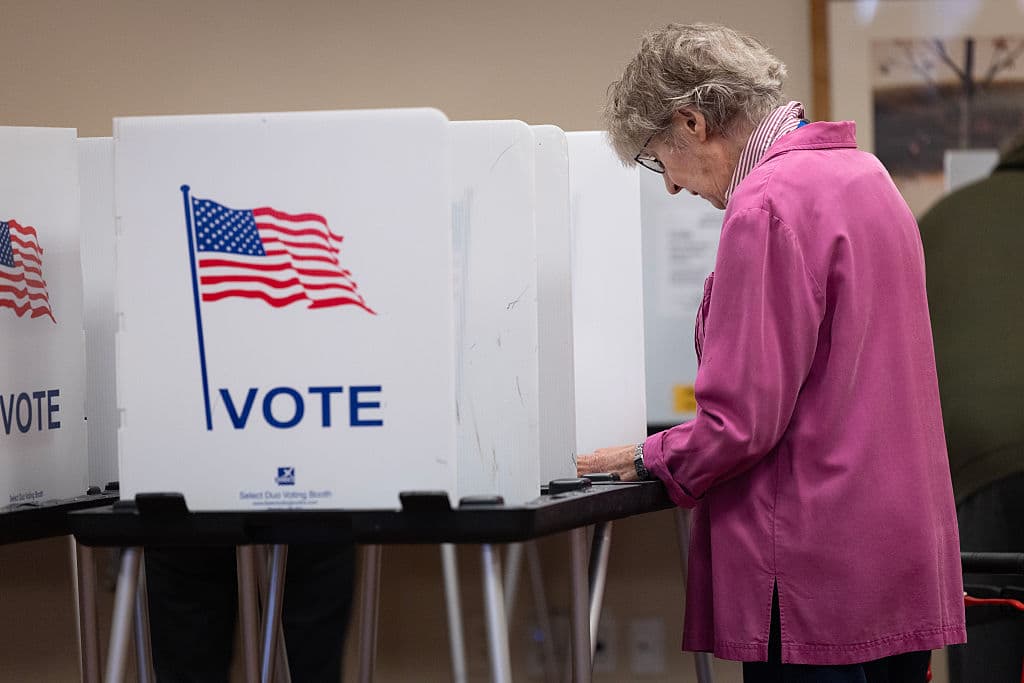

As Congress continues to dither on the SAVE America Act, many red states are taking up the slack. A new Wisconsin law requires most signature gatherers for political candidates to be residents of the state. The election integrity bill – which was introduced by Republican State Rep. Jim Piwowarczyk and others and signed into law by Democrat Gov. Tony Evers – highlights bipartisan concern over who should get a vote in American politics. But as federal efforts to secure US elections grind to a halt, are local election integrity efforts getting renewed attention?
Wisconsin Elections Are for Wisconsinites
It’s time to call a spade a spade: Senate Republicans likely don’t have the votes to pass the SAVE America Act. For now, election integrity lies with the states, and Wisconsin is helping to lead the way. Under Wisconsin Act 126, individuals who want to help circulate petitions for local and state elections must be eligible voters in the state, with an exception made for presidential and vice presidential candidates.
Piwowarczyk said the law “ensures that individuals circulating nomination papers and recall petitions are qualified Wisconsin electors – people who live here, vote here, and have a direct stake in our communities. This is a commonsense reform,” he added. “By ensuring that those gathering signatures are Wisconsin residents, we are reinforcing accountability and maintaining public confidence in our elections.”
Election Confidence MIA
Public confidence in elections? According to a recent PBS News/NPR/Marist poll, Americans’ trust that elections are run fairly has hit a new low. The November midterms are right around the corner, and the percentage of Americans “who expressed confidence [in elections] is at the lowest it’s been since Marist first asked this question in 2020.”
From Liberty Nation
 News, Trivia, Facts, Check Us Out
Stay informed.
Today’s news, the Constitution and American history, written for young readers.
Visit GenerationLiberty.com
One-third of adults believe voter fraud is “the biggest threat to safe and secure elections,” while 26% agree the leading problem is misleading information. Voter suppression, foreign interference, and polling station issues were also listed among survey participants’ top concerns.
News, Trivia, Facts, Check Us Out
Stay informed.
Today’s news, the Constitution and American history, written for young readers.
Visit GenerationLiberty.com
One-third of adults believe voter fraud is “the biggest threat to safe and secure elections,” while 26% agree the leading problem is misleading information. Voter suppression, foreign interference, and polling station issues were also listed among survey participants’ top concerns.
During the last two presidential elections, Wisconsin was subjected to intense scrutiny. In 2020, Joe Biden won the state by a razor-thin margin of 21,000 votes. In 2024, President Donald Trump won Wisconsin by just under 30,000. The Badger State is expected to be a battleground once again during the upcoming midterms, which is all the more reason for local lawmakers to focus on election integrity now – especially when the losing side is almost guaranteed to cry “stolen election.”
More Election Security
Florida Gov. Ron DeSantis, a Republican, recently signed legislation requiring stricter voter ID standards and proof of citizenship to register. Mississippi’s Republican Gov. Tate Reeves signed the Shield Act, requiring citizenship verification for all voters. Two more Republican governors – South Dakota’s Larry Rhoden and Utah’s Spencer Cox – signed laws that will require proof of citizenship to register to vote.
For some red states, the message is clear: If Washington won’t protect elections before the midterms, Republican governors will. Blue states, though? Don’t expect the same urgency. Ballotpedia, the digital encyclopedia of American politics, reported that just 12 states – Alabama, Arizona, Florida, Georgia, Kansas, Louisiana, Mississippi, New Hampshire, Ohio, South Dakota, Utah, and Wyoming – require proof of citizenship to register to vote “in at least some cases.” Not a single blue state in the bunch. And that’s just one piece of the election security puzzle.


.jpg&w=1920&q=75)