


When we think of the origins of Thanksgiving, we may imagine pilgrims and Native Americans gathered around wooden tables with food they grew and harvested. Early colonists had various days of celebrating and giving thanks for different reasons, such as a good crop year, a military victory, and a host of other occasions.
Officially, at the federal level, George Washington was the first to give a presidential proclamation designating a specific day to celebrate. The United States had recently established its new federal government under the Constitution, and Washington wanted Americans to recognize the nation's achievements and blessings. On Oct. 3, 1789, he issued this proclamation, as recorded by the Library of Congress:
“Whereas it is the duty of all Nations to acknowledge the providence of Almighty God, to obey his will, to be grateful for his benefits, and humbly to implore his protection and favor, and Whereas both Houses of Congress have by their joint Committee requested me ‘to recommend to the People of the United States a day of public thanks-giving and prayer to be observed by acknowledging with grateful hearts the many signal favors of Almighty God, especially by affording them an opportunity peaceably to establish a form of government for their safety and happiness.’ Now therefore I do recommend and assign Thursday the 26th. day of November next to be devoted by the People of these States to the service of that great and glorious Being, who is the beneficent Author of all the good that was, that is, or that will be.”
This first recognized day of thanks was more about having gratitude for the peaceful establishment of a government and the civil and religious freedoms American enjoyed than a day spent with family and loved ones watching football and gorging on food.
Abraham Lincoln issued a Thanksgiving proclamation establishing Nov. 26, 1863 (the same date as Washington’s), as the holiday for that year. At that time, the country was in the middle of the Civil War, and the president asked Americans to “set apart and observe the last Thursday of November next as a day of thanksgiving and praise,” cited the Library of Congress.
A Commercialized Holiday
When and how did Thanksgiving become so commercialized?
During the Great Depression, retailers were desperate for customers. Christmas shopping traditionally began after Thanksgiving. At that time, the holiday fell on the last Thursday in November, but in 1939, there were five Thursdays, meaning it fell on Nov. 30, giving shop owners about three weeks before Christmas. Business leaders thought that moving the holiday one week up would give people more time to shop, thereby increasing their sales. At first, President Franklin D. Roosevelt refused the idea, but then he agreed and on Oct. 31, 1939, he issued the official Thanksgiving proclamation that designated Nov. 23 as the holiday.
Free with the Daily Briefing
85EssaysUnravel the Constitution
Hamilton, Madison & Jay’s complete case for America, free and searchable in the Publius Reader.
Free with the Daily Briefing. Unsubscribe anytime.
This decision didn’t go over well with everyone. Traditionalists objected to changing a holiday that’s supposed to be associated with gratitude and family simply to a way to encourage people to spend more money.
Then there were other states that celebrated both days, so some Americans had two Thanksgivings. This was mostly done along state lines, where one family might be serving dinner while one block over people were still going to work or school.
Calendar makers were also displeased. Some had already printed millions of calendars that showed Thanksgiving on Nov. 30. Hotels complained because events they’d had planned and reservations made to celebrate the holiday were disrupted.
Thanksgiving parades were another tradition that started to promote holiday shopping. The first Macy’s New York City parade in 1924, for instance, was a promotional event intended to attract new customers.
In 1941, Congress stepped in and decided that Thanksgiving needed a permanent date. By federal law, they established the fourth Thursday in November so that when there were five Thursdays in the month, the day of gratitude wouldn’t be so close to Christmas shopping.
The Forgotten Tradition of Mumming
Thanksgiving wasn’t always a quiet observance day. In fact, a century ago, one tradition closely resembled Halloween. Ragamuffin Day, as it was sometimes called, was especially popular in New York City. Children wore old, oversized clothes, unusual hats, and masks. Some dressed up as beggars while others created elaborate costumes with the materials they had at home.
From Liberty Nation News, Trivia, Facts, Check Us Out
Stay informed.
Today’s news, the Constitution and American history, written for young readers.
Visit GenerationLiberty.com
Dressed up in their costumes, they would go door-to-door but they weren’t yelling “Trick or treat.” Instead they often asked: “Anything for Thanksgiving?” Sometimes they were rewarded with pennies, apples, or candy. When coins were tossed into the streets, the kids ran out to collect them. Children weren’t the only ones who celebrated. Adults held masquerades and neighborhood parties. Sometimes they participated in mumming, a European folk custom where groups wearing disguises and masks went door-to-door or paraded through streets performing dances, songs, and even short plays. The tradition can be documented as far back as 1891 in America.
While adults participated in mumming, children ran around the streets blowing loud horns and getting a little too rambunctious. People started complaining, some saying it was inappropriate for children to go around begging on such a holiday.
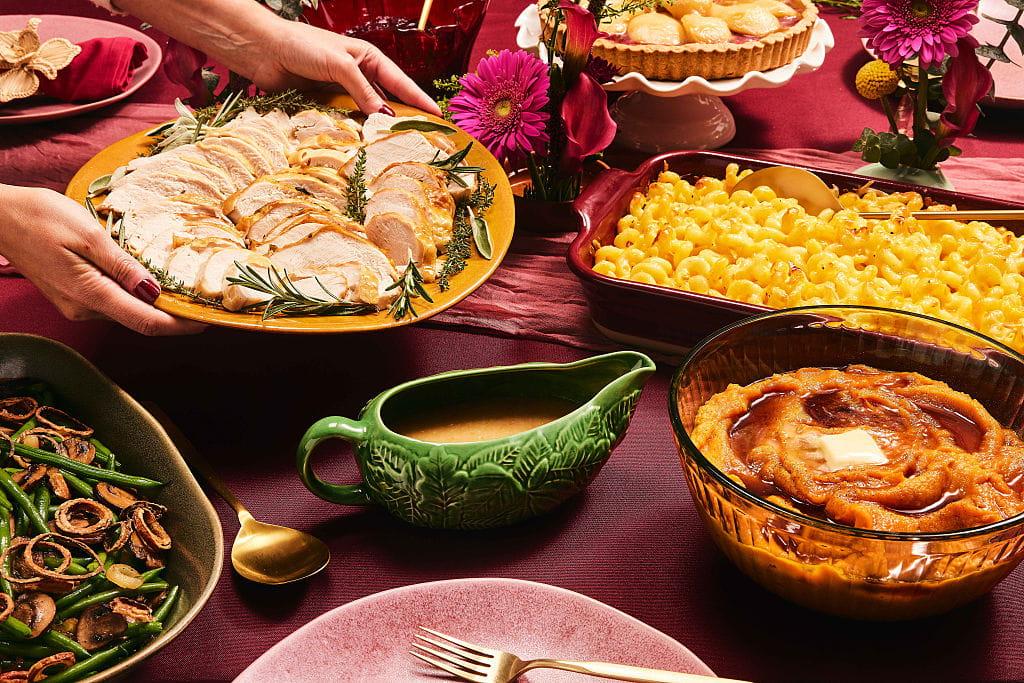
The custom survived into the 1950s but was abandoned as the trick-or-treat Halloween tradition started. Thanksgiving became a day to spend with loved ones, being thankful for blessings, and eating until tummies felt ready to pop.