


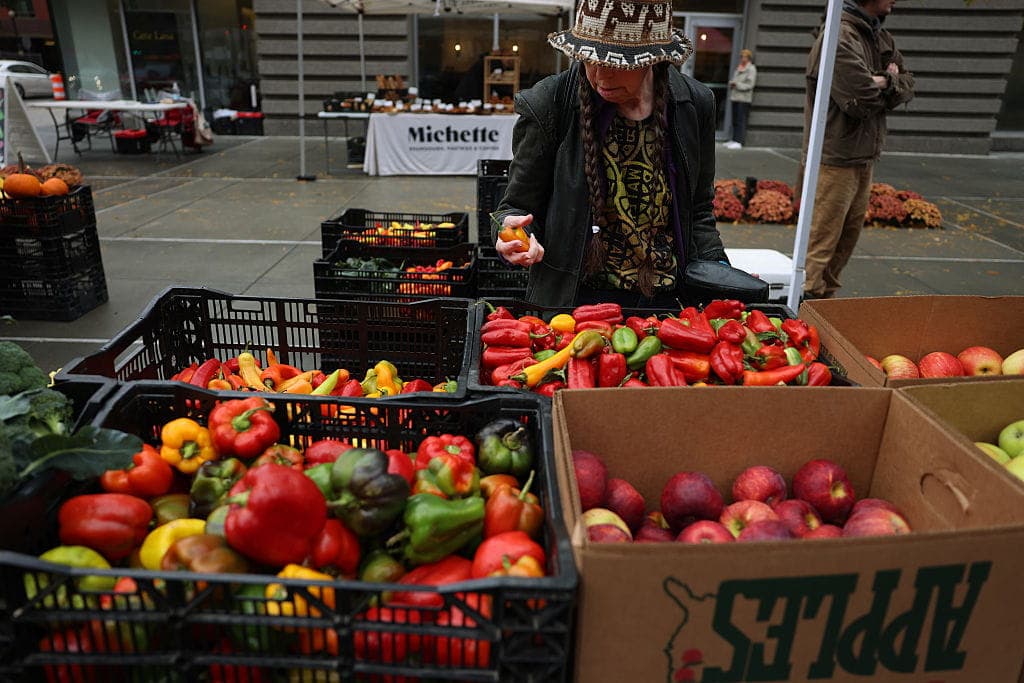

Farmers Markets are gaining in popularity, probably partially inspired by the MAGA movement that is promoting a healthier lifestyle. But these outdoor (and sometimes indoor) collections of food booths are about more than getting fresh and local produce and other food products. They also boost the economy and provide a sense of community.
Farmers Markets Growing in Popularity
A study conducted by researchers at the University of Wisconsin-Madison and the Farmers Market Coalition was published in the Journal of Agriculture, Food Systems, and Community Development. The study surveyed 5,141 US residents and found that 80% of Americans visit farmers markets at least once a year, and 41% said they were frequent attendees, going six or more times a year.
“Our research highlights the positive impacts farmers markets have on the health and well-being of individuals and communities,” said Bret Shaw, the study’s co-author and a professor at UWM’s College of Agricultural and Life Sciences. “People are drawn to markets not only for the fresh, high-quality food but also for the sense of community and connection they provide.”
Community Building
There’s more to be had at farmers markets than great, fresh, and local produce. It’s a chance for community building. A place where neighbors can come together and visit while they shop. Farmers are on hand to talk about their crops and give advice, including which seasons are the best for specific foods. Often, there are other social events like wine tasting and bands to enjoy, giving people a chance to mingle and socialize.
According to the Farmers Market Coalition, “Farmers Markets foster interactions among people of different race, class, age, and lifestyle, and 28% of respondents surveyed about public markets said the greatest benefit of the market to the community is that it ‘Brings people together.’”.
Darlene Wolnik, co-author and senior project manager at the Farmers Market Coalition, concurs, saying, “Farmers markets are cherished spaces where people connect with their food, their farmers, and their neighbors. They offer a unique shopping experience that strengthens community bonds and promotes healthy living.”
Supporting Local Farmers
Keeping the almighty dollar in your community is another great incentive for shopping at farmers markets.
Farmers Market Coalition explained that for every dollar spent at a farmers market, it’s estimated that $2.60 in “economic activity is generated in the surrounding area.” Furthermore, a study by the University of California reported that, “for every dollar of sales, direct marketers are generating twice as much economic activity within the region, as compared to producers who are not involved in direct marketing.” And, “for every $1 million in revenue, direct-market farms create almost 32 local jobs whereas larger wholesale growers create only 10.5.” The money stays in the community and can help fund resources such as schools.
Local farmers tend to grow specialty items that may not be found in grocery stores. They are also sensitive to sustainable agriculture and the environment. By shopping at local farmers markets, consumers are promoting the conservation of resources, reducing environmental impact, and maintaining soil health.
Growing Trend
When the COVID-19 pandemic hit, people sought out farmers markets where food was available, usually at a much cheaper price than grocery stores. The supply chain was interrupted at that time, making it difficult to find certain foods, or pay an arm and leg for it. Today, tariffs may be making it difficult for some shoppers to find what they want.
According to a survey by Trace One, 38.2% of those questioned said a desire to support local businesses was the top reason they went to farmers markets, while around 33% said the availability of fresher and higher quality food was what inspired them. Farmers markets are the second-most popular place to shop, after supermarkets, with 42.9% saying they shop at farmers markets.
Now that the Supplemental Nutrition Assistance Program (SNAP) is getting an upgrade and restricting some unhealthy foods, people are going to farmers markets even more, where the program is usually accepted. “Given the high interest in attending farmers markets by people receiving SNAP benefits, our data support the idea that farmers markets offer an important opportunity to expand access to fresh food to low-income households,” Shaw said.
“Farmers markets provide health, economic, and social benefits to communities,” Laura Witzling, lead author of the study and a consultant for the Farmers Market Coalition, explained. “With those benefits in mind, we see potential for new or expanded partnerships between farmers markets and local governments, businesses, and community organizations to promote and sustain farmers markets.”
As more Americans rethink where their food comes from and who they are supporting with their dollars, farmers markets are stepping into a role that goes far beyond weekend shopping. They reflect a shift toward self-reliance, healthier choices, and stronger local ties at a time when many feel disconnected from all three.



.jpg&w=1920&q=75)
.jpg&w=1920&q=75)
.jpg&w=1920&q=75)