
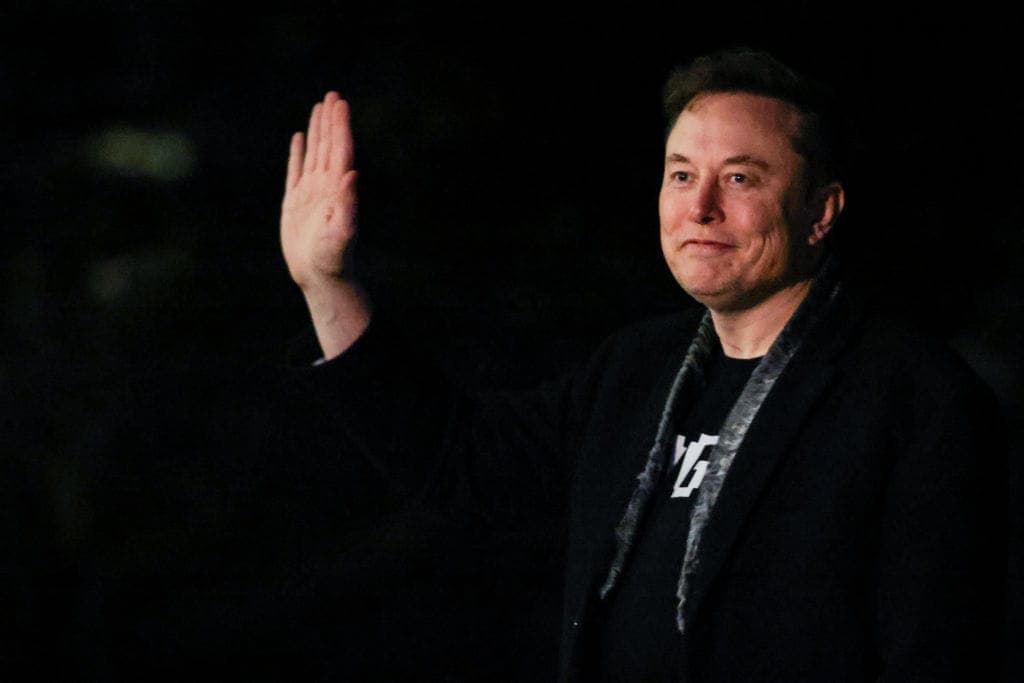

Free speech champion Elon Musk is once again leading an effort to protect commercial speech from government control. His company, xAI, filed suit on April 9 against the state of Colorado, seeking to block the enforcement of a Democrat bill that regulates the content of artificial intelligence applications to prevent unlawful discrimination. xAI asserts that the anti-discrimination statute cripples business development and is discriminatory in itself.
Musk Fights Again
Mr. Musk is no stranger to controversy. Whether it is his activities unearthing fraud through DOGE, the keying of his company’s vehicles, or his purchase of Twitter (now X), the tech innovator has never shied away from fights he believed were important for the nation or his corporate leadership. The current lawsuit raises some very important questions for the United States and the race to develop artificial intelligence.
Colorado’s law imposes burdensome reporting requirements on developers of artificial intelligence in an effort to curb what the Colorado law terms “algorithmic discrimination,” defined as “any condition in which the use of an artificial intelligence system results in an unlawful differential treatment or impact that disfavors an individual or group” based on any prohibited classification such as race, gender, limited proficiency in the English language, etc. The burdens of compliance are onerous. Musk and his legal team assert that these constraints impose an unreasonable burden on free speech, and the statute thus “severely burdens the development and use of AI.”
President Trump has emphasized the importance of AI for the nation to become a world economic leader and to protect Americans from foreign powers that might beat the US in a technological race not that different from a traditional arms race. The potential for both good and evil in rapidly evolving AI technology is the stuff of science fiction movies, doomsday alarms about synchronicity or the loss of human agency, and gushing optimism about improved efficiency and wealth generation. All of these are possible outcomes, and President Trump has been pushing hard for a federal law or regulatory framework to protect the fledgling industry from a stifling patchwork of varying state statutes and unify protections nationally.
Federal Preemption Does Not Yet Apply
If a federal statute governing AI (and “algorithmic discrimination”) existed, Colorado’s new AI law would be superseded by the doctrine of federal preemption under the Constitution’s Supremacy Clause: where state and federal law conflict, federal law prevails. But in the absence of federal law, Colorado is free to seek to protect its citizens from threats of discrimination. However well-intentioned, the statute certainly imposes many constraints and costs on developers of AI, and Musk is arguing that this will stymie development while unlawfully restricting free speech.
An intriguing parallel to this unfolding controversy is the European Union’s efforts to control social media and other international companies by penalizing state-prohibited speech. Musk has been fighting on the EU front to protect his proprietary Grok chatbot and now battles similar domestic restraints he says hurt an already high-risk product development area. The xAI lawsuit asserts that “ provisions prohibit developers of AI systems from producing speech that the State of Colorado dislikes, while compelling them to conform their speech to a State-enforced orthodoxy on controversial topics of great public concern….” and would compel the company to alter its Grok chatbot to “conform to a controversial, highly politicized viewpoint.”
Such concerns bear persuasive weight in the shadow of recent nefarious federal government intrusions into Americans’ free speech rights by the Biden administration during the pandemic. Democrats such as Colorado’s cadre of self-styled defenders against “algorithmic discrimination” have been recently responsible for compelled speech (gender pronouns), combatting so-called “hate speech” that is often protected First Amendment content, and censoring parents for objecting to their children’s “gender transitioning.” Meanwhile, they have been advancing overtly race-based policies that violate the Equal Protection Clause in the name of “anti-racism,” and advocating for unscientific ideological absurdities while stifling real science (such as masking, social distancing, climate change, and transgender indoctrination).
Free Speech, or Discrimination?
Elon Musk has a very valid point that, especially in blue states like Colorado, there is a prevailing and growing “State-enforced orthodoxy” that infringes upon fundamental principles of free speech. The new statute recites that its provisions cannot be used to undermine free speech, stating:
“NOTHING IN THIS PART 17 IMPOSES ANY OBLIGATION ON A DEVELOPER, A DEPLOYER, OR OTHER PERSON THAT ADVERSELY AFFECTS THE RIGHTS OR FREEDOMS OF A PERSON, INCLUDING THE RIGHTS OF A PERSON TO FREEDOM OF SPEECH OR FREEDOM OF THE PRESS THAT ARE GUARANTEED IN: (a) THE FIRST AMENDMENT TO THE UNITED STATES CONSTITUTION….”
But this just begs the question. The recent legacy of the Democratic Party has been to curtail free ideas in the name of protecting the public from vaccine “disinformation,” racism, January 6th rioters, etc. This is patently totalitarian. Across the Atlantic in many EU countries, citizens are fined and even imprisoned for social media postings deemed verboten by the ruling bureaucracy: such speech policing is anathema to the American way – more so when it crushes business development and economic prosperity.
Interestingly, Colorado’s statute specifically limits its application to Colorado citizens. Colorado’s jurisdiction does not extend to residents of Alaska or California, yet its law will impact those other jurisdictions if companies like xAI must comply with its directives. xAI could develop a different AI algorithm to comply with the varying vicissitudes of state laws across the country, but this is very costly, difficult to administer, and would create exactly the kind of patchwork of conflicting regulations and compliance costs that federalism seeks to prevent. This, in turn, raises states’ rights arguments under the Tenth Amendment, much as California’s statutes that impact animal welfare within its borders have profound effects on swine and poultry producers in other states.
A federal statute governing AI regulations would avoid these problems. If such a law or regulatory framework were administered at the federal level, the xAI suit in Colorado would be rendered moot. In the meantime, litigation battle lines are being drawn, and Elon Musk will once again cross swords with regulators he contends are overstepping their Constitutional authority by canceling free and protected speech – even by an AI machine.
Dig Deeper Into the Themes Discussed in This Article!
Liberty Vault: The Constitution of the United States

.jpg&w=1920&q=75)