

Just days after raiding Caracas and capturing Venezuelan dictator Nicolás Maduro, Donald Trump made one of the most concerning statements a US president could ever make. When asked in an interview with The New York Times if there were any limits to his global powers, Trump responded: “Yeah, there is one thing. My own morality. My own mind. It’s the only thing that can stop me.” He went on to say that he doesn’t need international law. Well, at least he got it about half right.
Global Meltdown
The part the president may have gotten right – at least to some degree – is that he doesn’t need international law. The US has signed onto thousands of treaties, UN Charter obligations, and various other pacts and customary international laws. As well, the UN regularly passes dozens of resolutions per year, though they aren’t exactly binding on the member states.
Refusing to abide by those agreed-upon rules violates those deals, but President Trump has worked to pull the US out of many of the international agreements in favor of whatever course of action is best for America. As Liberty Nation News Assistant Editor Elizabeth Lawrance recently reported, the president withdrew the US from 66 international organizations – 31 of which were UN entities.
For many Americans, the idea of cutting ties with these global outfits and taking back both American sovereignty and billions of dollars a year in tax dollars is a dream scenario. The US could pull out of the UN and NATO entirely, and both organizations would effectively collapse. And perhaps that’s what should happen.
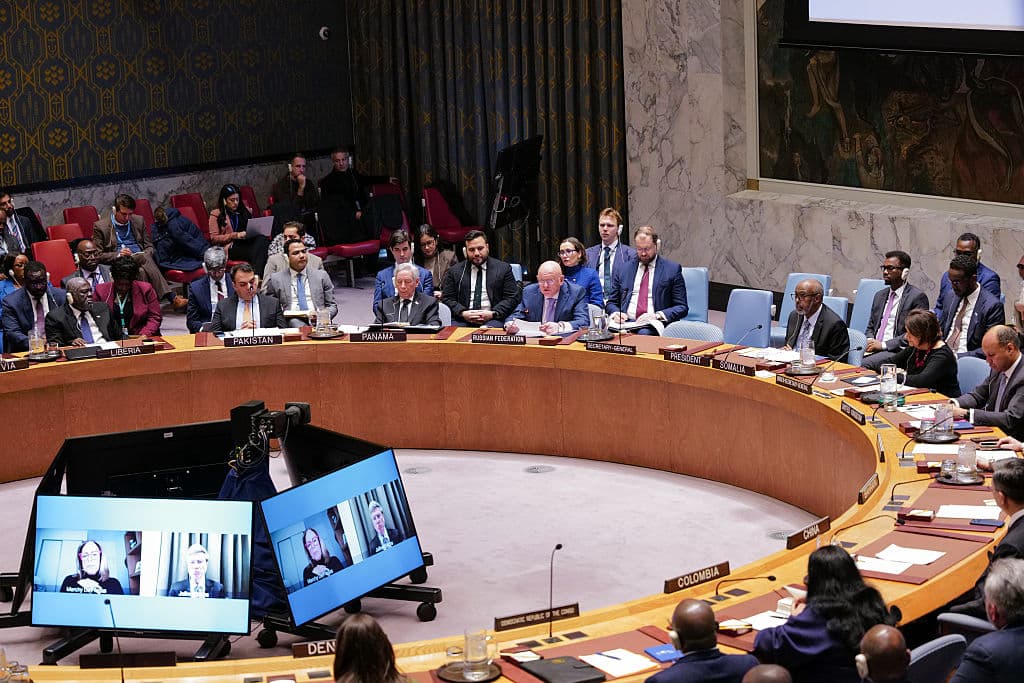
Then there’s the European Union. No, the US isn’t a part of it, but the EU is still the world’s largest source of international legislation – the Union pumps out more than 2,000 directives, acts, regulations, and the like every year, each of which affects all 27 member countries. President Trump’s apparent complete disregard for international law and norms and dedication to do whatever it takes to advance the interests of the US could be an existential threat to the EU.
After America’s operation to remove Maduro, for example, Kaja Kallas, the EU’s top diplomat, issued a statement calling for “calm and restraint” and respect for the principles of international law. One member nation, Hungary, declined to sign. As one senior EU diplomat told Politico on Friday, “The world is not based anymore on European values.” International law – and the EU, specifically – are largely irrelevant to President Trump’s decision-making, and that’s destroying the bloc’s influence around the globe.
Beyond the Law
Beyond the Law – and for the Steven Seagal fans out there, Above the Law – are decent action movies and great titles. But they’re terrible descriptors for a US president or any other employee or representative of the government. Our leaders absolutely should be of strong moral character – and our nation might be a lot better off today if more of them had been over the years – but “My own morality. My own mind,” is not the only constraint on the people elected and appointed to run the United States of America; there are others, and chief among them is the Constitution.
President Trump did walk that back, a little, in answers to follow-up questions, but it remains a very concerning statement. When asked further about whether his administration needed to abide by international law, he said, “I do.” But he added to that: “It depends on what your definition of international law is.” That sounds eerily close to Bill Clinton’s famous line.
Back in 1998, when Bill Clinton was both the sitting president and under investigation for perjury and obstruction of justice, he was confronted about the truth of a statement that had previously been made under oath. Clinton was reminded of Monica Lewinsky’s affidavit claiming that “there is absolutely no sex of any kind in any manner, shape, or form, with President Clinton.” The prosecutor went on to call this an “utterly false statement,” and what followed became perhaps the most often quoted bit of verbal gymnastics in grand jury history:
“It depends on what the meaning of the word ‘is’ is. If the – if he – if ‘is’ means is and never has been that is not – that is one thing. If it means there is none, that was a completely true statement.”
Clinton’s argument was that the statement was true simply because his attorney used the present tense “is” and that he was not, at that particular moment, engaged in sexual activity with Ms. Lewinsky – as if anyone in the courtroom would have missed two people engaged in such … activity.
President Trump’s line about international law or the other constraints at home, he then acknowledged, may not be quite so ridiculously legalistic as Clinton’s famous line, but it still raises a concerning issue. When presidents take actions and sign orders – or even when Congress passes laws – that are of questionable constitutionality at best, there always seems to be some clever workaround that, at face value, seems to justify it.
If the National Firearms Act of 1934 is a bill restricting the ownership of firearms, then it’s a clear violation of the Second Amendment. If it’s a tax bill relating to interstate commerce, however, it’s constitutional. If Donald Trump’s strike on Caracas was a military invasion of a foreign nation without congressional approval, then he clearly overreached. If, however, it’s a police action to apprehend an international criminal who has effectively overthrown the rightful government of Venezuela, then it can be explained away as being within his authority.
Perhaps more concerning is how this very fluid system of defining terms might be applied in other areas – like, perhaps, the acquisition of Greenland by the US government.
It falls to the courts, and ultimately the US Supreme Court, to interpret the Constitution and the executive or legislative action – and it falls to “we the people” to hope they get it right.

.jpg&w=1920&q=75)
.jpg&w=1920&q=75)
.jpg&w=1920&q=75)