

The midnight ride of Paul Revere on a borrowed horse, which ended tragically for the animal, is idealized by poets and the framers of early American history. In Revolutionary War accounts, there is no mention of the horse's name or breed; yet, without its willingness to gallop to its death, the Battle of Concord might have had a less than victorious outcome. Some might surmise that the glory of all causes, the Great American Experiment, would never have occurred without the noble steed or its fellow horses during the war.

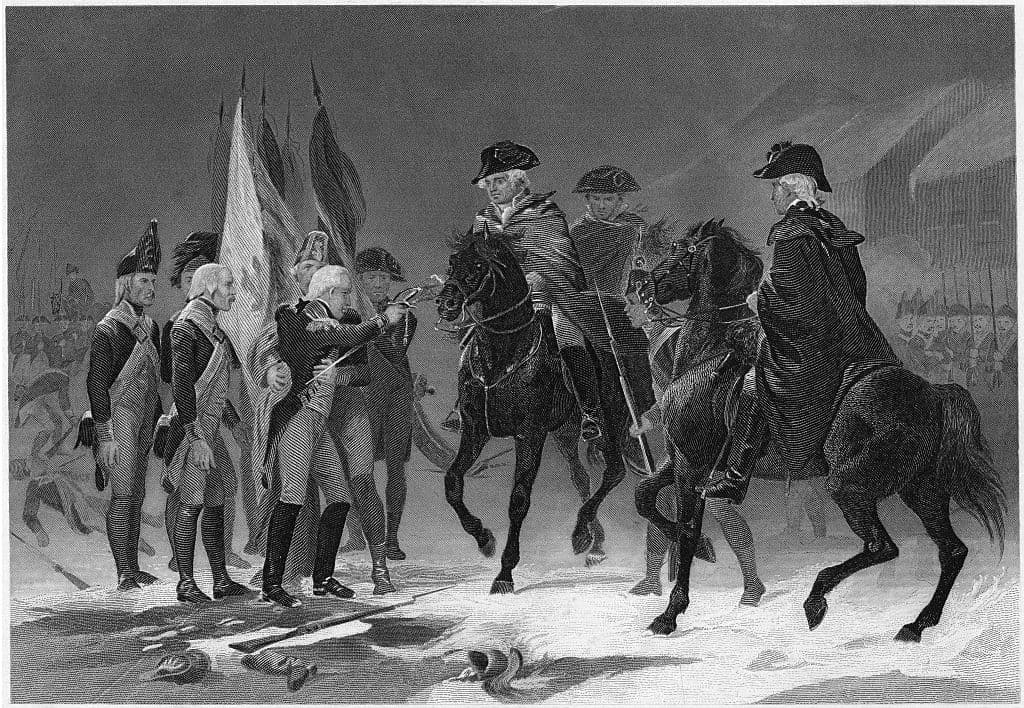
Warhorses provided protection and comfort, transported heavy loads of artillery and camp supplies, and were used as messenger mounts, carrying revised battle plans, enemy intelligence, and orders between commanders. General George Washington, a renowned equestrian who loved his hunting dogs and horses, failed to see the value of cavalry regiments. There were very few mounted units at the beginning of the war, mostly because the Continental Congress heeded Washington's advice and was not inclined to fund them.
After spending time with the first volunteer cavalry unit, the Philadelphia Light Horse Brigade, founded in 1774, Washington saw the light and petitioned Congress to establish the colonies' first mounted units.
Revolutionary Dragoons
Mounted troops were categorized into three different skills and priorities. Heavy cavalry (cuirassiers) wore armor and were primarily used for a shock effect. Light cavalry (hussars) mainly engaged in reconnaissance, screening, and liaison missions. Dragoons were mounted infantry on the front lines. Horses were carefully trained to be calm in chaos for the front lines, enduring cannon and musket fire and the calamities of bloody battle. Horses engaged in fighting were also trained to kick and bite; they were weapons of war themselves, regardless of the soldier astride. Warhorses had a profound psychological impact on men in battle, boosting morale and courage with their stately, tranquil presence while creating fear in enemy troops.
Horses for the cause had to be sourced locally, which often meant taking draft horses from farmers and loggers or using personal transportation animals (light horses) and installing them in camps with new, albeit temporary, stewards. But if you could wrangle up a mount, either by broker to the Continental Army or by simply "borrowing" from friends and relatives, allies like the French shipped bridles, bits, and saddles to aid in the effort.
American Horses
The future and first president rode two horses throughout the Revolutionary War: Blueskin and Nelson, a white and a sorrel, respectively.
After the Revolutionary War, Washington wrote wistfully to Elizabeth Dulany, "Marks of antiquity have supplied the place of those beauties with which this horse abounded in his better days. Nothing but the recollection of which, & of his having been the favourite of Mr. Dulany in the days of his Court ship, can reconcile her [Mrs. Dulany] to the meagre appearance he now makes."
The average horse can carry 20% of its body weight in supplies, including food, munitions, tents, and other necessities associated with the encampment. They also transported cannons. The job and the environment were not for the more delicate animals – or the most stubborn. These majestic creatures paid a price for America’s freedom, leaving the familiarity of home to face unforeseen dangers and entrusting humans to guide their way. Be kind to the horses that served – be it honoring the memories of warhorses of the Revolution or caring for the still-living animals retired to the ranch or backyard paddock, or who are still in service. They deserve at least that amount of respect and so much more.