


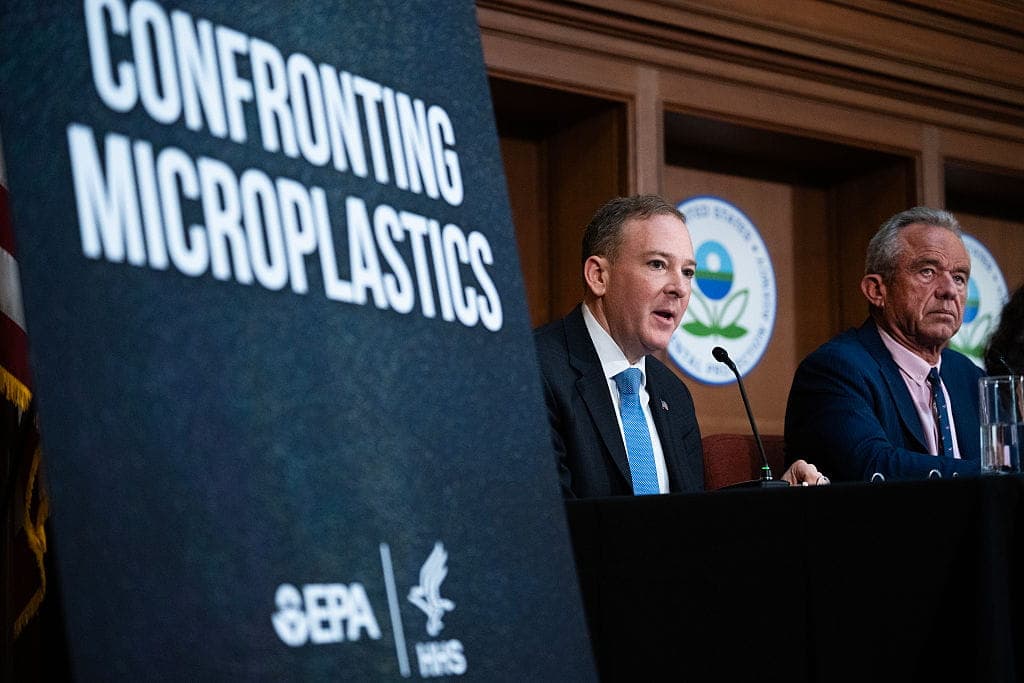

Scientific awareness of the omnipresence of microplastics has grown rapidly, and the particles have even been found on mountaintops and ocean floors – and in human lungs and brains. Recent revelations that chemical industry scientists knew five decades ago that microplastic particles move quickly out of the gut and are stored in vital organs suggest plastic makers and other chemical companies cared more about damage to their balance sheets than about irreparable health harms to generations of Americans.
If We Are What We Eat, We Are Now Part Plastic
The Los Angeles Times reports German researcher Gerhard Volkheimer presented evidence showing this threat of gut absorption of microplastics at a 1974 conference on the workplace hazards posed by PVC plastics. Volkheimer shared results from his studies of persorption, the physiological process by which ingested solid particles move across the gut lining and into the rest of the body. This “enteral permeability for microparticles” had been known since at least 1844, but Volkheimer fed microscopic PVC particles to animals from 1959-1967 in laboratories at Humboldt University, Berlin. The implications of what he discovered and shared at that 1974 conference are now amplified by modern studies of microplastic accumulation in human arteries, brains, lungs, and other organs.
Using dogs, pigs, goats, rats, guinea pigs, rabbits, and chickens, Volkheimer established that the PVC microparticles (the term “microplastics” was not coined until 2004) moved to blood, the lymphatic system, and organs, including the lungs, liver, brain, and muscle tissue within two hours of ingestion. His research showed the particles crossed the placenta, were present in breast milk and cerebrospinal fluid, and moved faster and in greater volume when combined with caffeine, nicotine, or sleep. PVC particulate persorption was also faster in the young.
All of these health risks now appear to be proving out in America’s youth. Generally speaking, young people are more vulnerable to all food-borne contaminants because of their developing bodies and their higher food-to-body-weight intake ratio than adults. Women are more threatened by such toxins due to their sensitive reproductive systems. The chemical industry appears to have purposefully concealed or discredited this known threat of microplastic particles for half a century, even as the scale of production of new chem-lab machinations of a plethora of plastic perversions increased exponentially. This included the food plastics industry.
A History of Industrial Perfidy
These unconscionable revelations parallel a long history of corporate collusion to conceal public health harms. The tobacco industry conspired for decades to discredit claims that its cigarettes caused lung cancer, even as its laboratories researched how to increase the potency and thus addictiveness of its offerings.
Asbestos, per- and polyfluoroalkyl substances (PFAS) such as those found in Teflon non-stick pans and thousands of other products, pesticides, and many other erstwhile scientific ‘wonders’ turned out to carry hidden human health threats. Yet the subsequent expansion of the use of thousands of plastics is astronomical. The EPA has identified more than 12,000 PFAS, which persist for enormous periods without breaking down, earning them the moniker ‘forever chemicals.’
Microplastics are now ubiquitous, and humanity is at least fifty years behind on fully understanding their impacts on human health. According to the Los Angeles Times, modern research into microplastics in the human body began in 2018, when researchers discovered fragments in feces at the University of Vienna. Had industry researchers and corporate boardrooms been more vigorous in self-regulation, the plastic plague upon us would be less pernicious.
Microplastics Peddlers Unrepentant to the Last
Yet industry groups do not appear to be repentant. The Los Angeles Times concluded bleakly:
“For decades, the industry’s own documents indicate it was concerned about Volkheimer’s findings that plastic particles could pass from the gut into the blood and lodge in the body’s tissues. Today, as scientists report finding those particles in human arteries, placentas and brains, the industry’s leading trade groups emphasize what they describe as substantial gaps and quality problems in the research, and say more study is needed before conclusions can be drawn about human health.”
The controversy over whether the food plastics industry knew microplastics were a threat, and when they knew it, mirrors similar questions about safety, corporate integrity, and regulatory competence for many popular and long-used consumer products in the United States. It also raises deep and vitally important sociological questions about why we humans continue to trust blindly in new technological advances like pop fads. iPhones are cool, but maybe GLP-1s won’t turn out much better than mRNA jabs.
The gargantuan microplastics question in the cosmic living room is: Why haven’t human consumers aggressively demanded a return to glass drinking or food containers? They may be heavy and shatter, but they don’t persist harmfully in the ecosystem for eons, are much easier to recycle (only a small percentage of plastics are actually recycled), and aren't endocrine disruptors or linked to cancer or Alzheimer’s. This is also largely true of tin and other metal containers, though these commodities are much more expensive. Plastics are relatively cheap financially, but potentially costly to human health.
The fact that glass is less convenient than Tupperware, Styrofoam, or plastic wrap (and bottles) does not change the inconvenient truth that millions of Americans continue to ingest and absorb far more microplastics than a common-sense-recommended daily allowance, instead of reversing course. Perhaps more studies are needed.