
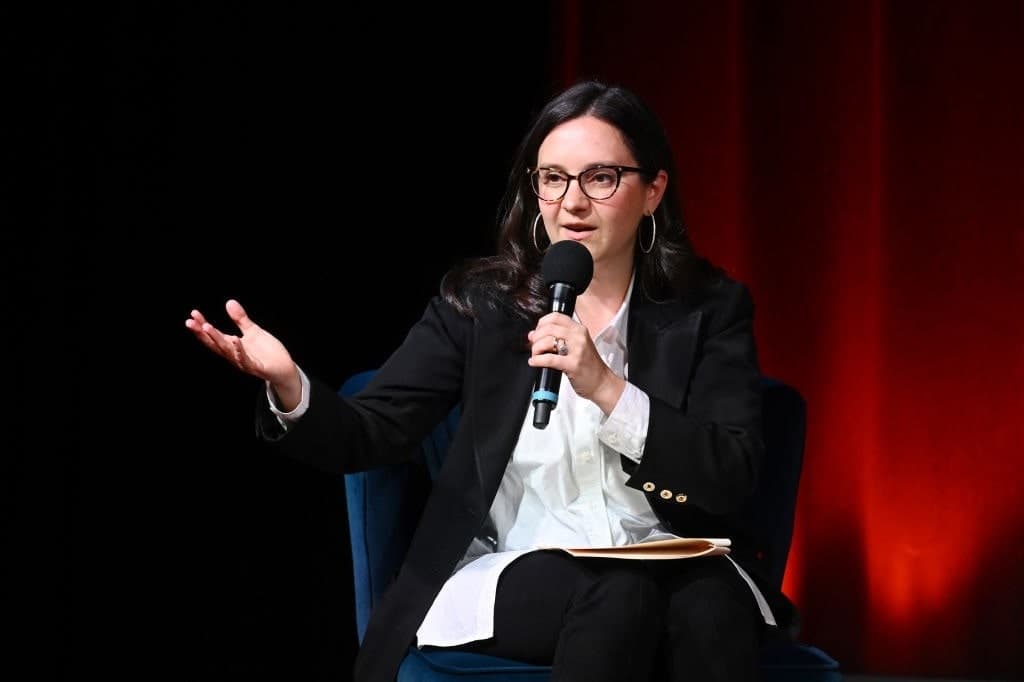

Bari Weiss, founder of The Free Press and former opinion writer for The New York Times, is returning to the mainstream after striking a deal with Paramount. The media conglomerate acquired The Free Press for a reported $150 million and appointed Weiss to the chief editor role at CBS News, a move sure to upset more than a few people. In Weiss’ first memo to CBS staffers, she listed core principles they will need to follow, such as holding "both American political parties to equal scrutiny" and delivering "journalism that reports on the world as it actually is"; "Journalism that is fair, fearless, and factual." All this is well and good, but will it make a lick of difference to consumers? More specifically, even if CBS can live up to the lofty goals that Weiss and Paramount CEO Dave Ellison recently put in writing, can nonpartisan news thrive in today's world (especially in the mainstream), where so many people seem obsessed with consuming only what affirms their beliefs and their team's narrative?
CBS Overlooks an Inconvenient Truth
For an established network to aim towards reporting on political events with equal scrutiny to both sides is not new: Numerous outlets already claim they do so even though they don’t, which makes Ellison’s intentions harder to believe. “Every step of the way,” he wrote in a recent memo to staffers, “trust and facts will remain our guiding principles as we work every day to strengthen and deepen our connection with our audience.” He said the network is challenging itself to improve, “recognizing that we have the ability to reach a broad audience and demonstrate constructive, respectful, and bipartisan dialogue in our own work.”

But for CBS to be seen as anything other than a liberal arm of the Fourth Estate might take a bit of magic. Even if it does deliver the news, the whole news, and nothing but the news as it actually is, no matter where it leads, few people will probably notice.
A study published last year in the Journal of Experimental Psychology: General found that "the public at large tends to put partisanship over truth when consuming news. This holds true across the political spectrum, education levels, and reasoning ability.” Participants resisted inconvenient truths that challenged their political worldview more often than they accepted false information that confirmed those same beliefs. And, lo and behold, people who were “the most confident in their political side’s lack of bias were the most biased."
“The problem isn’t just misinformation but the filters of our own mind – perhaps more so,” said Geoffrey L. Cohen, senior author of the study and the James G. March Professor of Organizational Studies in Education and Business.
People are so accustomed to echo chambers and one-sided articles that facts are rarely taken at face value. Not to mention, much of the news today seemingly has an undercurrent of opinions with an “us vs them” mentality, both of which appear to fuel today’s polarization and influence how people perceive politics. When it comes to the Fourth Estate, though, it's often not what it says but what it leaves out that distorts the news and spreads falsities. It’s not that difficult to deliver fact-based news and still spin a narrative when omitting, for instance, anything that might make one party look bad.
Walking the Line
Not everybody knows who Bari Weiss is, but many might remember her controversial departure from The Times back in 2020. Her colleagues threw a fit over a story the paper published, written by Senator Tom Cotton (R-AR), in which he suggested sending troops to quell the violent unrest in cities over the death of George Floyd. Outraged, Times staffers flooded Twitter with tweets claiming Cotton’s article put “black lives in danger.” Weiss quit, describing the workplace culture as “hostile” to anybody not holding the appropriate left-leaning views. “Showing up for work as a centrist at an American newspaper should not require bravery,” Weiss wrote in a resignation letter posted on her website.
She eventually started a Substack called Common Sense, which became The Free Press in 2022 and is now a full-fledged digital media company serving around 1.5 million subscribers, with more than 100,000 of those paying. Over the years, the reader consensus at The Free Press has been that Bari maintained a liberal bent. Yet many people see her as a conservative pretending to be a centrist, partly because The Free Press has been critical of wokism and of liberal bias at media outlets. Regardless of which way Weiss leans, some of her views are undoubtedly far from the norm of CBS.
Of course, all this talk about unbiased journalism doesn’t mean much if Ellison is just trying to alter public perception without really intending to change much except for the addition of Weiss and The Free Press. He said he believes much of “the country longs for news that is balanced and fact-based,” and that may be true, but what people consider balanced and fact-based is seemingly subjective nowadays. Maybe he’s only hoping his latest acquisitions will draw millions of new customers and put CBS in the penthouse of the Fourth Estate.
Weiss will no doubt shake up the newsroom, whether she intends to or not. CBS might even evolve and have a different look, but it's tough to believe it will suddenly walk the line and tell it how it is. Principles look good on paper, but to live by them requires more than $150 million and a new chief editor.

.png&w=1920&q=75)
