


The Treasury Department recently shocked global financial markets after announcing it would amplify its debt buyback campaign to at least $4 billion. It temporarily soothed the US government bond market, only for yields to accelerate again. Now there is talk of employing crisis-style emergency actions to engineer a calm ocean of stability. But doing so could risk undoing some of Chairman Kevin Warsh’s work at the Fed.
Insulting the Fed
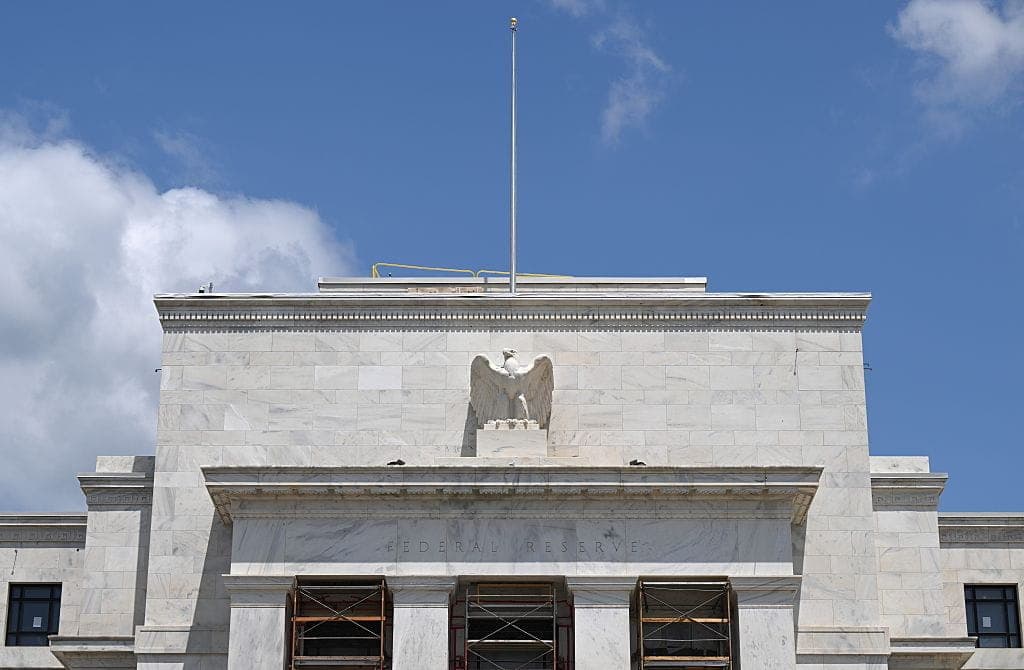
Based on new reporting from CNBC, Treasury Secretary Scott Bessent is prepared to go to war with the bond vigilantes, and the Eccles Building could be collateral damage.
The business news network reported on Aug. 24, citing two senior officials, that the Treasury could tap into its $1 trillion bank account at the Federal Reserve to increase government bond purchases. This would essentially allow Bessent to use existing tax collections to buy long-term Treasury securities (think 30-year bonds) to apply pressure on yields. It would likely complement Bessent's current strategy, pairing record debt buybacks with the issuance of short-term notes (30 days to one year).
At his Iran-related news conference announcing Operation Economic Outcast, Bessent did not comment on the report. But he did note that the Treasury has yet to make a $4 billion purchase as the new strategy takes effect early next month. Should he move ahead with these actions? Regardless, it leads to an important question: What about the Fed?
Warsh and Peace
A key tenet of Warshonomics 101 is to bring about change to the century-old institution. How the US central bank communicates with the public has captured much attention. But Chairman Warsh’s policy of no longer holding the market’s hand could be influencing Treasury yields, leading a chorus of market watchers to suspect bonds are normalizing.
Free with the Daily Briefing
85EssaysUnravel the Constitution
Hamilton, Madison & Jay’s complete case for America, free and searchable in the Publius Reader.
Free with the Daily Briefing. Unsubscribe anytime.
Still, the Fed’s balance sheet reforms could be undermined by the Treasury Department. Warsh wants to stop the expansion of the balance sheet, bond buying, and market manipulation. Achieving this aim could be challenging when the White House is doing what the Federal Reserve used to do (quantitative easing!) during crises and in normal times.
“We are in a regime where activist Treasury policy is as material — for good and for bad — as central bank policy,” Krishna Guha, Evercore ISI vice chairman, wrote in an Aug. 20 note. “Warsh has tried to make the unconventional case that the Fed should stand back.”
Are motives different? It depends on whom you listen to. When the Fed conducts QE – an innovative monetary policy tool that lowers interest rates by acquiring bonds – it does so to support economic growth. When the Treasury enacts similar methods, it is to nudge investors to concentrate on the fundamentals.
“All we’re trying to do is get people to focus on the fundamentals and not trade the headlines during a quiet period in a thin market,” Bessent told CNBC last week. His theory could be put to the test after Labor Day when everyone returns from summer break.
While the public is not aware of the topics of conversation during Bessent and Warsh’s weekly tête-à-tête, there is little doubt they discussed the government bond market.
Eyes on Jackson Hole
The Federal Open Market Committee will not hold its next two-day policy meeting until later next month. On the road to Sept. 15, Wall Street and Main Street will get to watch Warsh’s first keynote speech at this week’s annual Jackson Hole Economic Symposium. The new chairman has been reluctant to offer a sneak peek into the future to avoid any semblance of forward guidance. However, with yields climbing across the board, bonds will be the first true test of Warsh’s economic prowess. Talking about bonds will be a must.
.jpg%20Ukraine&w=1920&q=75)