

.jpg&w=1920&q=75)

President Donald Trump got the go-ahead to continue construction on the new White House ballroom on August 21. A federal judge had ordered work to halt back in April, but on Friday, Supreme Court Chief Justice John Roberts issued a stay blocking that injunction until the High Court can resolve the case.
President Trump’s ballroom addition faced considerable backlash and controversy from the day it was conceived. But then, so too have the changes made by many presidents before him. Shocking though it may seem considering the establishment media coverage of the legal and ethical battle, this is far from a new issue.
The Legal Dance Around the Ballroom Build
The Trump administration began demolishing the East Wing of the White House on October 20, 2025 – just a couple of months shy of a year ago. Initial plans had the ballroom sitting near the White House without affecting the existing structure – a feature shared by several changes made by recent presidents without Congressional consent. But officials later decided that the East Wing had to be completely removed to modernize the construction properly.

This, of course, led to immediate backlash. The National Trust for Historic Preservation sued to stop construction – though the lawsuit was only filed after the demolition. The group’s argument was that the independent federal reviews and public comment periods should have occurred before the teardown. That said, the preservation of the historic East Wing was, ostensibly, the group’s concern. Certainly it seems it should be, as the trust was established by Congress to protect historic sites. In this case, that mission was a lost cause before the organization filed suit; halting production of the new facility doesn’t rebuild the lost one.
Senior US District Judge Richard Leon agreed with the trust, at least in part, in his April 16 ruling that halted construction of the above-ground portion of the ballroom. Construction on the underground bunker, however, wasn’t affected – an interesting development, given that hiding a secret wartime bunker was the core reason for expanding the East Wing in 1942. On August 7, the DC Circuit Court of Appeals voted 2-1 against the Trump administration, upholding the lower court order. On the day work was supposed to halt, however, Supreme Court Chief Justice John Roberts issued an administrative stay:
“UPON CONSIDERATION of the application of counsel for the applicants, the response, and the reply filed thereto,
IT IS ORDERED that the preliminary injunction entered on April 16, 2026, by the United States District Court for the District of Columbia, case No. 1:25-cv-4316, is hereby stayed pending further order of the undersigned or of the Court.”
Construction, Controversy, and Cost
The controversy extends beyond just protocol; there’s also the issue of cost. “Construction is under budget and ahead of schedule,” the president wrote in his Truth Social post expressing his gratitude to the Supreme Court. Trump has long maintained that construction is being covered by himself and other corporate donors. That is true to some degree – but it is, by necessity of federal law, not true of the whole project.
“We’re spending hundreds of millions of dollars on the ballroom, and it’s all from people like me and great companies that are putting it up,” Trump said. “It’s going to be close to 400 million dollars, and it’s all paid for by patriots and patriotic companies, big companies.” He went on to explain that he’ll likely name those companies over the next couple of weeks, adding: “So that’s all money, no taxpayer money for the ballroom at all.”
It could well be that private money is covering the above-ground ballroom itself, at least most of it. However, Article I, Section 9 of the Constitution and the Antideficiency Act of 1884 (updated in 1950 and 1982) prohibit the use of private funds for direct government operations. This includes military and security, meaning congressionally appropriated tax funds legally have to pay for the underground bunker and any below- or above-ground security features.
The idea, of course, is to keep the executive branch accountable to elected representatives and to prevent wealthy donors or foreign entities from funding loyal, private militaries. But it hasn’t always stopped presidents from doing essentially what Trump is doing today. Yes, most presidents sought and received congressional approval for major White House renovations. And, no, those who circumvented that process didn’t embark on projects quite as large as this one. Still, there are examples – both recent and in antiquity – of presidents using private funding to do what they want to the White House and grounds with or without the approval of Congress.
Chester A. Arthur famously refused to move into the White House in 1881 until it was modernized. Congress didn’t give him the budget, so he sold off 24 wagonloads of historic White House furniture – including some things that had belonged to President Abraham Lincoln – in an auction to fund his redecorating.
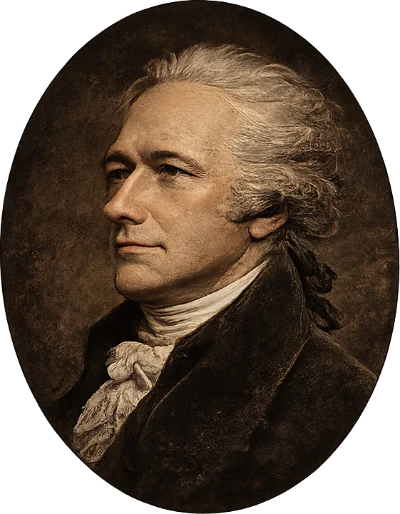
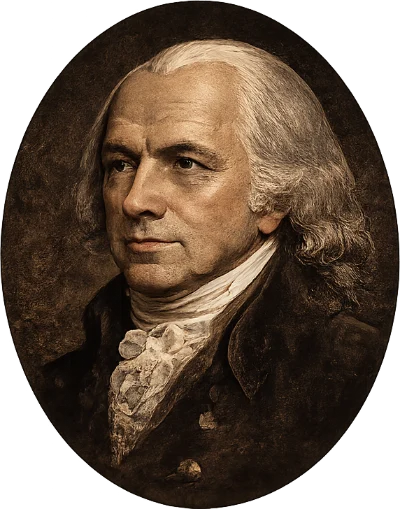
Franklin D. Roosevelt in 1933 and Gerald Ford in 1975 both bypassed Congress to build swimming pools using private donations. And as recently as 2009, Barack Obama converted the existing South Lawn tennis court to a basketball court using private funds.
Donald Trump wasn’t the first president to sidestep Congress when it comes to White House renovations or even just funding in general – and he almost certainly won’t be the last. For now, however, the massive construction project has potentially become a race against the clock. The High Court allowed work to progress, for now, but that’s not a final ruling on the merits of the case.
Still, the East Wing is gone, and the ballroom is already under construction. What would a ruling against the Trump administration mean, exactly? Stop work and leave a big, unfinished construction project to rot? The amount of progress already made itself may end up being reason enough to rule in favor of the ballroom. But even if it proves otherwise, a ruling against the build may come too late to matter.