

When attempting to prompt good behavior from a recalcitrant child, the objectives are to reinforce the desired conduct and discourage undesirable behavior. If ever there were a recalcitrant geopolitical child, it is Iran. The United States offered to reinforce its standards of good behavior through good-faith negotiations with the Persian Gulf nation. However, the leadership in Tehran answered by breaking the ceasefire and attacking commercial cargo, crude oil, and liquefied natural gas tankers. It seems President Donald Trump is taking action to bring the Middle Eastern country to heel.
Iran Fails to Live Up to Its Commitment
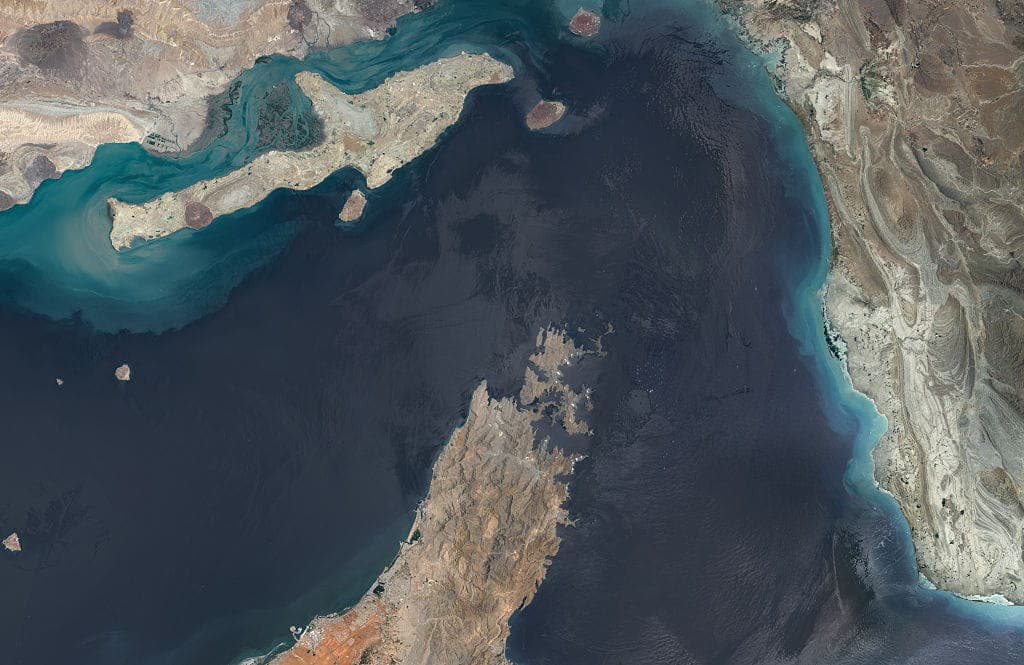
In recent weeks, the United States has engaged in a tit-for-tat exchange of air attacks with Iran. The Islamic Revolutionary Guard Corps (IRGC) has broken the ceasefire repeatedly since the United States and Iran signed a memorandum of understanding on June 17. As positive reinforcement, American forces committed to lifting the blockade on shipping to and from Iranian ports, and the US began efforts to ease the economic sanctions that had been financially hobbling Tehran's government. Expected in return was Iran living up to its agreement to allow the free flow of commercial vessel traffic through the Strait of Hormuz, without attempts to regulate or impose fees. The United States was disappointed. Iran flagrantly began to regulate traffic and attacked ships that did not comply.
The point at which President Donald Trump had had enough was July 6-7, when Iranian forces struck at least three commercial vessels transiting the strait, including a Saudi-flagged crude tanker. Iran claimed the ships ignored warnings, but the United States said the Iranians had no right to issue warnings. Those attacks resulted in an American bombing campaign over the next several nights.
Free with the Daily Briefing
85EssaysUnravel the Constitution
Hamilton, Madison & Jay’s complete case for America, free and searchable in the Publius Reader.
Free with the Daily Briefing. Unsubscribe anytime.
By July 12, according to US Central Command (USCENTCOM), there had been a total of 140 attacks, expanded beyond military targets to include major transportation nodes and other infrastructure, such as the railroad bridge in the town of Aqqala in northeastern Iran, a critical transportation link for goods. According to London’s Financial Times, “The line plays an important role in transit and trade with Central Asia and is part of an international corridor that links Iran, Turkmenistan, and Kazakhstan. Attacks were also reported on electricity infrastructure in Chabahar and Konarak in south-east Iran, causing three electricity transmission lines to go out of service and cutting off power to parts of the region.”
Airstrikes also took out Iran’s ability to control traffic in and around the strait. The Jewish Institute for National Security of America reported in its Iran War Update on July 9, “According to Iranian state media, strikes also targeted the Kalantari Port, Shahid Beheshti Port, and the port city of Chabahar’s maritime traffic control tower,” which coordinated vessel traffic for Iranian ports and coastal operations. Furthermore, targets included the Iranshahr Airport/Air Base used by the IRGC Aerospace Force, as well as ports and coastal facilities, including Bandar Abbas, a major IRGC Navy maintenance and marine operations hub.
New Focus on Logistics and Other Infrastructure Targets
USCENTCOM described the latest missions with accompanying video, explaining, “During the five-hour mission, U.S. forces successfully struck military targets across Iran … to further degrade Iran's ability to attack commercial shipping.” The focus on inland logistics and other infrastructure is intended to disrupt Iran’s economic lines of communication with partners such as China. The financial disruption complicates Iran’s ability to reconstitute its forces. To tighten the economic noose, Trump reinstated the blockade on all Iranian shipping traffic into and out of Iran’s ports. Trump announced:
“The Hormuz Strait is OPEN, and will remain OPEN, with or without Iran. We are reinstating THE IRANIAN BLOCKADE, so named because it is only stopping Iran’s ships or customers from entering or leaving. All other countries will have fair and open use of the Strait. The U.S.A. will be, from this point forward, known as ‘THE GUARDIAN OF THE HORMUZ STRAIT.’”
In a subsequent Truth Social post, the US chief executive explained that, if the United States took over security for the Strait of Hormuz, as compensation, there would be major additional trade and investment deals that “various Gulf States will be making into the United States.”
From Liberty Nation News, Trivia, Facts, Check Us Out
Stay informed.
Today’s news, the Constitution and American history, written for young readers.
Visit GenerationLiberty.com
News, Trivia, Facts, Check Us Out
Stay informed.
Today’s news, the Constitution and American history, written for young readers.
Visit GenerationLiberty.com
Such arrangements are not unprecedented. During the Tanker War in 1987, Kuwait requested US protection for its oil tankers after Iranian attacks. The Reagan administration agreed to make Kuwaiti tankers US-flagged vessels and to escort them through the Hormuz Strait. In compensation, Kuwait provided access to ports and facilities, and other Gulf States supplied fuel for US warships and aircraft.
The broadened strategic targeting campaign is designed to limit Iran’s ability to function as a belligerent country. Not being able to move major components to reconstitute its arms factories effectively ends Iran’s capability to field counterattacks. Reapplication of the marine blockade and expanding the target set to include major logistics and infrastructure could bring Iran to its senses and back to meaningful negotiations – or not. In any event, the Iranian leadership is suffering the consequences of its bad behavior.
~
The views expressed are those of the author and not of any other affiliate.

.png&w=1920&q=75)