


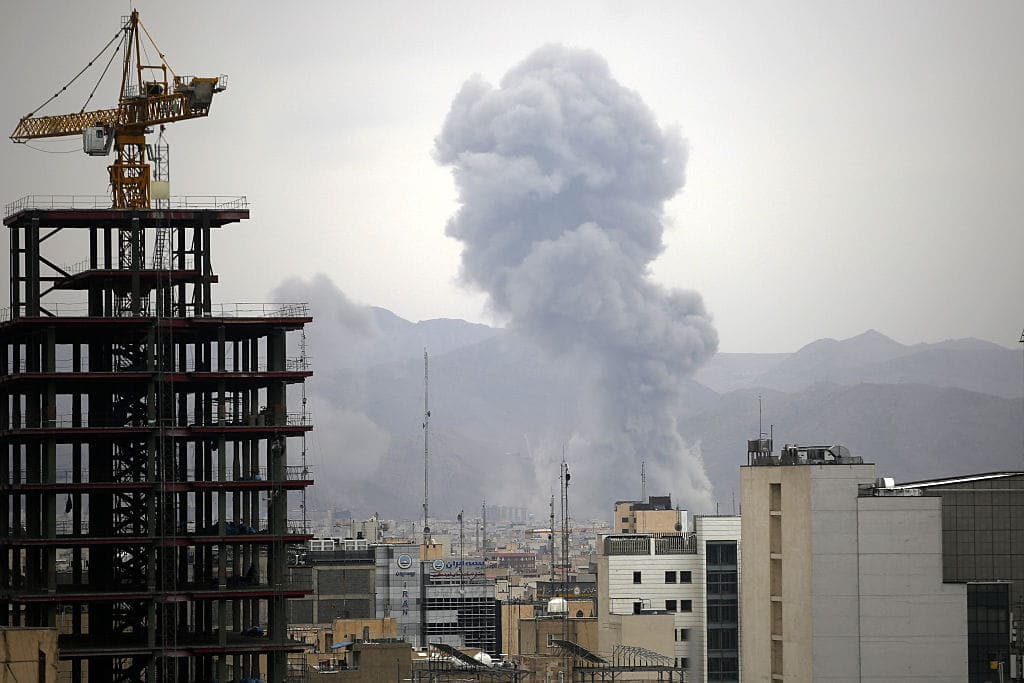

President Donald Trump’s patience with Iran is at an end – and the ceasefire/Memorandum of Understanding is over. On July 7, the US president ordered a resumption of the bombing of Iranian military and infrastructure complexes. The deliberate and continued missile and drone attacks have brought payback time for Tehran’s leadership, which Trump referred to as “scum” at a press availability during the recent Ankara NATO Summit.
Iran Does Not Control the Hormuz Strait
Liberty Nation News’ Editor-in-Chief Mark Angelides provided an excellent analysis of Tehran’s thinking in its unprovoked breach of the ceasefire. The leaders of Iran are under the delusional notion that they can control the Hormuz Strait and dictate who does and who does not transit the international waterway.


Free with the Daily Briefing
85EssaysUnravel the Constitution
Hamilton, Madison & Jay’s complete case for America, free and searchable in the Publius Reader.
Free with the Daily Briefing. Unsubscribe anytime.
According to a US Central Command (USCENTCOM) X posting: “Iranian state media claims that transit through the Strait of Hormuz is only permitted through routes designated by Iran.” As USCENTCOM explained, however, the truth is: “Iran does not control the Strait of Hormuz. Since early May, U.S. forces have helped facilitate the successful transit of more than 800 commercial vessels and 380 million barrels of crude oil through the vital international trade corridor.”
Nonetheless, to demonstrate its point, Iran used drones and other “projectiles” to strike two commercial crude oil tankers and one liquid natural gas vessel in the Strait of Hormuz, as well as US military bases in Kuwait, Oman, and Bahrain. In response, the US began two nights of intense bombardment of myriad targets throughout Iran. Unlike previous retaliatory strikes, America’s response could not be considered a tit-for-tat or proportional response.
According to the Associated Press:
“The U.S. military's Central Command said it hit some 90 targets across Iran [on July 8], releasing black-and-white footage of what appeared to be strikes on an airport runway and missile launchers. The US says the strikes were intended to ‘further degrade’ Iran’s ability ‘to threaten freedom of navigation’ in the strait, through which a fifth of the world’s traded oil and natural gas passed before the war began with US and Israeli attacks on Feb. 28.”
Over the two days of US air attacks on Iran, a total of 170 targets were destroyed, including air defense systems, command and control networks, coastal radar sites, anti-ship missile capabilities, and more than 60 Islamic Revolutionary Guard Corps (IRGC) small boats in and near the strait.
Hitting the IRGC's small Boston Whaler-type boats is effective in protecting Hormuz Strait transits from marauding craft carrying a variety of missiles, rocket launchers, anti-ship missiles, and heavy machine guns. Some of these IRGC small boats are reported to be capable of also launching mines. These air assaults serve the clear operational purpose of neutralizing Iran’s capability of harassing and threatening the maritime traffic transiting between the Persian Gulf and the Gulf of Oman. President Trump on July 8 warned in a Truth Social post, “This is in retribution for yesterday’s bombing of ships by Iran. If it happens again, it will get much worse!”
Mysterious Airstrikes
In an unusual turn of events, as of this writing, a Newsmax report claims airstrikes of “unknown” origin hit Iranian targets. “A series of mysterious, unclaimed airstrikes that hit Iran after the US said it finished its attacks have again raised questions of who else may be targeting the Islamic Republic,” Newsmax explained. “Iran responded to the strikes Thursday by launching a wider volley of attacks across the Mideast, targeting Bahrain, Jordan, Kuwait and Qatar.”

Reports state one person was injured in the Iranian air assault. In the past, several of the Gulf States have launched air attacks on Iran in retaliation for in-kind Iranian drone and missile attacks launched against US partners in the Gulf region.
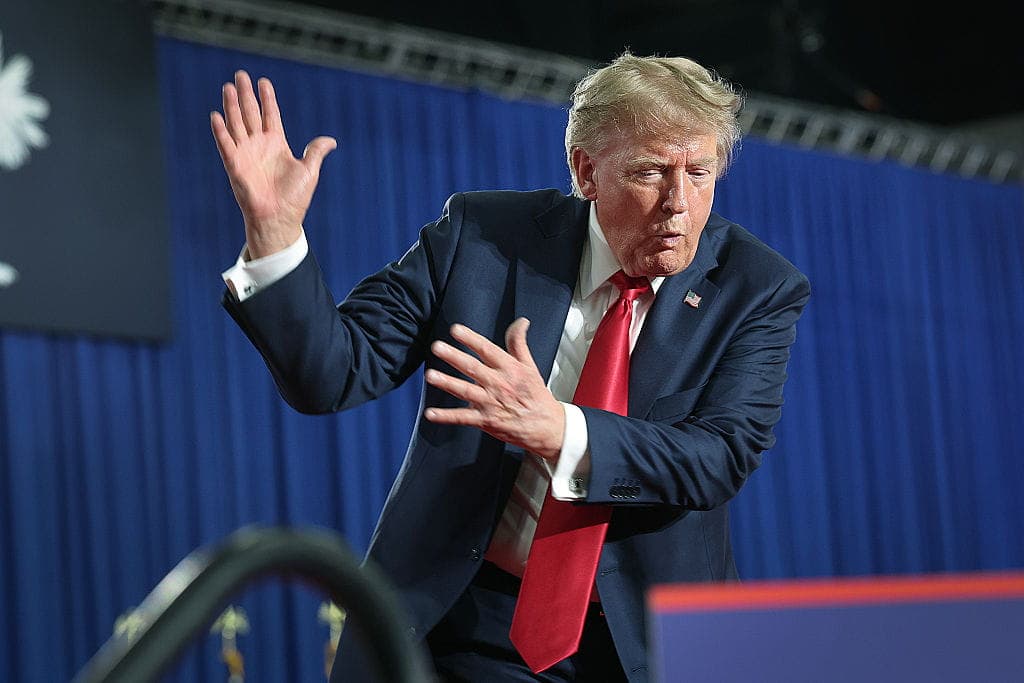
The remnants of the Ceasefire/MOU rest in shreds due to Iran’s wanton attacks on commercial shipping in the Strait of Hormuz and the subsequent US responses. President Trump made his views very clear during the NATO summit in Ankara. He told reporters: “I don’t want to deal with them anymore — they’re scum. You know what scum is? They’re scum. They’re sick people. They’re led by sick people. And they’re vicious, violent people. And if they had a nuclear weapon, they’d use it. As far as I’m concerned, it’s over.” The US has demonstrated its willingness to spend as much time as it takes to iron out an agreement, but if Iran is dead set against it, further negotiations seem futile. As President Trump has explained, when Iran attacks commercial vessels transiting the Hormuz Strait, the US will respond 20-fold. Iran will get the worst of it for its actions.
~
The views expressed are those of the author and not of any other affiliate.

.jpg&w=1920&q=75)
.jpg&w=1920&q=75)