


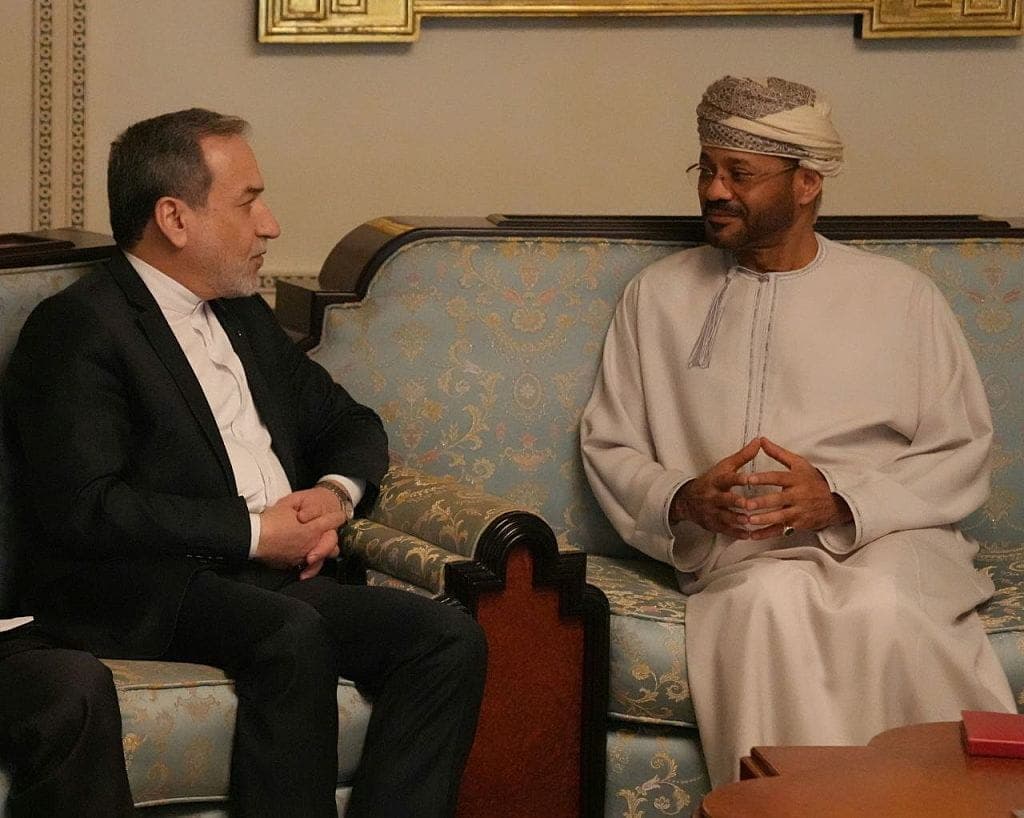

It has been eight months since the US and Iran held indirect talks to resolve ongoing tensions in the Arabian Gulf region. Those discussions proved fruitless, and the failure to come to an agreement on Tehran ceasing its nuclear enrichment program and stopping the air attacks on Israel resulted in the June 2025 12-day war. Those hostilities demonstrated to the Tehran leadership that they were powerless to stop what turned out to be a devastating defeat for Iran, with the US executing Operation Midnight Hammer and destroying the nation’s atomic weapons development program. February 6, in Oman, the US made another stab at talks focused on curtailing Iran’s nuclear ambitions.
The US in the past has also emphasized stopping Iran’s wholesale slaughter of its citizens, reducing its intermediate-range missile program, and ceasing support for terrorist proxies.
Iran Refuses to Make Concessions

To add clout to the US bargaining position, the US has deployed 12 warships in the Gulf Region, including the USS Abraham Lincoln Carrier Strike Group, near the Strait of Hormuz. Initially, the armada was in position to show the Ayatollah Khamenei it was prepared to carry out an airstrike on Iran if the wholesale killing of protesters did not stop. However, as Liberty Nation News explained, “If the US were to execute an air assault on military targets ostensibly as a response to the horrific killing of its citizens, that would not address the greater issue of Iran’s continuing with a nuclear weapons program and the development of a growing intermediate-range ballistic missile inventory.”
Nonetheless, for the purpose of this recent Oman meeting, the subject of the discussions was focused on Iran’s program to develop atomic weapons.
As has been the case in previous discussions between Iranian and US officials, the exchange of talking points occurred through Omani diplomats rather than face-to-face meetings. Foreign Minister Abbas Araghchi represented the Iranian delegation. His going in position to the talks left little wiggle room for compromise. As The Wall Street Journal reported:
“Tehran stuck to its refusal to end enrichment of nuclear fuel in talks Friday between senior US and Iranian officials, but both sides signaled a willingness to keep working toward a diplomatic solution that could head off an American strike. According to Iranian state media, Foreign Minister Abbas Araghchi told his US counterparts that Tehran wouldn’t agree to end enrichment or move it offshore, rejecting a core US requirement.”
Despite what appears to be an impasse in the talks, again, as the WSJ pointed out: “Araghchi, however, said it [the meeting] was a good start, and he and Oman’s foreign minister said the parties aimed to meet again.” President Trump echoed some of the optimism about the meeting, telling reporters, “Iran looks like it wants to make a deal very badly.”
The US has been in this position before, with Iran stringing out the negotiations and refusing to make concessions. However, following the meeting in which Iranian officials appeared pleased to kick the can down the road, the US State Department announced additional sanctions on Iranian oil traders and the shadow tanker fleet that transports that oil. The new sanctions are on “multiple entities, individuals, and vessels to stem the flow of revenue that the regime in Tehran uses to support terrorism abroad and repress its citizens,” the Stated Department said. Included in the sanctions are 14 shadow fleet vessels transporting “Iranian petroleum, petroleum products, and petrochemical products.”
The US Has a Strategic Opportunity
What is different this time is that Iran is in much worse economic shape, and the elite political officials are in a precarious position with Iran’s citizens. Retired General Jack Keane, former US Army Vice Chief of Staff, told Fox News: “There is an historic opportunity here to set the conditions through a military strike that puts the regime on the pathway to collapse…the regime is the weakest it’s ever been. A military strike will weaken that regime further.” Keane advocated for a military strike that would bring down the regime and would change the dynamics in the region for decades to come. “It’s a major strategic opportunity that was not available a year ago.”
The armada is in position, and other combat resources are in the Gulf Region. Additionally, there are long-range bombers in the US and positioned in the Indian Ocean that could execute such a strike on Iranian Islamic Revolutionary Guard Corps (IRGC) facilities. The American warships in the Middle East – including guided-missile destroyers – stealth F-35 Lightning IIs on board the USS Lincoln, and assorted other combat aircraft, would make short work of the IRGC Navy to prevent Iran from holding the Strait of Hormuz at risk.
According to the Institute for the Study of War’s Iran Update, February 6, 2026, “Iran remains unlikely to compromise on its red lines, which include uranium enrichment, its ballistic missile program and support for the Axis of Resistance, which reduces the likelihood that Iran and the United States will be able to reach a diplomatic solution during subsequent rounds of negotiations.” If that’s the case, then that is what the US warship armada is for.
~
The views expressed are those of the author and not of any other affiliate.