

There's been a lot of chatter in the political sphere these days about fairness. The progressive left has seemingly co-opted this word, along with the phrases restore fairness and fair share. The problem here, of course, is what constitutes "fair." The more it is used in political circles, the more this definition becomes perverted.
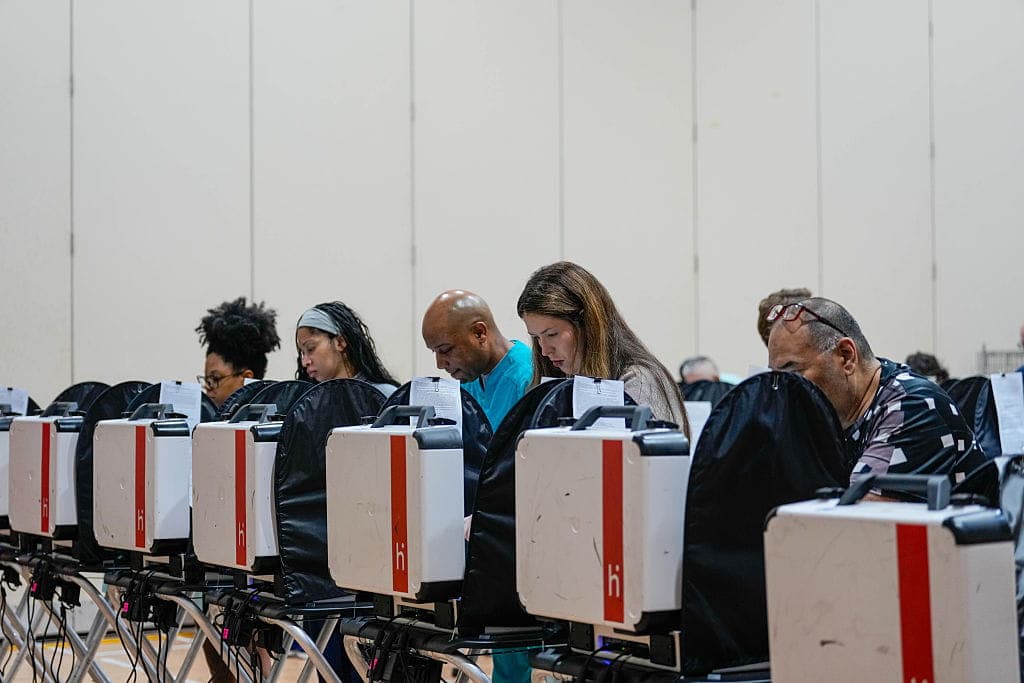
"Marked by impartiality and honesty: free from self-interest, prejudice, or favoritism" is how fair is defined in the Merriam-Webster dictionary. For example, the recent Virginia election put forth a ballot question with the phrase "to restore fairness," as in:
"Should the Constitution of Virginia be amended to allow the General Assembly to temporarily adopt new congressional districts to restore fairness in the upcoming elections …"
It turns out that using the phrase "to restore fairness" was deemed disingenuous by the Virginia courts. As the ABC News affiliate that covers the Commonwealth pointed out, "[C]ritics of the ballot language say fairness means different things to different voters. A lower court ruled the ballot language was too vague and confusing." Ultimately, as former VA Attorney General Ken Cuccinelli told WJLA-TV, the ballot initiative violated the "plain English rule," meaning its wording was misleading.
Then there's the question of integrity. If changing the voting map in Virginia permits only one safe GOP district, is that truly fair?
Do You Dare to Question My Fair Share?
Then there's this whole notion of "fair share," which one would think means at least some amount of impartiality. The progressive left often calls for the "rich to pay their fair share." At a Tax the Rich rally in New York City, Sen. Bernie Sanders (I-VT) argued just that. In writing about the event, National Review astutely pointed out that the problem is that the rich are already paying more than their fair share:
"One of the most indefatigable clichés in politics is that rich people don't pay their 'fair share' for government services. Progressives are back on this hobbyhorse, arguing that the only just remedy is to confiscate wealth."
Sanders and his sidekick, Rep. Alexandria Ocasio-Cortez (D-NY), are holding rallies across America promoting the notion that the wealthy aren't paying their fair share. Along with the element of fairness comes the concept of justice – that is, is it just and right for the wealthy to pay the government more because they have more resources? The problem here is that no one can agree on just what a fair share is in dollars and cents. Or as American economist Thomas Sowell once said, "What exactly is your 'fair share' of what someone else has worked for?"
History Repeats Itself
Perhaps the most famous speech on this issue was delivered by Huey Long in 1934 when he was a senator for Louisiana. Titled “Share Our Wealth,” with the subtitle “Every Man a King,” Long argued that the best way to ensure fairness in a society was to cap fortunes and redistribute wealth, sprinkling it among the impoverished so that everyone could have “a decent standard of living,” according to a website named after the senator. Long based his polemic on the morality of the Bible and the constitutionality of his plan. Asserting that “all men are created equal,” Long essentially made the case to confiscate property from the wealthy.
If President Franklin Roosevelt was best known for his New Deal, President Harry S. Truman should be recognized for two speeches — in 1945 and ’49 — that promoted what is known as his Fair Deal. “Truman stressed that the U.S. 'cannot maintain prosperity unless we have a fair distribution of opportunity and a widespread consumption of the products of our factories and farms,’” according to History, Art & Archives of the US House of Representatives. He outlined an eight-point plan as a governmental solution to economic inequities, which included housing, finance, labor, and reforms across several federal agencies.
Today, conservative politicians are trying to roll back much of Truman's and Roosevelt’s largesse funded by American taxpayers for the primary reason that the US government simply can no longer afford the ballooning costs of such public assistance programs. This is causing the pivot back to the old mantra of wealth distribution. It’s really nothing more than the old phrase “What’s yours is mine and what’s mine is mine.” Or better yet, it could be how President John F. Kennedy framed it: “What’s mine is mine and what’s yours is negotiable.” If federal and state governments can’t bear the cost of the so-called fair share, one wonders what makes them believe that taxing the wealthiest among us will solve the problem.

.jpg&w=1920&q=75)
.jpg&w=1920&q=75)