


American Blockade – A Rare But Effective Choice
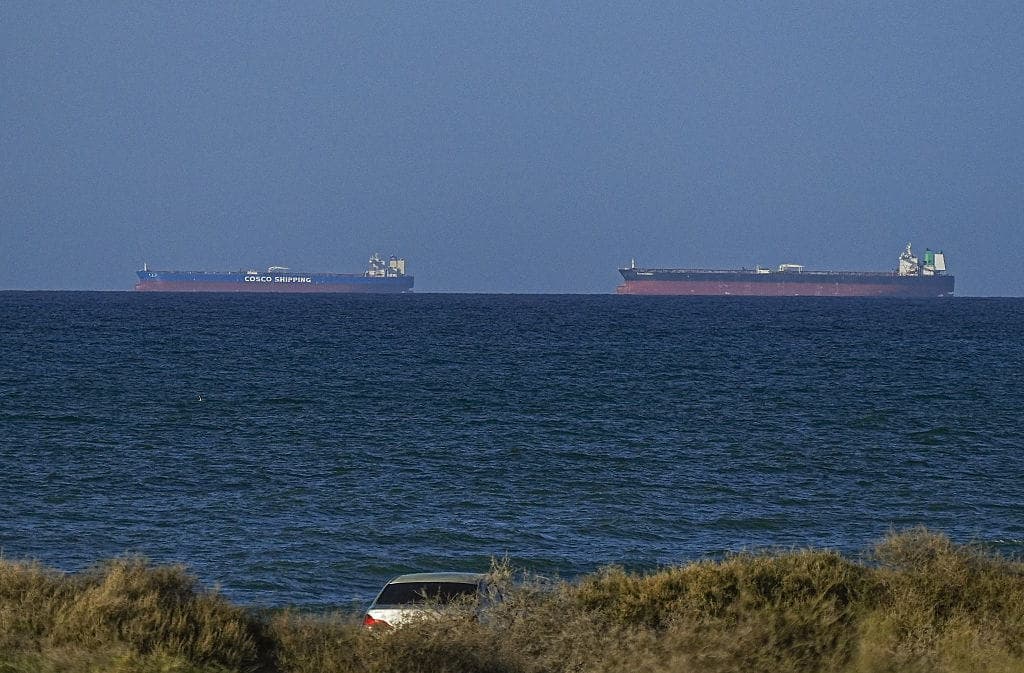
Rarely does the US set up a blockade. But it isn’t unheard of. As recently as 2025, the US used an aircraft carrier group to blockade Venezuela. Before that, the famous US blockade was that of Cuba during the 1962 Cuban Missile Crisis, though at the time it was referred to as a “quarantine” to avoid the perception of an act of war. Despite the infrequent use of the blockade, as Liberty Nation Newsexplained, “President Donald Trump announced Sunday, April 12, that the US Navy will establish a blockade on Iran and the Strait of Hormuz. The president made his announcement hours after peace talks in Pakistan failed.” In a Truth Social posting, President Trump made his position clear, asserting:
“Effective immediately, the United States Navy, the Finest in the World, will begin the process of BLOCKADING any and all Ships trying to enter, or leave, the Strait of Hormuz. At some point, we will reach an ‘ALL BEING ALLOWED TO GO IN, ALL BEING ALLOWED TO GO OUT’ basis, but Iran has not allowed that to happen by merely saying, ‘There may be a mine out there somewhere,’ that nobody knows about but them.”
It is the US Central Command’s intention to begin the blockade by ensuring that there are no mines in the strait. According to Naval News on April 11, “USS Frank E. Peterson (DDG 121) and USS Michael Murphy (DDG 112) transited the Strait of Hormuz and operated in the Arabian Gulf as part of a broader mission to ensure the strait is fully clear of sea mines previously laid by Iran’s Islamic Revolutionary Guards Corps.” The mine sweeping operation will establish a new passage for transiting the Hormuz Strait, “and we share this safe pathway with the maritime industry soon to encourage the free flow of commerce,” said Adm. Brad Cooper, commander of CENTCOM.
The destroyers had transited the strait and operated in the Arabian Gulf to prepare for more intensive mine-clearing, focusing on a variety of mines that may have been placed in the sea lane. Naval News also reported that additional forces, such as underwater drones, will be used as part of the mine-clearing operations. Iran’s reaction to the blockade is predictable. “Iran’s Revolutionary Guard has insisted the Strait of Hormuz is open for civilian vessels but says that military ships, ‘will be dealt with severely,’” according to Al Jazeera. Despite Iran’s bluster, the two US destroyers operated into and out of the Hormuz Strait unimpeded.
Approval for Trump’s Direct Action
A number of notable defense expert commentators and congressional representatives have come out in favor of the blockade. Congressman Byron Donalds (R-FL) explained on the NBC News program Meet the Press: “The Iranians [are] using the Strait of Hormuz against the rest of the world, the president I believe is doing the right thing trying to control the strait possibly in order to open that up for international waters so you can have trade move freely, not just in that region, but for the rest of the world.” Retired Brigadier General Blaine Holt, frequent commentator for Newsmax, observed: “President Trump is correctly stepping on the gas and saying, ‘We're just going to take over the Strait.'" On the same Newsmax program, Fred Fleitz, former chief of staff at the National Security Council, explained, “President Trump is taking away Iran's only leverage [by implementing the blockade], and that's the Strait of Hormuz.” The US Naval blockade of Iran’s ports, including Kharg Island, has the potential to bring Tehran to its knees economically. Additionally, controlling the Strait of Hormuz has the benefit of targeting the financial health of Iran without destroying its infrastructure, as President Trump was prepared to do. One might expect the Iranian negotiators to request re-engagement in talks very soon after the full impact of the blockade is felt. As President Trump posted on Truth Social, “IRAN IS UNWILLING TO GIVE UP ITS NUCLEAR AMBITIONS!” Until the Iranian leadership gives up its desire for atomic weapons, life in Iran is going to be very difficult. ~The views expressed are those of the author and not of any other affiliate.

.jpg%20noncitizen%20voting&w=1920&q=75)
.jpg%20Hillary%20Clinton&w=1920&q=75)