


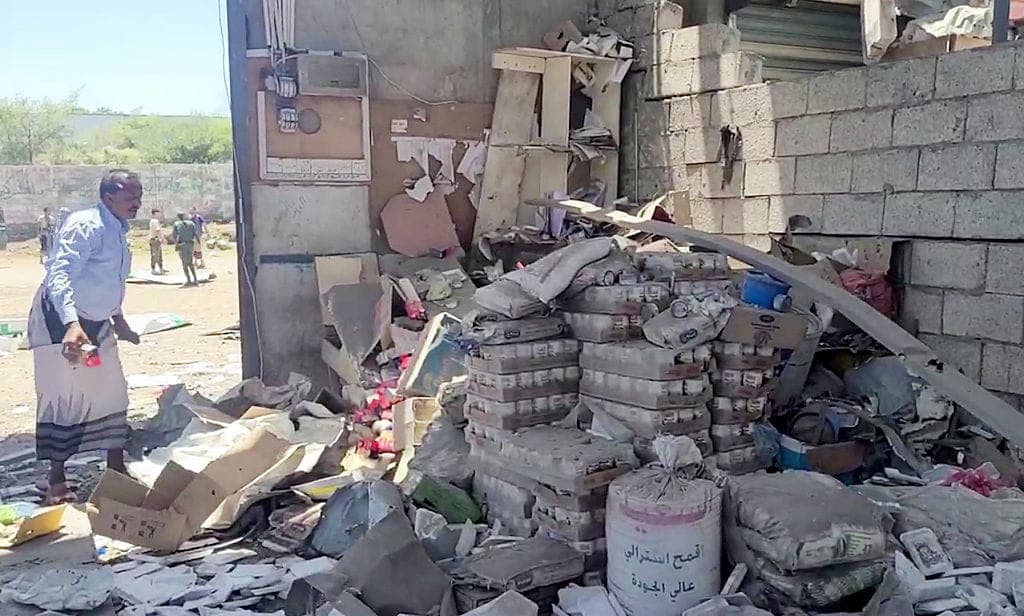

While the world focuses its attention on the Iran war, another conflict is causing upheaval in the Middle East. Roughly 1,300 miles southwest of the Strait of Hormuz lies the Bab al-Mandeb Strait; both border the Arabian Peninsula. Bab al-Mandeb separates Yemen from Djibouti and Eritrea on the Horn of Africa. Yemen is in the midst of a 12-year-long civil war that has left the country a landscape of death and destruction.
As Liberty Nation News reported, “It’s been more than a year since President Donald Trump executed an intense bombing campaign against the Houthis, which brought about a ceasefire that is still in place.” However, with the hostilities between Saudi Arabia and the Houthis becoming more intense daily, the White House may believe there is a need to be more proactive in aiding the Saudi Kingdom in its efforts to defeat the terrorist organization. The Saudis are supporting the internationally recognized government in the civil war.
The Fighting in Yemen Has History
Fighting in Yemen is not new. Conflict there can be traced back to the 2011 Arab Spring protests and street riots that removed President Ali Abdullah Saleh from power. Saleh was the president of unified Yemen for 22 years, succeeded by Abdrabbuh Mansur Hadi, who fared no better. Hadi faced political factions, a weakening economy, and the emergence of the Houthi terrorists, a Zaydi Shia religious movement in northern Yemen. The Houthis captured the capital of Sanaa in September 2014, taking over key institutions and forcing Hadi to flee. At Hadi’s urging, in March 2015, a Saudi-led coalition took on the Houthis with an air assault and a blockade, attempting to re-establish the recognized government. It was unsuccessful and left Yemen devastated.
Sporadic fighting between the Saudi-led forces and the Houthis, along with their allies, continued until the United Nations brokered a truce in April 2022, which reduced the level of conflict but failed to achieve a settlement that addressed major issues. Disputes over oil revenues, port management, and salaries remained unresolved. Relative calm existed for a while until the Houthis took up solidarity with Hamas after its brutal attack on Israeli kibbutzim on Oct. 7, 2023. The Houthis began a campaign of assaults on Red Sea shipping, which stopped when the United States implemented concentrated and heavy airstrikes on Houthi missile launch sites, command and control facilities, and anti-ship missile storage facilities. The Houthis agreed to a ceasefire that, though fragile, has mostly held.
The conflict involves complex allegiances and proxies. Among the most prominent players is Iran, which backs the Houthis, whose relationship with the northern tribes has been particularly important. As the Washington Institute for Near East Policy explained, “The Houthis recognize the political utility of the northern tribes’ support, and Houthi leadership has engaged in significant efforts to control the tribes and manipulate their traditional frameworks for political influence. As a result, a block of Yemen’s northern tribes currently fights under Houthi control.” In the past, however, Tehran has provided the bulk of the warfighting ammunition, command and control, anti-ship missiles, drones, and intelligence support.
Tribal Alliances Are Crucial
Saudi Arabia and the internationally recognized government also rely on tribal alliances to engage the Houthis. The most recent outbreak of hostilities comes amid major Houthi battlefield gains in September, when the Iran-backed group captured critical trading routes, the port city of Mocha, and areas around the Bab al-Mandeb Strait. Al Jazeera observed, “Over the past decade of war in Yemen, tribes have repeatedly mobilized against the Houthis at a local level, but deep divisions and a lack of sustained outside backing have prevented the emergence of a unified tribal front.” Most tribes inclined to side with the government forces are waiting to see who prevails in this latest escalation of fighting.
The recognized Yemeni government is led by Dr. Rashad Al-Alimi, chairman of the Presidential Leadership Council. At the beginning of October, Al-Alimi announced that government forces are involved in a new “Dawn of Yemen” operation to “restore state institutions, liberate the capital Sanaa, and end the coup by the terrorist Houthi militias,” according to one of his X posts.
Deadly Missile Attack on Riyadh International Airport
On Oct. 10, Houthi terrorists took their fight to the Saudi Arabian capital with a missile attack on the kingdom’s international airport. At least 12 people were killed and hundreds more injured. According to The Wall Street Journal, “Major General Turki Al-Malki, a spokesman for the Saudi-led coalition in Yemen, said that the attack, which killed and injured civilian passengers and airport workers, amounted to a war crime by the Houthi militia and that coalition forces would respond.”

The United States has provided targeting support, intelligence sharing, and related military assistance to Saudi Arabia. According to The Maritime Executive, “Saudi Crown Prince Mohammed bin Salman, Saudi Arabia’s de facto ruler, reportedly called Trump twice in September to request military backing against the Houthis.”
President Trump so far has rejected the use of American forces directly in the Yemeni conflict and has limited direct support to the Saudis. Indications suggest the United States is unwilling to take a leading role or commit its military in a broader Yemen conflict, a position consistent with the National Security Strategy.
~
The views expressed are those of the author and not of any other affiliate.

.jpg%20Hillary%20Clinton&w=1920&q=75)

.png&w=1920&q=75)