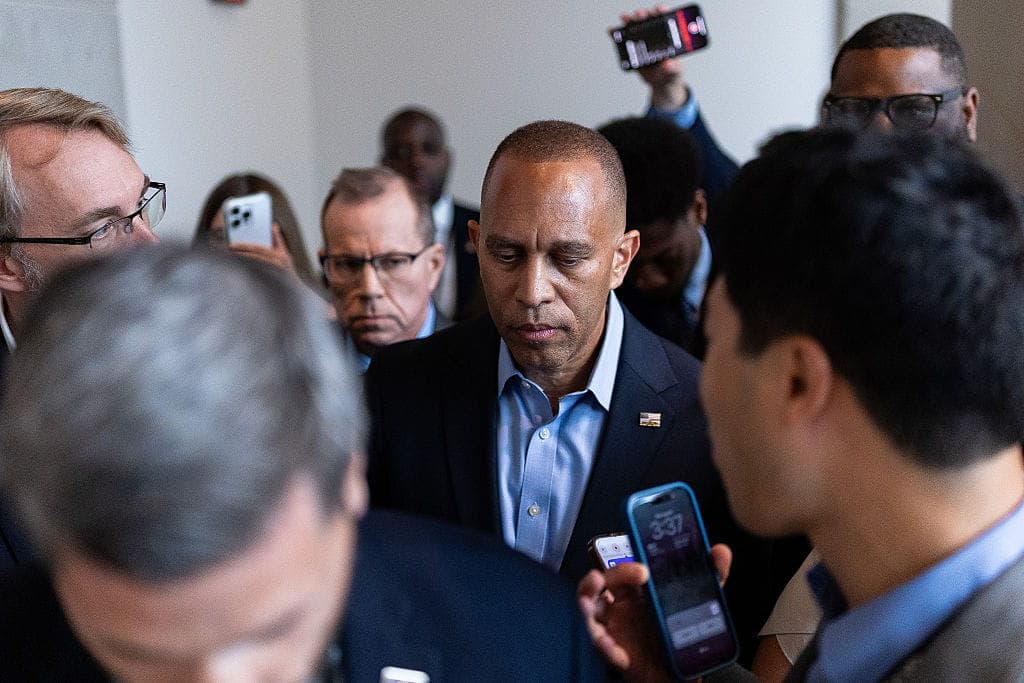


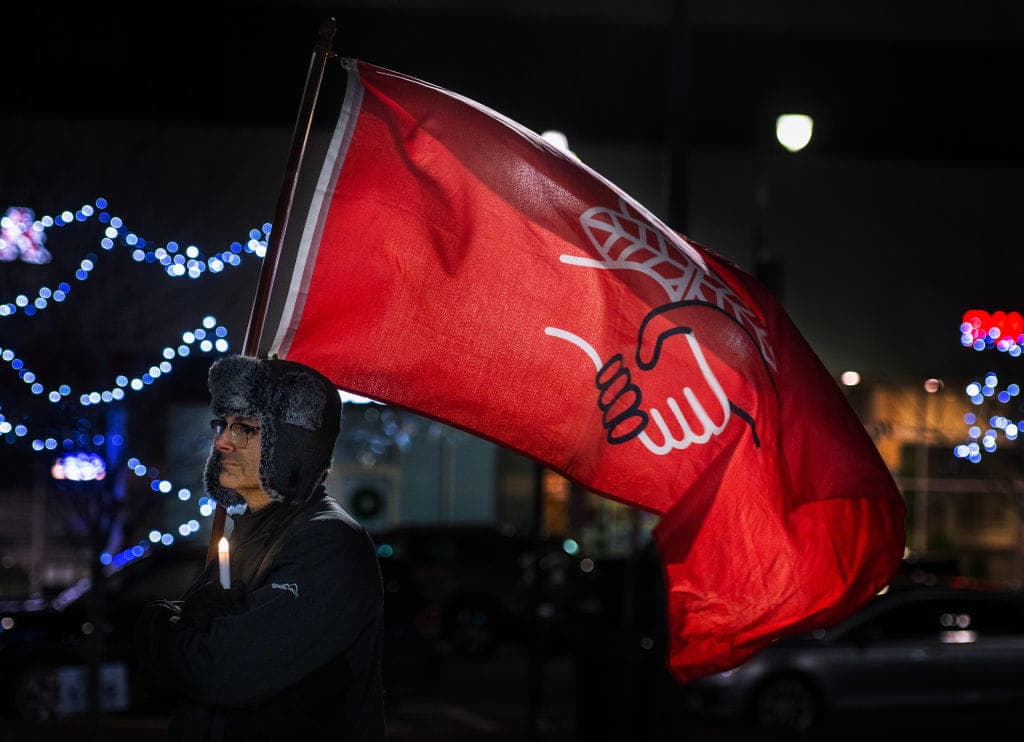

Three leaders of the Democratic Socialists of America (DSA) have been in the news lately over their cushy lifestyles in New York City, with some outlets pointing out the hypocrisy between the socialists’ reality and their rhetoric. Labor Coordinator Olivia Gonzalez Killingsworth and DSA Steering Committee chair Julie Swoope each live in a half-million-dollar Brooklyn apartment. Killingsworth bought hers after flipping an inherited Upper West Side triplex for $2.4 million in 2022, according to The New York Post. Then there’s Gustavo Gordillo, a Yale-educated sculptor and one of New York’s leading socialist organizers; his father gifted him a $1.5 million townhouse in Bedford-Stuyvesant, a gentrified Brooklyn neighborhood. Enjoying such lifestyles while advocating for dismantling the capitalist system seems performative and dishonest, but it’s nothing new.
Silver Spoons and the Socialist Doctrine
Revolutionary politics has gone hand in hand with inherited comfort for more than a century. Friedrich Engels, a close collaborator of Karl Marx, was the son of a wealthy textile manufacturer and could usually count on financial aid from home. Engels consistently funneled money to Marx, too, bankrolling his household and the years of research that went into writing Das Kapital, Marx’s anti-capitalist magnum opus. Together, they wrote The Communist Manifesto and fleshed out the foundation of modern socialism – all subsidized by capitalism.
Free with the Daily Briefing
85EssaysUnravel the Constitution
Hamilton, Madison & Jay’s complete case for America, free and searchable in the Publius Reader.
Free with the Daily Briefing. Unsubscribe anytime.
Even the man who converted Engels to communism, Moses Hess, was the son of wealthy parents. Other examples include Peter Kropotkin, one of anarchism’s most influential theorists; he was born a prince and educated in the exclusive Corps of Pages in St. Petersburg before serving as an aide to Tsar Alexander II for a year. In America, John Reed, a close friend of Vladimir Lenin, came from a wealthy family in Oregon, graduated from Harvard in 1910, and then began writing for a socialist newspaper in 1913. He was a communist activist and helped shape early 20th-century socialist and labor movements. He also witnessed the 1917 Bolshevik Revolution in Russia and recorded the event in his best-known book, Ten Days That Shook the World (1919).
The pattern repeats because building or leading a movement, whether revolutionary or electoral, requires resources – not only money but also free time, education, and connections. This is why movements are so often formed and led by people with cozy backgrounds and wealthy connections. Sociologists have a name for this common occurrence: resource mobilization theory, which claims that the success of social movements lies primarily in the resources available to them. However, this theory is not unique to the left.
Blind Spots
Resource mobilization theory also fits the rise of the right’s dominant faction: President Donald Trump’s MAGA movement. The leaders of such movements tend to form coalitions within existing organizations and launch campaigns to apply political pressure. MAGA absorbed the Republican Party and the right-wing media ecosystem while attracting wealthy donors and PACs to fund campaigns and build the operation. Not to mention, many people who have helped further the MAGA cause are also wealthy or come from well-off families, including Trump.
The DSA’s movement is smaller (for now) but has similar structural features. The group revived a decades-old organization, expanded it through local chapters, and is now infiltrating the Democratic Party, with ostensible plans to absorb it to advance its own agenda. Some billionaires have even donated to DSA candidates running for elected office. The organization is self-funded, though, and gets most of its money from membership dues and donations. Notably, a federal judge recently declared the DSA the legal beneficiary of $5.2 million, the retirement account of a longtime New York University sociology professor, David F. Greenberg, who passed away in 2024.
The point is that movements backed by the wealthy are not limited to the left. They’re almost a prerequisite for building a coalition and spreading a message to a large audience, especially to gain power and influence. The right and left diverge, however, in what they do with that money.

The MAGA movement rose on the promise of putting America first and making it great again. In 2016, Trump ran as a billionaire fighting for the forgotten man, not against the rich, and he didn’t pretend to be an average working-class person. More to the point, one would be hard-pressed to find anybody in the MAGA movement who has shaped their political identities around opposing millionaires.
By contrast, many wealthy Democrats and their socialist flank have built entire platforms around fighting the oligarchy, aiming to tax and redistribute rich people’s money. They vilify the wealthy and advocate for handouts, acting relatable while greatly benefiting from the system they condemn.
In the end, the hypocrisy doesn’t refute socialism's arguments any more than Engels' factory money refuted Marx's. The real inconsistency is that socialists who won't credit capitalism for what it has built are often the first to insist socialism’s failures don’t count against it.