


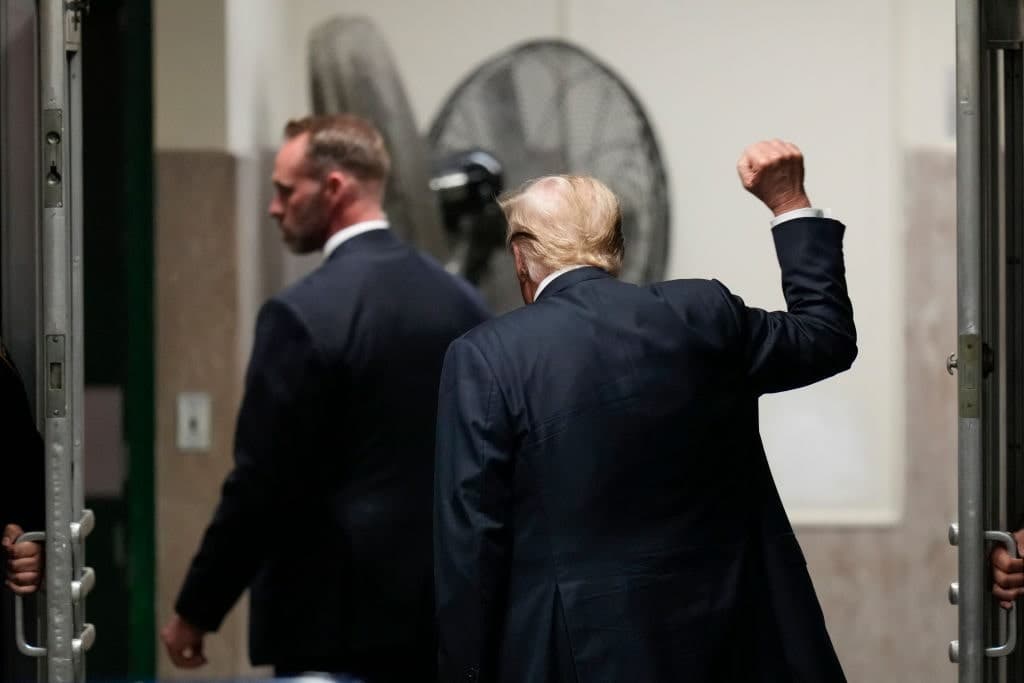

Former President Donald Trump was found guilty on all 34 charges of falsifying business records in the first degree on Thursday evening, May 30. This is the first time a former president has been convicted of a felony, let alone almost three dozen. Judge Juan Merchan set the sentencing date as July 11th, just four days before the Republican National Convention, which begins July 15. What does this mean for Trump's presidential campaign? What are his options going forward, and what sort of sentence might he face? We go to Liberty Nation’s Legal Affairs Editor Scott D. Cosenza, Esq., to answer this and more.
James Fite: Scott, the first question that comes to mind is what sentence awaits Trump now that he has been convicted on 34 Class E felonies? What does the sentencing guideline suggest, and what seems likely in this case?
Scott D. Cosenza: There are five felony classes in New York, and E is the least serious. By definition, felonies are crimes carrying potential incarceration terms of a year or more. These were non-violent felonies committed by someone with no criminal record, however. District Attorney Alvin Bragg declined to state what sentence he would request in post-trial comments. No custodial sentence is required here, and Juan Merchan will not likely sentence Trump to any time behind bars. That would be consistent with what NY-based attorneys report with other first-time offenders convicted of non-violent class E felonies.
Defense motions on sentencing are due in court by June 13, while the state has until June 27 to respond.
The Trump Appeal Pathway
James: What are the former president's options for appeal? What would that process look like, and how long might it delay the sentencing should any appeal prove successful?
Scott: Donald Trump's defense has an abundance of pathways that may lead to a successful appeal. Lead defense attorney Todd Blanche filed a motion for acquittal immediately after the guilty verdict, which Merchan just as quickly denied. That's the last time Merchan will be deciding such matters, however. Future appeals from Trump will be in state appellate courts and, eventually, federal court if needed.

(Photo by Stephanie Keith/Getty Images)
We should expect to see Trump's pleadings challenging all manner of things, including many of Judge Merchan's rulings that prejudiced the defendant's fundamental rights. Another thing that springs to the front of my mind is Merchan allowing the jury to hear multiple times that Trump violated campaign finance laws and have that presented as a fact rather than a prosecution theory.
James: Donald Trump is a convicted felon – at least for now – but the Constitution doesn't prohibit felons from running for and, therefore, becoming president. If Trump wins in November as the polls suggest he will, how might his sentencing affect his taking office in January? Alternatively, if he appeals and that delays his sentencing beyond Election Day, how might a win in November affect the eventual sentencing should his appeal fail? Finally, as president, would Trump be able to pardon himself?
Scott: The President may grant pardons for federal convictions. Trump cannot pardon himself unless he becomes Governor of New York. If he wins, he will likely be able to appeal sentencing until after his presidency. There is no printed rulebook for this kind of thing, and avoiding chaos and perhaps a genuine Constitutional crisis are great reasons to wait.

.jpg&w=1920&q=75)